英语
英语 俄语
俄语 西班牙语
西班牙语 德语
德语
Home / Author / Linnea Qiao — International Sales Manager / 25kg Commercial Dryer: Advanced Industrial Drying for High-Throughput Laundry Operations

Kingstar is your trusted partner for industrial and commercial laundry equipment. We specialized in the R&D and manufacturing of high-end industrial washers, commercial washers and dryers. Meanwhile, we provide global clients with comprehensive planning, layout workflow design, and software-hardware integration services for smart laundry plants.
Linnea Qiao — International Sales Manager
Sep 04,2026
25kg Commercial Dryer: Advanced Industrial Drying for High-Throughput Laundry Operations
Commercial laundry operations require equipment that can deliver consistent results under demanding working conditions. Hotels, hospitals, laundromats, dry cleaners, textile service companies, and institutional laundry rooms may process hundreds or even thousands of kilograms of textiles each day. For these facilities, drying is not simply a final step after washing. It is a critical production process that affects turnaround time, labor efficiency, textile quality, energy consumption, hygiene, and customer satisfaction.
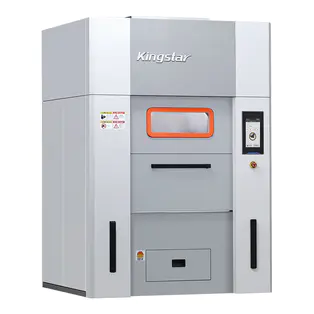
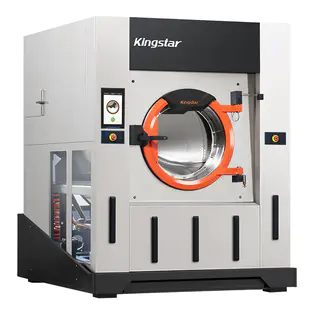
The 25kg Commercial Dryer is designed to address these requirements with a combination of intelligent controls, high-power heating, efficient airflow, durable construction, and flexible energy options. With a rated capacity of 25 kilograms, a 460-liter drum volume, a 10.1-inch full-color touchscreen, and support for steam, electric, or gas heating, the machine is suitable for professional laundry environments that need reliable output and precise process control.
Unlike a household dryer, which is normally designed for intermittent domestic use, this commercial dryer is engineered for repeated cycles, heavier loads, more demanding textiles, and professional service conditions. Its design places particular emphasis on thermal stability, air movement, operator convenience, and serviceability. These characteristics help users process laundry faster while reducing unnecessary heat loss, overdrying, and manual intervention.
Jiangsu Chuandao Intelligent Equipment Co., Ltd. develops and supplies industrial laundry equipment for professional customers and OEM or ODM projects. The company combines product engineering, intelligent control technology, industrial component selection, and manufacturing experience to provide laundry machinery for different operating environments. This article examines the product’s main advantages, technical characteristics, applications, manufacturing strengths, and selection considerations.
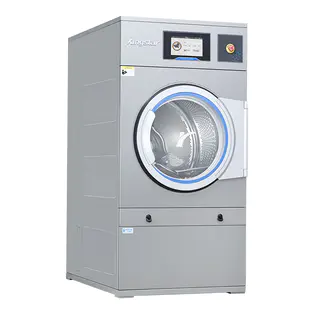
Commercial Dryer
Why Drying Performance Matters in Commercial Laundry
Washed textiles retain a substantial amount of moisture after extraction. If this moisture is not removed efficiently, laundry facilities may experience longer processing times, higher energy use, textile odor, uneven finishing, and increased labor costs. Drying performance therefore influences the complete workflow rather than only one individual machine cycle.
A professional dryer must create a controlled relationship between heat, airflow, drum movement, fabric exposure, and exhaust. Excessive heat can damage fibers, shrink garments, fade colors, or weaken elastic materials. Insufficient heat or poor airflow can leave textiles damp, requiring additional cycles and increasing operating costs. A high-quality dryer must balance these factors for a wide range of fabrics and load types.
The 25kg Commercial Dryer uses an intelligent control system to support this balance. PID control technology helps regulate the return air temperature, exhaust air temperature, and inner drum temperature. By monitoring and adjusting these conditions, the machine can maintain a more stable drying environment than a basic dryer with simple on-and-off heating control.
Temperature stability is especially important for hospitals, hotels, and uniform service providers. These users often process materials with different thicknesses and moisture-retention characteristics. Towels, bed sheets, blankets, workwear, uniforms, and personal garments do not dry at the same rate. Precise control allows operators to select suitable programs and reduce the risk of inconsistent results.
Product Overview
The 25kg Commercial Dryer is a heavy-duty industrial drying machine with a nominal capacity of 25 kilograms. Its drum volume is 460 liters, and the volume load ratio is listed as 1:18. This ratio supports effective textile tumbling and helps provide sufficient space for hot air to circulate through the load.
The inner drum is manufactured from 304 stainless steel. This material offers corrosion resistance, a smooth surface, and suitability for frequent contact with damp textiles. The perforated inner drum sheet has a thickness of 1.2 millimeters, with perforations measuring 8 millimeters in diameter. These specifications are intended to support airflow while maintaining structural strength during repeated operation.
The machine is equipped with a 10.1-inch full-color high-definition touchscreen. The control interface includes up to 99 built-in automatic programs, which can be edited according to the type of textile, load condition, and operating requirements. This provides greater flexibility than a dryer with only a few fixed mechanical settings.
The dryer supports three heating methods: steam heating, electric heating, and gas heating. This flexibility allows customers to select an energy configuration that matches local utility availability, facility infrastructure, operating costs, and installation conditions.
| Specification | SDR-2015 | SDR-2020 | SDR-2025 |
|---|---|---|---|
| Rated capacity | 15 kg | 20 kg | 25 kg |
| Drum diameter | 750 mm | 850 mm | 850 mm |
| Drum depth | 680 mm | 640 mm | 800 mm |
| Drum volume | 300 liters | 360 liters | 460 liters |
| Volume load ratio | 1:20 | 1:18 | 1:18 |
| Main motor power | 0.37 kW | 0.55 kW | 0.75 kW |
| Fan motor power | 0.37 kW | 0.55 kW | 0.55 kW |
| Electric heater power | 13.5 kW | 18 kW | 22.5 kW |
| Rated voltage | 380/3/50 | 380/3/50 | 380/3/50 |
| Screen size | 10.1 inches | 10.1 inches | 10.1 inches |
| Exhaust airflow | 21.3 cubic meters per minute | 36 cubic meters per minute | 36 cubic meters per minute |
High-Capacity Drum Design
Load capacity is one of the most important factors when selecting a commercial dryer. A machine that is too small for the washing operation creates bottlenecks. Operators may need to divide loads into multiple cycles, which increases handling time, labor requirements, and energy consumption. A 25kg capacity provides a practical solution for facilities that need to process substantial loads without immediately investing in very large industrial systems.
The 25kg model uses an 850-millimeter drum diameter and an 800-millimeter drum depth. The resulting 460-liter volume gives textiles room to lift, fall, and separate as the drum rotates. Effective tumbling helps expose more surface area to heated air, which supports uniform drying and reduces the possibility of damp pockets inside dense loads.
The drum perforation diameter is 8 millimeters. Properly sized perforations allow exhaust air to pass through the textile load while helping maintain the structural integrity of the drum. The perforated sheet thickness of 1.2 millimeters provides a balance between durability, airflow, and weight.
The large door design improves loading and unloading convenience. This is particularly useful when operators handle bulky items such as blankets, towels, mattress covers, curtains, or hospitality linens. A well-designed door also reduces the physical effort required during repeated shifts and can help shorten the time between cycles.
Compared with smaller domestic dryers, the commercial drum is designed for greater load consistency and more frequent use. It is also better suited to integration with commercial washing machines and washer-extractors, whose larger capacities may produce a substantial volume of laundry for every batch.
Intelligent Control with a 10.1-Inch Touchscreen
Traditional dryers often rely on limited controls that allow operators to choose only a basic time and temperature setting. While this approach may be sufficient for simple applications, it provides less control over complex laundry requirements. Different fabrics and textile weights require different drying conditions, and a fixed program may produce uneven or excessive drying.
The 25kg Commercial Dryer uses a 10.1-inch full-color touchscreen interface. The large display makes operating information easier to read and supports a more intuitive workflow. Operators can select programs, adjust parameters, monitor progress, and manage drying conditions from a centralized interface.
Up to 99 built-in automatic programs can be edited according to customer requirements. Programs may be configured for towels, sheets, uniforms, garments, healthcare textiles, workwear, or other textile categories. Once suitable settings have been established, operators can repeat them consistently across multiple shifts.
Programmability also helps reduce dependence on individual operator experience. A trained technician or production manager can define appropriate settings for different textile groups, after which other staff members can follow standardized procedures. This supports quality control and reduces the possibility of accidental temperature or time selection.
The control system is particularly valuable for businesses that process textiles from multiple customers. A dry cleaner or commercial laundry may need to handle delicate garments in one cycle and heavy towels in the next. Editable programs provide greater flexibility than a single general-purpose setting.
PID Temperature Control
PID control technology continuously manages temperature conditions by comparing measured values with target values and making adjustments as necessary. In this dryer, control is applied to the return air temperature, exhaust air temperature, and inner cylinder temperature.
This multi-point approach provides a more complete understanding of the drying environment. Monitoring only one temperature point may not accurately reflect the condition of the textile load. By considering several areas, the system can help maintain more consistent drying conditions throughout the cycle.
Stable temperature control may reduce several common problems. It can help limit overheating, prevent excessive heat loss, reduce overdrying, and improve repeatability between batches. It can also support better protection for textiles that require controlled drying rather than maximum heat.
High-Power Heating and Thermal Insulation
Fast heating is essential in a commercial laundry because every minute affects production capacity. The 25kg model is equipped with a 22.5 kW electric heater configuration. It also has a gas heating power specification of 19.1 kW and supports steam heating at a pressure of 0.6 MPa, with a listed steam consumption of 55 kilograms per hour.
High heating capacity enables the dryer to raise the working temperature efficiently and maintain the heat needed to evaporate moisture from heavy loads. However, heating power alone does not determine drying performance. If heat escapes through the outer cylinder or cabinet, the machine must consume more energy to maintain the desired temperature.
For this reason, the dryer uses an insulation layer around the outer cylinder. The insulation helps preserve heat inside the drying chamber and reduces unnecessary heat loss. It also supports a faster temperature rise and a more stable operating environment.
Thermal insulation provides several practical benefits. It may improve energy efficiency, reduce the temperature of external surfaces, protect the surrounding workspace, and support more predictable cycle times. In a busy laundry room, these benefits can contribute to lower operating costs and improved workplace comfort.
The combination of high-power heating and insulation differentiates the machine from basic dryers that use a powerful heater but have limited thermal protection. A well-insulated design makes better use of the energy delivered to the machine, helping convert more of that energy into useful moisture removal.
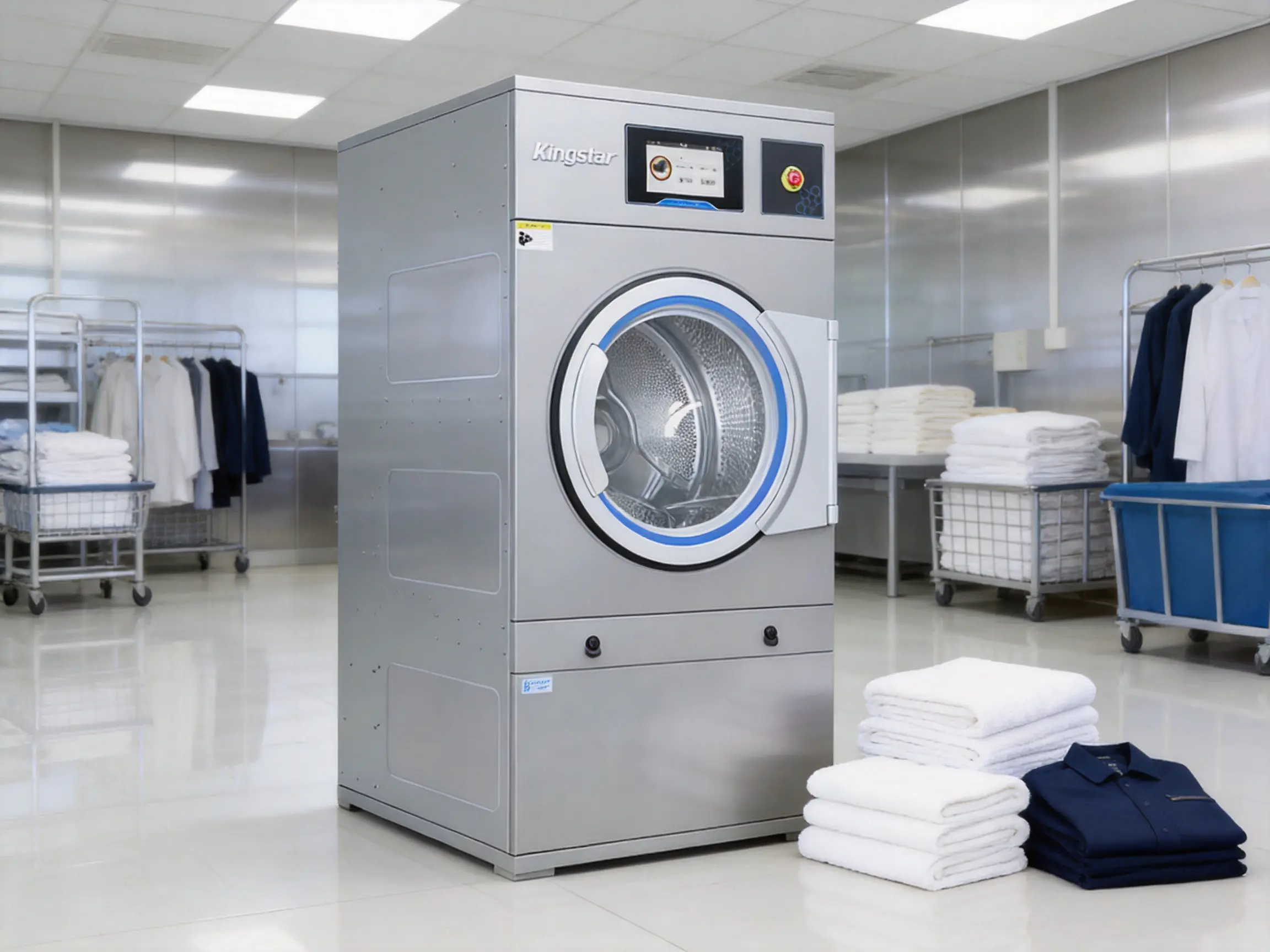
Three Heating Options for Different Facilities
One of the product’s strongest advantages is its support for steam, electric, and gas heating. Laundry facilities differ significantly in their available utilities. A hotel may have a central steam system, a self-service laundry may prefer electric installation, and an industrial facility may select gas because of local energy prices or existing infrastructure.
Steam Heating
Steam heating is suitable for facilities that already operate boilers or central steam networks. The dryer is specified for a steam pressure of 0.6 MPa. Steam systems can provide rapid heat transfer and are widely used in large hotels, hospitals, textile plants, and centralized laundry facilities.
Steam heating can be integrated into an existing plant utility system, potentially reducing the need for additional electrical capacity. It may also be practical where multiple pieces of laundry equipment share the same boiler infrastructure.
Electric Heating
Electric heating offers a straightforward operating concept and can be suitable for facilities without a steam boiler or gas supply. The 25kg model has an electric heater power specification of 22.5 kW. Electric heating allows the operator to use the local three-phase electrical supply, listed for this series as 380 volts, three-phase, 50 hertz.
Electric systems can provide precise and responsive control. They are also useful for locations where clean installation, easy startup, and reduced fuel-handling requirements are priorities. Before installation, customers should confirm that the facility’s electrical infrastructure can safely support the required load.
Gas Heating
Gas heating can be considered where natural gas or another approved gas supply is readily available. The product specification lists a gas heating power of 19.1 kW and gas consumption of 2.17 cubic meters per hour. Gas pressure requirements should be confirmed with the supplier and local installation professionals before ordering.
Gas heating may offer operating-cost advantages in regions where gas is more economical than electricity. It can also support fast heating and high-throughput operation. Proper ventilation, fuel connections, exhaust design, and safety compliance are essential for gas-heated equipment.
Airflow and Exhaust Performance
Heat must be carried through the textile load and removed together with evaporated moisture. Airflow is therefore as important as heater capacity. The 25kg model provides a listed exhaust airflow of 36 cubic meters per minute and uses a 200-millimeter exhaust diameter.
A strong exhaust system helps remove humid air from the drum and replace it with heated air. This supports evaporation and helps prevent moisture from accumulating inside the machine. Inadequate exhaust design can reduce drying efficiency even when the dryer has sufficient heating power.
Commercial installation should include an appropriately designed exhaust route. The duct should be correctly sized, as short as practical, and arranged to minimize unnecessary bends and restrictions. The facility should also consider the discharge location, air replacement, lint management, and local building requirements.
Operators should clean lint filters and inspect exhaust passages regularly. Lint accumulation can restrict airflow, increase drying time, raise energy consumption, and create a safety concern. A preventive maintenance schedule is essential for keeping the dryer operating near its intended performance.
The airflow system also supports textile quality. Continuous removal of humid air helps the load dry more evenly, reducing the chance that some items remain damp while others become excessively dry. Consistent airflow is particularly important for dense materials such as towels and blankets.
Durable Materials and Imported Electrical Components
Commercial laundry equipment must tolerate vibration, heat, humidity, repeated loading, and long operating hours. Material selection and component quality therefore have a direct effect on reliability and service life.
The inner drum uses 304 stainless steel, a material commonly selected for its corrosion resistance and smooth, cleanable surface. This is valuable in laundry environments where the drum is repeatedly exposed to moisture, detergent residues, textile fibers, and elevated temperatures.
The product also uses imported electrical components. The listed component configuration includes Mitsubishi inverters and Schneider contactors. Imported wires, plugs, and bearings are also specified. The use of recognized industrial components can support stable electrical performance, motor control, and maintenance availability, although final component configurations should always be confirmed for the specific order.
A frequency inverter can contribute to smoother motor operation and more controlled drum movement. Gradual acceleration and deceleration may reduce mechanical shock and support more stable textile handling. It can also help the machine adapt its operation to different program requirements.
Industrial contactors, wiring, plugs, and bearings must be selected and installed to handle the machine’s working conditions. Reliable electrical connections help reduce unplanned downtime, while quality bearings support smooth drum rotation and reduce mechanical noise or vibration caused by premature wear.
These features provide an advantage over low-cost machines that may use inconsistent component quality or limited electrical protection. The value of a commercial dryer is determined not only by its initial purchase price but also by its ability to remain productive over years of operation.
Manufacturing Strengths and Engineering Approach
Jiangsu Chuandao Intelligent Equipment Co., Ltd. focuses on the development and supply of industrial laundry machinery, including washing machines, washer-extractors, dryers, and related commercial laundry equipment. The company’s product approach combines practical laundry requirements with intelligent control and industrial component selection.
Advanced manufacturing in commercial laundry equipment begins with application analysis. A dryer must be designed around the expected load, textile type, heating source, airflow requirement, available space, electrical standard, and maintenance environment. The product series includes 15kg, 20kg, and 25kg capacities, allowing customers to select a size appropriate for their throughput instead of using one machine configuration for every project.
Manufacturing strength is also reflected in the coordination of mechanical and electronic systems. The drum, motor, fan, heater, insulation, temperature sensors, touchscreen, inverter, and exhaust structure must work as one integrated system. A high-power heater cannot compensate for poor airflow, and a sophisticated touchscreen cannot compensate for an undersized drum or weak mechanical structure.
The company’s use of imported industrial components demonstrates an emphasis on component reliability and standardized electrical control. Mitsubishi inverters and Schneider contactors are recognized in industrial automation applications. Their inclusion can make the equipment more familiar to technicians who already work with industrial electrical systems.
The use of 304 stainless steel for the inner drum reflects attention to hygiene, corrosion resistance, and long-term service conditions. The insulation layer around the outer cylinder demonstrates an engineering focus on heat retention rather than relying only on heater output.
Product development also includes multiple heating configurations. Supporting steam, electric, and gas options requires the manufacturer to understand different utility systems and installation requirements. This flexibility is useful for international projects, where energy infrastructure, voltage standards, and fuel availability can vary considerably.
For OEM and ODM customers, a flexible engineering approach can support adjustments to control language, branding, electrical configurations, program settings, external finishes, and installation requirements. Any customization should be reviewed technically before production to ensure that safety, capacity, and performance are maintained.
Quality-Oriented Production Process
A reliable manufacturing process should include inspection and verification at several stages. Material inspection helps confirm that selected steel and structural parts meet the required specifications. Mechanical assembly checks can verify drum alignment, door operation, belt or drive condition, fan installation, and fastening quality.
Electrical assembly inspection should confirm wiring accuracy, component installation, grounding, control-panel connections, inverter settings, and emergency protection. Temperature sensors and control circuits should be checked to support accurate PID operation.
Functional testing is equally important. A completed dryer should be evaluated for drum rotation, fan operation, heating response, touchscreen control, exhaust behavior, and temperature stability. Testing helps identify problems before shipment and supports more reliable commissioning at the customer’s facility.
Packaging and shipping preparation are also part of manufacturing strength. Industrial equipment may travel long distances and experience vibration during transportation. Appropriate protective packaging, documentation, connection instructions, and spare-part recommendations can help reduce installation delays and damage risks.
Advantages Compared with Basic Commercial Dryers
The 25kg Commercial Dryer offers several advantages over simpler commercial dryers and low-cost competitors.
More Precise Temperature Management
PID control with multiple temperature monitoring points provides greater process precision than basic timed drying. This can support more consistent results across different textile categories and reduce the risk of overheating or incomplete drying.
Greater Program Flexibility
With up to 99 editable programs, the machine can be adapted to a broad range of laundry applications. Operators can establish standardized settings for different loads instead of adjusting time and temperature manually for every cycle.
Multiple Energy Choices
Steam, electric, and gas heating options enable the dryer to fit more facility types. Customers can select the most practical configuration based on existing infrastructure and local operating costs.
Improved Thermal Efficiency
The insulated outer cylinder helps retain heat, supports faster warming, and reduces heat loss. This design can improve the relationship between energy input and useful drying performance.
Industrial Component Selection
Imported inverters, contactors, wires, plugs, and bearings provide a component platform intended for professional use. Standardized industrial parts may also make service and replacement more manageable for qualified technicians.
Practical Operator Experience
The full-color touchscreen and large loading door make the machine easier to operate in busy laundry rooms. A clear interface can reduce training time and help operators manage repeated cycles more consistently.
Capacity for Medium and High-Throughput Facilities
The 25kg load capacity is suitable for businesses that require more output than a domestic dryer can provide but do not necessarily need a very large tunnel or continuous drying system. It can also be used in parallel with other units to create a scalable drying department.
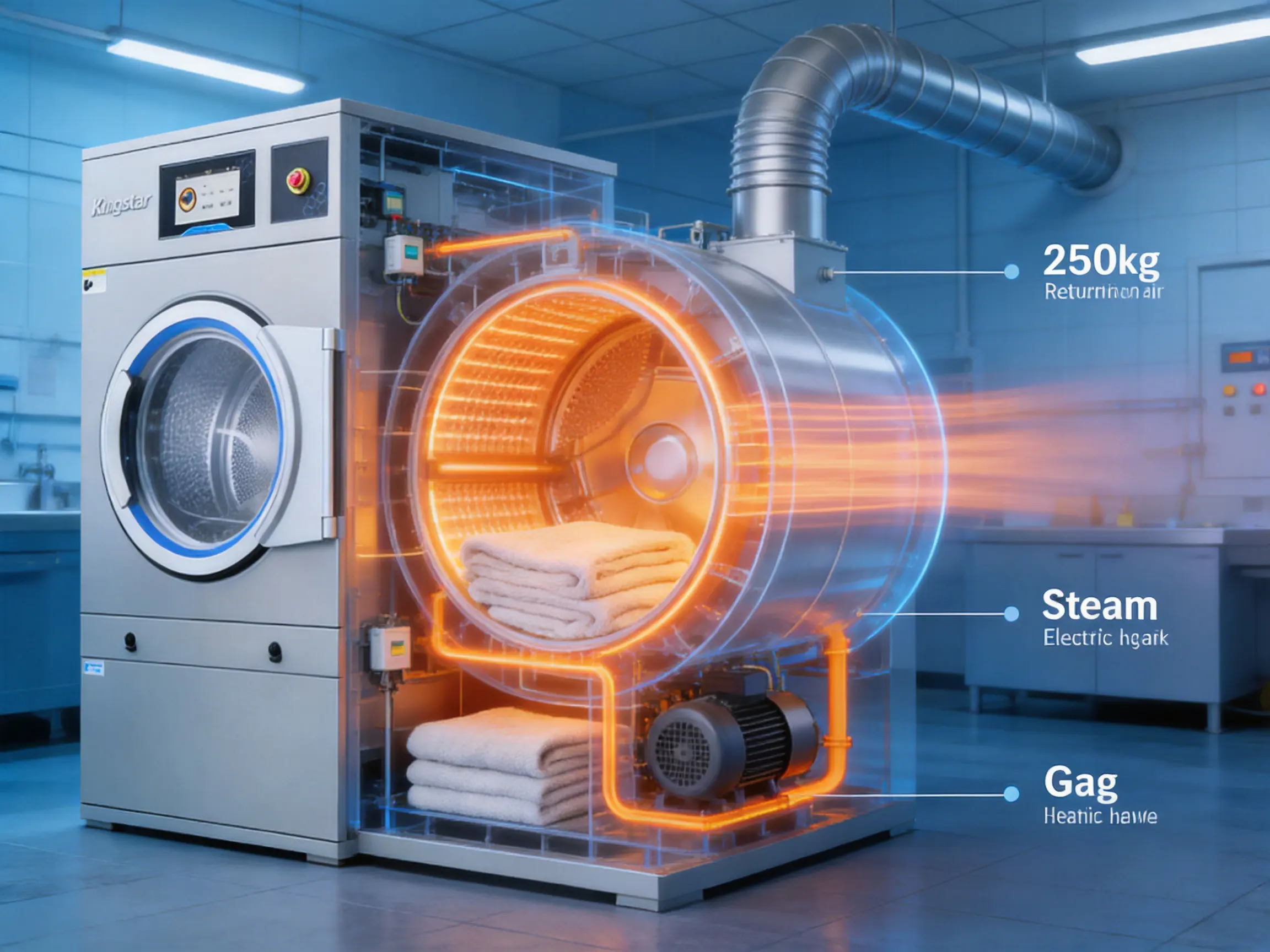
Applications in Different Industries
Hotels and Resorts
Hotels process sheets, pillowcases, towels, bathrobes, table linens, and staff uniforms. These textiles must be returned to service quickly, especially during periods of high occupancy. A commercial dryer with programmable cycles helps the laundry department establish repeatable results for different textile categories.
The 25kg capacity is practical for processing large towel loads or multiple sets of bed linens. The touchscreen programs can be configured to reduce unnecessary drying and help protect fabrics from excessive thermal exposure.
Hospitals and Healthcare Facilities
Hospitals and healthcare facilities require reliable processing of sheets, patient garments, towels, uniforms, and other textile products. Drying equipment must support hygienic workflows and consistent output. The stainless steel inner drum provides a smooth, corrosion-resistant surface that is suitable for frequent cleaning and professional laundry use.
Healthcare operators should configure drying temperatures and cycles in accordance with their textile-care procedures and applicable hygiene standards. The dryer supports controlled process settings, but the complete laundry protocol must also include suitable washing, disinfection, handling, and storage procedures.
Laundromats and Self-Service Laundry
Self-service laundry businesses depend on equipment availability, simple operation, and fast turnaround. The large touchscreen can make program selection more intuitive, while the commercial construction supports repeated customer use.
A laundromat may choose electric heating for installation simplicity or gas heating where local infrastructure makes it economical. Multiple machines can be arranged in a row to increase capacity and reduce customer waiting time.
Dry Cleaners
Dry cleaners handle garments with different materials, shapes, and care requirements. Programmable cycles can help operators create suitable drying profiles for workwear, uniforms, general garments, and selected delicate textiles.
Dry cleaners should always follow garment-care labels and professional textile-care procedures. The dryer’s adjustable controls are an operational advantage, but they do not eliminate the need for trained staff and proper textile classification.
Industrial and Textile Facilities
Manufacturing companies may need to dry workwear, protective garments, textile samples, cleaning cloths, or production-related materials. The commercial dryer can support internal laundry departments and help reduce reliance on outside service providers.
Institutional Laundry Rooms
Schools, dormitories, military facilities, correctional institutions, restaurants, and catering businesses may also benefit from commercial drying equipment. These applications often require dependable operation, straightforward maintenance, and programs that can be repeated by different operators.
Installation Considerations
Commercial dryer installation should be planned before the equipment arrives. The facility must confirm the available floor area, door access, ventilation route, power supply, heating source, drainage or condensate arrangements where applicable, and service access.
The listed dimensions for the 25kg model are approximately 890 millimeters in width, 1,420 millimeters in depth, and 1,805 millimeters in height. Additional clearance should be provided for loading, unloading, inspection, ventilation, electrical service, and maintenance.
The rated voltage for the series is 380 volts, three-phase, 50 hertz. Electrical installation must be completed by qualified professionals in accordance with local regulations. Protection devices, grounding, cable sizing, isolation, and emergency-stop arrangements should be verified before commissioning.
Exhaust ducting is essential. The 25kg model uses a 200-millimeter exhaust diameter. The duct system should be designed to maintain effective airflow and prevent back pressure. Long, narrow, or heavily obstructed ducts can reduce drying performance and increase operating time.
For gas-heated models, the gas pressure and supply system must be confirmed with the manufacturer and an authorized installation professional. Gas systems require appropriate ventilation, shutoff devices, combustion safety measures, and compliance with local codes.
For steam-heated models, the facility should confirm steam pressure, steam quality, piping, valves, condensate management, and insulation. Incorrect steam installation may result in poor heating performance or unnecessary maintenance.
The floor should be level and strong enough to support the machine and its operating load. Operators should also consider the movement of laundry carts, the position of the washing equipment, and the route from extraction to drying. Good workflow design can improve productivity as much as machine capacity.
Operating Practices for Better Results
Correct loading is essential. The machine should not be overloaded, even though the rated capacity is 25 kilograms. Excessive loading restricts textile movement and airflow, which can increase drying time and leave damp areas. Underloading may also reduce tumbling efficiency for certain textile types.
Textiles should be classified by material, thickness, color, and care requirement before drying. Towels and heavy cotton items generally retain more moisture than lightweight garments. Mixing very different items may produce uneven results because some fabrics reach the target dryness earlier than others.
Operators should select a suitable program rather than always using the highest temperature or longest cycle. Excessive drying wastes energy and can shorten textile life. The editable program system allows the facility to develop standard settings based on actual load behavior.
Lint filters should be cleaned regularly. Lint is a natural result of textile processing, but accumulated lint can restrict airflow and create a potential fire hazard. Cleaning frequency should be based on load type and operating hours, with high-lint fabrics requiring more frequent attention.
The exhaust route should be inspected for blockage, condensation, loose connections, or excessive lint. Airflow problems often appear as longer drying times, elevated temperatures, or inconsistent results.
Operators should monitor the machine for unusual vibration, noise, smell, or temperature behavior. Early reporting can help prevent small problems from developing into costly failures.
Maintenance and Serviceability
A preventive maintenance plan helps protect productivity and extend the service life of a commercial dryer. Maintenance should include daily, weekly, monthly, and periodic technical inspections.
Daily tasks may include cleaning the lint filter, checking the drum area, inspecting the door seal, and confirming that the touchscreen and safety functions operate normally. Operators should also keep the area around the dryer clean and free of combustible materials.
Weekly inspections may include checking exhaust connections, reviewing fan performance, examining visible wiring, and confirming that the drum rotates smoothly. The door should close securely, and no unusual rubbing or vibration should be present.
Periodic service should include inspection of bearings, motor connections, inverter settings, contactors, heating elements or heat-exchange components, sensors, and structural fasteners. Qualified technicians should perform electrical and gas-related service.
The use of recognized industrial components can support serviceability because technicians may be familiar with their operating principles and replacement procedures. Customers should maintain records of programs, service actions, component replacements, and operating conditions.
Preventive maintenance is generally less expensive than emergency repair. A short planned service interval can prevent extended downtime during peak laundry periods. It can also help the machine retain stable heating and airflow performance over time.
Energy Efficiency and Operating Cost Control
Commercial dryers naturally use more energy per cycle than household dryers because they process heavier loads and remove more moisture. However, the correct comparison should consider energy use per kilogram of laundry and the total number of cycles required to complete a workload.
A household dryer may consume less energy per cycle but require several cycles to process the same amount of laundry. A commercial dryer can reduce handling and cycle count by processing more textiles at once. Efficient airflow, insulation, program control, and proper loading can further improve productivity.
The insulated outer cylinder helps reduce heat loss. PID temperature management can help prevent unnecessary overheating. Strong exhaust airflow supports moisture removal, which may shorten cycle times when the machine is correctly installed and loaded.
Facilities can improve energy performance by using high-speed extraction before drying. The more water removed during washing and extraction, the less energy is required to evaporate the remaining moisture. Coordinating the washer-extractor and dryer capacities can therefore improve the efficiency of the entire laundry system.
Operators should avoid mixing wet and nearly dry textiles in the same load. They should also prevent over-drying, clean lint filters, and maintain exhaust ducting. These simple practices can produce meaningful savings over the life of the machine.
Safety and Compliance Considerations
Commercial drying equipment should be installed and operated according to the manufacturer’s instructions and applicable local regulations. Operators should receive training before using the machine.
Electrical connections must be protected and properly grounded. The machine should be connected to a suitable supply with correctly rated protection devices. Only qualified personnel should open electrical panels or modify control settings.
Gas installations require particular attention to fuel pressure, ventilation, combustion exhaust, leak testing, and emergency shutoff procedures. Steam installations require safe handling of pressurized components and hot surfaces.
Lint management is a major safety requirement. Filters and exhaust paths should be cleaned according to a documented schedule. Combustible items, solvents, and flammable chemicals should not be stored near the dryer.
Operators should follow textile-care instructions. Materials contaminated with oils, solvents, or other flammable substances may require specialized handling before entering a dryer. The facility should establish written procedures for identifying and managing such loads.
Safety interlocks, door systems, emergency stops, and temperature protection devices should be tested periodically. Any malfunction should be reported immediately, and the machine should remain out of service until the issue is corrected.
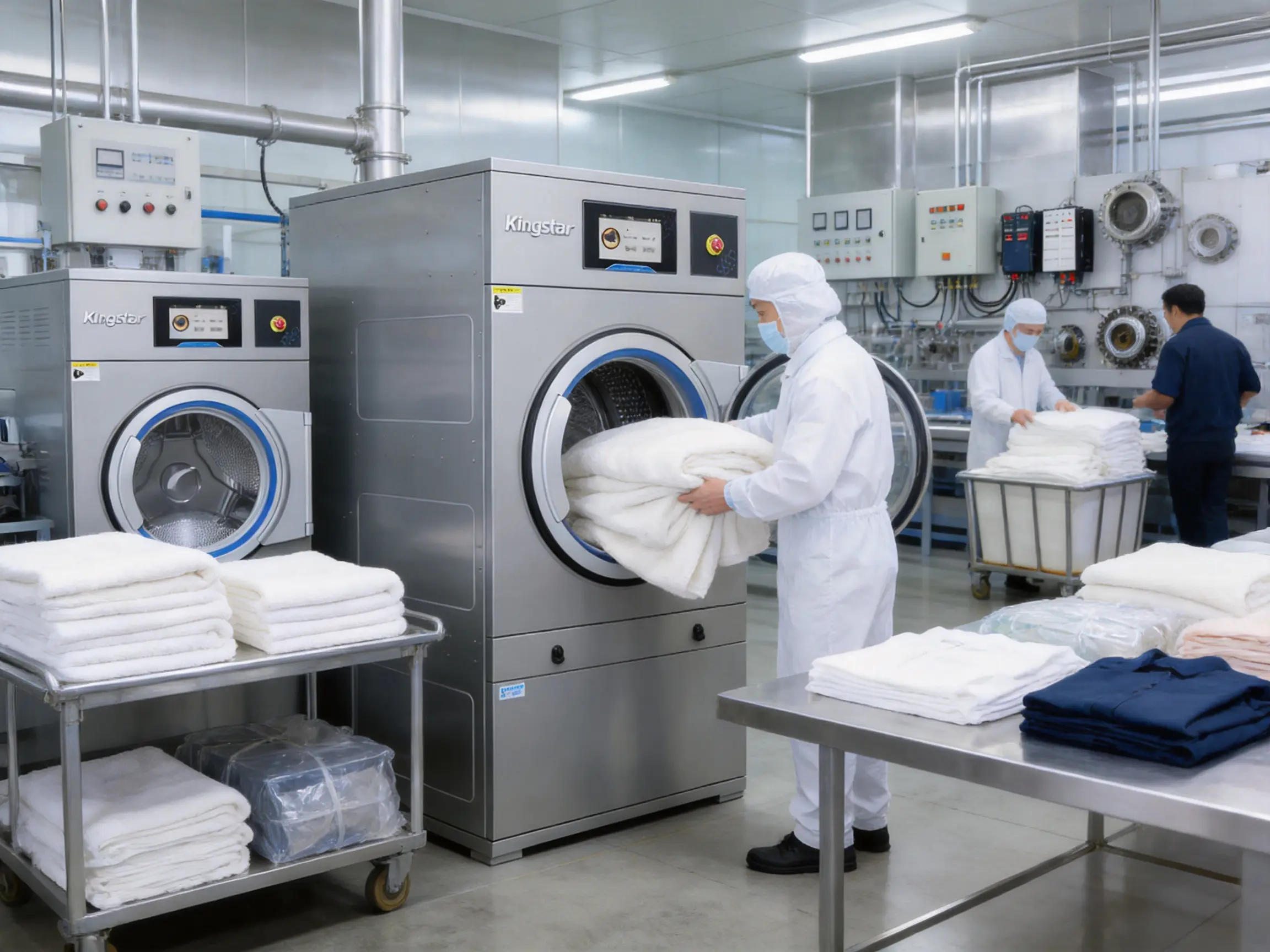
How the Dryer Supports a Complete Laundry System
The dryer should be evaluated as part of the complete laundry workflow. It normally operates after a washer or washer-extractor and before folding, ironing, finishing, packaging, or storage.
A properly matched washer-extractor can remove a significant quantity of water before the load enters the dryer. This reduces drying demand and improves throughput. If the dryer is too small compared with the washer, wet laundry may accumulate and create a bottleneck. If it is too large, the investment may not be fully utilized.
The 15kg, 20kg, and 25kg models allow customers to build a capacity plan around their actual production volume. A facility may use one 25kg unit for centralized drying or several smaller units for load separation and operational flexibility.
For hotels and hospitals, multiple dryers can provide backup capacity during maintenance or peak demand. For laundromats, several machines can support simultaneous customer use. For industrial facilities, the equipment can be arranged according to the movement of laundry carts and textile batches.
The company’s broader product range includes industrial washing machines, washer-extractors, stacked washer and dryer systems, stack dryers, and commercial dryers. This product coverage can make it easier for customers to coordinate equipment selection across the washing and drying stages.
Commercial Dryer Versus Household Dryer
A household dryer is intended for smaller loads and moderate use. Its components, airflow system, heater, drum, and control structure are designed for domestic operation. It is not normally suitable for continuous commercial workloads.
A commercial dryer is designed for higher capacity, more frequent cycles, stronger airflow, and improved serviceability. It may require specialized electrical, gas, steam, and exhaust installation. The purchase price is higher, but the machine is intended to support professional productivity and longer operating hours.
| Feature | 25kg Commercial Dryer | Typical Household Dryer |
|---|---|---|
| Typical capacity | 25 kg | Approximately 6 to 10 kg |
| Operating environment | Laundries, hotels, hospitals, institutions, factories | Residential homes |
| Control system | 10.1-inch touchscreen with editable programs | Basic digital or mechanical controls |
| Heating choices | Steam, electric, or gas | Usually electric or domestic gas |
| Temperature control | PID control with multiple temperature points | Basic sensor or timed control |
| Drum material | 304 stainless steel inner drum | Domestic-grade drum materials |
| Exhaust requirement | Commercial exhaust system | Residential venting or condenser system |
| Duty cycle | Frequent and repeated use | Intermittent household use |
| Maintenance approach | Planned industrial preventive maintenance | Routine household cleaning and service |
Purchasing Considerations
Before purchasing a commercial dryer, customers should estimate the daily laundry volume, peak workload, average moisture content after extraction, textile categories, available heating sources, and required turnaround time.
The selected capacity should reflect actual production rather than only the largest possible load. Facilities should consider whether loads will be separated by fabric type and whether the dryer will operate continuously or in scheduled batches.
Utility costs should also be evaluated. Steam, electric, and gas heating may produce different total operating costs depending on local prices, boiler efficiency, electrical demand charges, gas availability, and installation expenses.
Installation space must be measured carefully. The machine dimensions do not represent the total required area. Clearance for door opening, carts, exhaust ducting, electrical panels, and technician access should be included in the layout.
Customers should request confirmation of the final technical configuration before ordering. Important items include voltage and frequency, heating method, gas or steam requirements, exhaust dimensions, control language, safety features, warranty terms, spare parts, and commissioning support.
For export projects, the buyer should also confirm packaging standards, shipping dimensions, documentation, local certification requirements, and the availability of qualified installation personnel.
Why Professional Buyers Choose Industrial Laundry Equipment
Professional buyers generally evaluate a machine according to total cost of ownership rather than purchase price alone. A dryer that costs less initially may become expensive if it requires frequent repairs, produces inconsistent results, consumes excess energy, or causes production delays.
The 25kg Commercial Dryer is designed around professional priorities: repeatable performance, high throughput, flexible heating, controlled temperatures, durable materials, and practical operation. These features can help reduce labor requirements and improve the use of available laundry-room space.
The machine is also suitable for businesses that expect their laundry volume to grow. A 25kg system can provide additional capacity without requiring a fully continuous industrial drying line. It can be installed as a standalone unit or combined with other laundry equipment as part of a larger project.
For OEM and ODM buyers, cooperation with an experienced industrial equipment manufacturer may provide additional value. Product configuration, branding, programming, electrical standards, and project requirements can be reviewed together before production. This approach helps align the final equipment with the buyer’s market and operating conditions.
Frequently Asked Questions
What is the rated capacity of the commercial dryer?
The SDR-2025 model has a rated capacity of 25 kilograms and a drum volume of 460 liters. The recommended load should be adjusted according to textile type, moisture level, and the operating instructions.
Which heating methods are available?
The dryer supports steam heating, electric heating, and gas heating. The appropriate option depends on the facility’s available utilities, local energy prices, installation conditions, and regulatory requirements.
What is the electric heater power of the 25kg model?
The listed electric heater power for the 25kg model is 22.5 kilowatts. The facility should confirm electrical capacity, cable sizing, protection, and local installation requirements before commissioning.
What steam pressure does the machine require?
The listed steam pressure is 0.6 MPa. Steam piping, valves, condensate management, and safety components should be designed and installed by qualified professionals.
Does the dryer use automatic programs?
Yes. The machine includes a 10.1-inch full-color touchscreen and up to 99 built-in editable automatic programs. Programs can be adjusted for different textiles and production requirements.
How does PID control improve drying?
PID control helps regulate the return air temperature, exhaust air temperature, and inner drum temperature. This supports more stable drying conditions and can reduce overheating, overdrying, and inconsistent moisture levels.
What material is used for the inner drum?
The inner drum is made from 304 stainless steel. This material offers corrosion resistance and a smooth surface suitable for frequent use in a commercial laundry environment.
What exhaust connection is required?
The 25kg model lists a 200-millimeter exhaust diameter and an exhaust airflow of 36 cubic meters per minute. The complete duct system must be designed to maintain airflow and comply with local requirements.
Can the dryer process towels and hotel linens?
Yes. The 25kg capacity and large drum are suitable for towels, sheets, uniforms, garments, and other commercial laundry items. Programs should be selected according to textile thickness, moisture level, and care instructions.
Is the dryer suitable for hospitals?
The machine can be used in hospital laundry departments for suitable linens, uniforms, and other textiles. Healthcare facilities must establish their own approved washing, disinfection, drying, handling, and storage procedures.
How often should the lint filter be cleaned?
The lint filter should be cleaned regularly, normally after each operating period or according to the facility’s maintenance schedule. High-lint loads may require more frequent cleaning.
Can the dryer be integrated with a washer-extractor?
Yes. It can be used as part of a complete laundry system with commercial washing machines and washer-extractors. Capacity matching and workflow planning should be completed before installation.
What should customers confirm before ordering?
Customers should confirm capacity, heating method, voltage, frequency, steam or gas requirements, exhaust dimensions, control language, safety requirements, installation space, warranty conditions, spare parts, and after-sales support.
Is OEM or ODM cooperation available?
The manufacturer supplies industrial laundry machinery and can discuss OEM or ODM requirements. Custom specifications should be reviewed by the technical team to ensure compatibility, safety, and production feasibility.
Conclusion
The 25kg Commercial Dryer is designed for laundry facilities that require dependable drying performance, flexible heating, intelligent control, and durable industrial construction. Its 460-liter drum, 304 stainless steel inner cylinder, 10.1-inch touchscreen, editable automatic programs, PID temperature management, high-power heating, insulation layer, and strong exhaust airflow provide a comprehensive solution for professional textile processing.
Its support for steam, electric, and gas heating allows the machine to adapt to different facility infrastructures. The use of industrial electrical components, including Mitsubishi inverters and Schneider contactors, reflects attention to reliability and serviceability. The product’s 15kg, 20kg, and 25kg series also allows customers to select capacity according to their production requirements.
Jiangsu Chuandao Intelligent Equipment Co., Ltd. combines industrial laundry equipment manufacturing with intelligent control development, component selection, application-oriented engineering, and OEM or ODM support. For commercial and institutional buyers, this combination can provide more value than selecting equipment based only on initial price.
With correct installation, appropriate loading, regular lint removal, preventive maintenance, and suitable program selection, the commercial dryer can become an important part of a productive laundry operation. It is a practical choice for laundromats, hotels, hospitals, dry cleaners, self-service laundry facilities, textile companies, and other organizations that require consistent drying results at commercial scale.
References
1. Industrial Laundry Equipment Product Specifications, Commercial Dryer Series.
2. Commercial and Industrial Textile Care Operating Principles.
3. General Guidance for Commercial Dryer Ventilation and Exhaust Design.
4. Industrial Temperature Control and PID Regulation Fundamentals.
5. Stainless Steel Materials in Hygienic Equipment Manufacturing.
6. Preventive Maintenance Practices for Commercial Laundry Machinery.
7. Professional Laundry Facility Energy Management Guidelines.
8. Textile Drying, Moisture Removal, and Fabric-Care Principles.
Product: Commercial Dryer

ADD:No.388 Xinggang Road, Chongchuan District, Nantong City, 226000, Jiangsu Province, China.
-
Phone: +86-13917089379
-
Tel:+86-13917089379
-
Fax:+86-0513-85663366
-
E-mail:louislu@kingstarlaundry.com
products