英语
英语 俄语
俄语 西班牙语
西班牙语 德语
德语
Home / Author / Linnea Qiao — International Sales Manager / 120kg Heavy-Duty Forward-Tilting Washer Extractor for High-Volume Laundry Operations

Kingstar is your trusted partner for industrial and commercial laundry equipment. We specialized in the R&D and manufacturing of high-end industrial washers, commercial washers and dryers. Meanwhile, we provide global clients with comprehensive planning, layout workflow design, and software-hardware integration services for smart laundry plants.
Linnea Qiao — International Sales Manager
Oct 10,2026
120kg Heavy-Duty Forward-Tilting Washer Extractor for High-Volume Laundry Operations
High-volume laundry facilities require equipment that can process substantial loads while maintaining dependable washing performance, efficient extraction, operator safety, and manageable operating costs. The 120kg Heavy-Duty Forward Tilting Washer Extractor, model SHS-2120T, is designed for industrial laundry environments where productivity, durability, and practical material handling are essential.
With a rated capacity of 120kg, a 1,200-liter drum volume, a maximum extraction speed of 745rpm, and a G factor of 400, this washer extractor is built to handle demanding textile-processing schedules. Its forward-tilting design supports efficient unloading, while its industrial construction is intended for laundries, hotels, hospitals, textile-service companies, uniform-processing centers, and other facilities that process large quantities of fabric every day.
The machine combines a large working chamber with a high-speed extraction system, steam compatibility, dedicated water and drainage connections, and a compact industrial footprint relative to its capacity. These features help operators manage large batches more efficiently than with multiple smaller machines, reducing handling steps and supporting a more organized production flow.
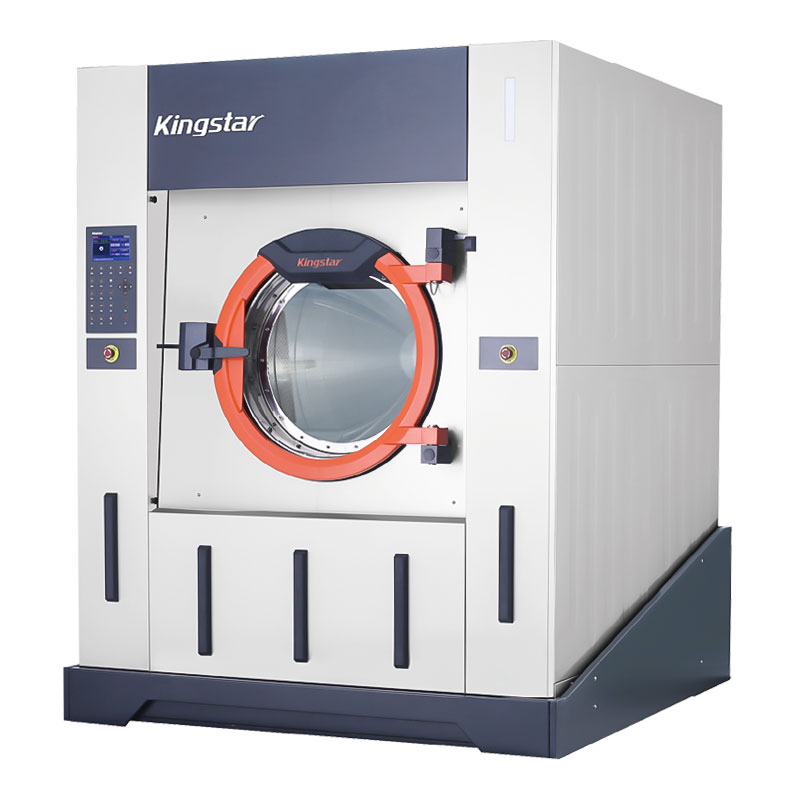
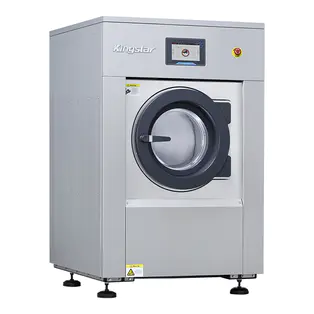
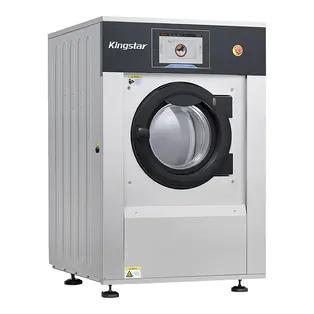
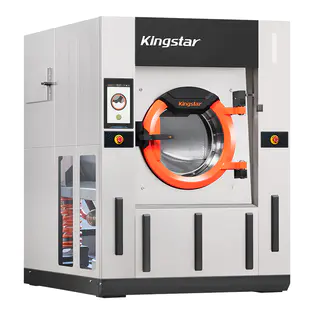
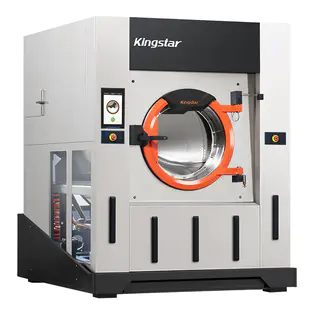
120kg Heavy Duty Forward Tilting Washer Extractor
Designed for Industrial-Scale Laundry Work
Industrial laundry is different from domestic or small commercial washing. A household appliance may be suitable for occasional loads, but an industrial installation must withstand repeated cycles, heavy textile weights, frequent loading and unloading, and continuous exposure to water, detergents, heat, and mechanical stress. The SHS-2120T is configured for this type of operating environment.
Its 120kg rated capacity allows a single machine to process a large quantity of textiles in one cycle. This is valuable for facilities handling bed linen, towels, workwear, uniforms, healthcare textiles, table linen, hotel laundry, and other commercial fabrics. Processing more textiles per cycle can reduce the number of batches required during a shift and may help lower labor requirements associated with loading, unloading, and transferring laundry between machines.
The 1,200-liter volume provides a substantial washing chamber for commercial production. Drum volume is especially important when processing bulky materials that occupy more space than their dry weight might suggest. Towels, blankets, protective clothing, and other dense or voluminous textiles require adequate room to move through the wash liquor. Sufficient internal space supports better circulation and helps prevent excessive compression of the load.
A large-capacity washer extractor can also contribute to better workflow planning. Instead of dividing one order among several smaller machines, an operator may be able to keep more of the same textile type together. This can simplify detergent selection, temperature management, batch tracking, and quality inspection. It also reduces the risk of mixing incompatible textile categories or processing loads under different wash formulas.
Forward-Tilting Construction for Easier Handling
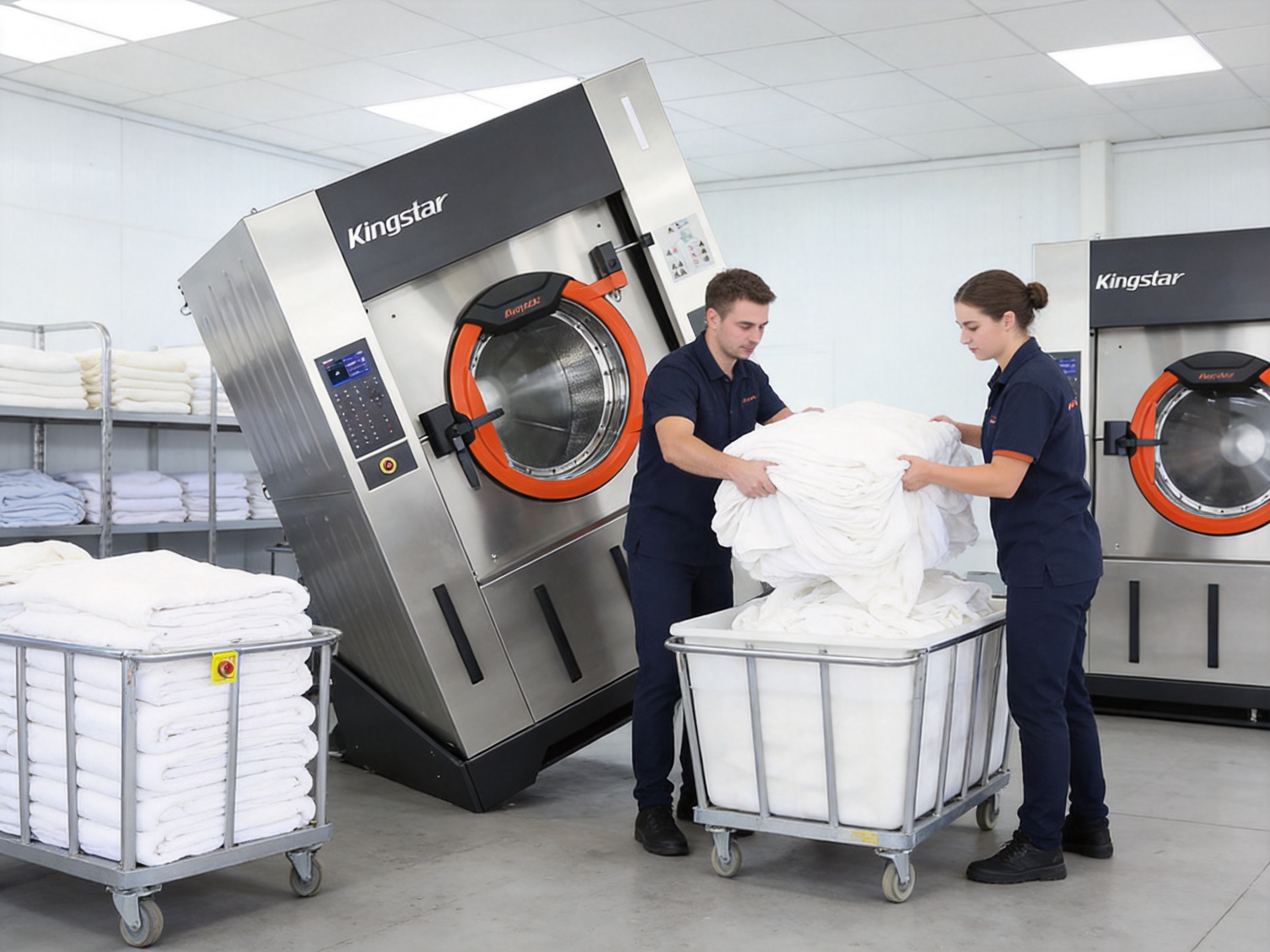
One of the defining features of this model is its forward-tilting structure. The drum and machine body are designed to tilt forward by up to 15 degrees, helping operators move washed textiles toward the front of the machine during unloading.
Unloading large industrial machines can be physically demanding. Without a suitable unloading arrangement, operators may need to reach deeply into the drum, pull heavy wet textiles forward, or spend additional time repositioning the load. Wet laundry is considerably heavier than dry laundry, so reducing manual reaching and lifting can make a meaningful difference to handling efficiency.
The forward-tilting movement supports a more direct transfer from the washer extractor to carts, conveyors, sorting platforms, or other downstream equipment. The exact unloading arrangement will depend on the facility layout, but the tilting function is intended to reduce the distance between the internal drum and the receiving position.
A 15-degree tilting angle represents a practical balance between improved discharge access and stable machine operation. It is sufficient to assist with unloading while keeping the machine suited to a structured industrial installation. For facilities with a high number of daily cycles, even a small reduction in unloading time can accumulate into meaningful productivity gains over a week, month, or year.
High Extraction Performance
The SHS-2120T has a maximum speed of 745rpm and a listed G factor of 400. These specifications are important because extraction performance affects the amount of water remaining in textiles after washing.
A higher extraction force can reduce residual moisture before the load moves to a dryer or finishing line. Lower residual moisture may shorten drying time, reduce thermal energy consumption, and improve the overall throughput of the laundry. In a facility processing many large loads, the extraction stage can have a direct effect on dryer demand and energy management.
The G factor is a useful reference for comparing extraction capability. A G factor of 400 indicates a strong industrial extraction performance suitable for applications that require effective water removal before drying or finishing. The actual result will depend on textile type, load distribution, wash formula, spin time, drain performance, and other operating conditions, but the specification demonstrates that the machine is designed for serious commercial use rather than light-duty washing.
Effective extraction also improves handling. A load that contains less free water is easier to move from the washer extractor to the dryer, press, ironer, or finishing station. Reduced moisture can make carts lighter and can minimize the time required for intermediate storage before drying.
Compared with basic commercial washing machines that offer limited extraction capability, a high-capacity washer extractor can provide a more complete production solution. Washing and extraction are performed in the same machine, avoiding the need to transfer wet textiles to a separate centrifugal extractor. This can reduce handling steps, save floor space, and simplify the process sequence.
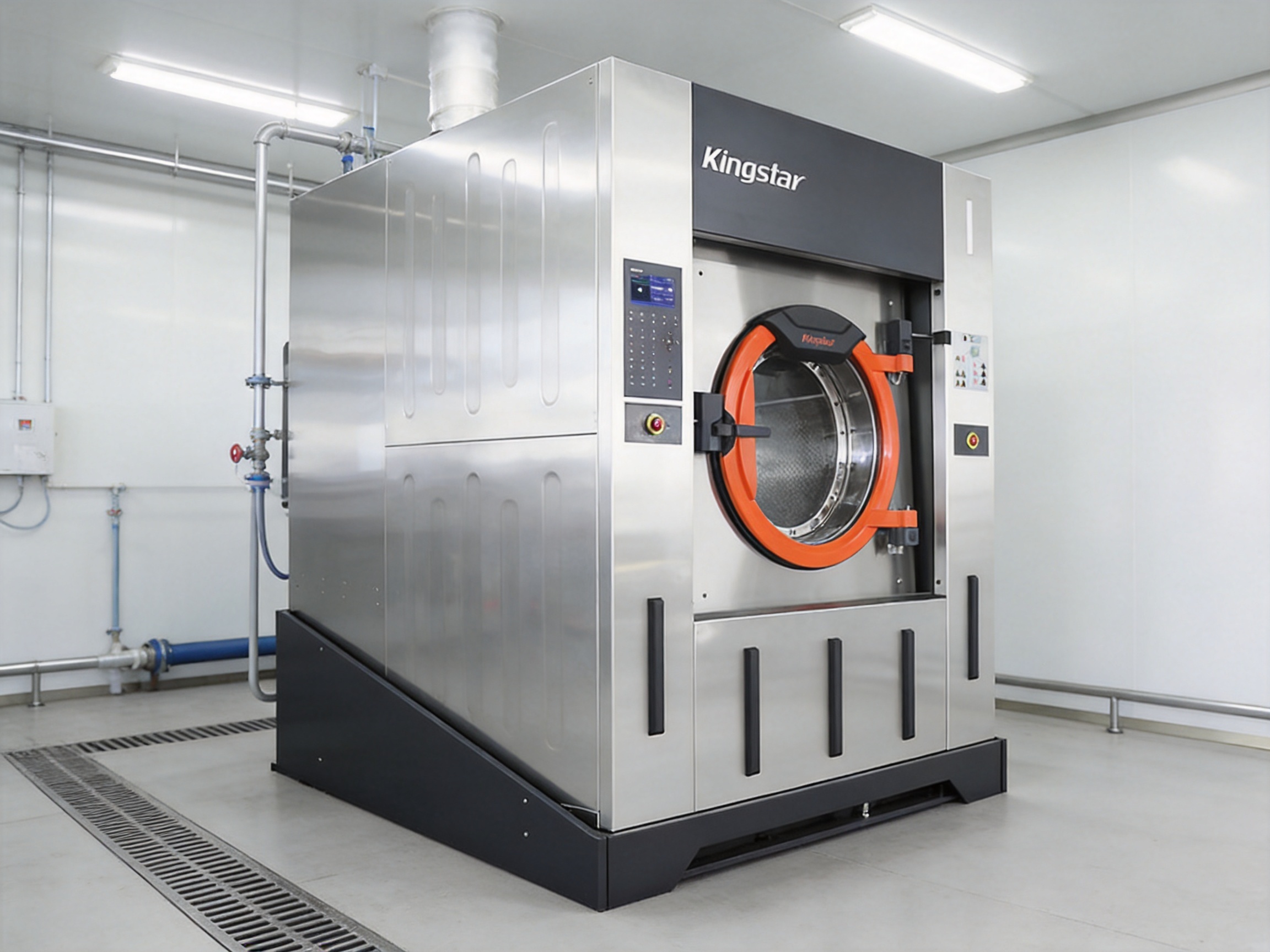
Technical Specification Overview
The following table summarizes the principal specifications supplied for the 120kg Heavy-Duty Forward Tilting Washer Extractor.
| Item | Specification |
|---|---|
| Model | SHS-2120T |
| Rated capacity | 120kg |
| Drum volume | 1,200 liters |
| Voltage | 380V |
| Maximum speed | 745rpm |
| G factor | 400 |
| Motor power | 15kW |
| Steam pressure | 0.4–0.6MPa |
| Water inlet pressure | 0.2–0.4MPa |
| Noise level | ≤70dB |
| Steam connection | DN25 |
| Water inlet connection | DN60 |
| Hot water connection | DN50 |
| Drain connection | DN110 |
| Drum diameter | 1,310mm |
| Drum depth | 950mm |
| Forward-tilting angle | 15 degrees |
| Machine weight | 3,830kg |
| Overall dimensions | 2,100 × 1,850 × 2,350mm |
The specifications indicate that the machine is intended for a prepared industrial environment. A 380V power supply, suitable water pressure, steam availability, hot-water connection, and appropriate drainage infrastructure should be confirmed before installation. Correct utility planning is essential for achieving reliable performance and avoiding interruptions caused by insufficient flow, pressure, or drainage capacity.
Large Drum Geometry and Load Movement
The drum has a stated diameter of 1,310mm and a depth of 950mm. These dimensions create a substantial washing chamber for large commercial loads. Drum geometry affects how textiles are lifted, dropped, soaked, rinsed, and redistributed during the cycle.
In a properly loaded machine, textiles should have enough room to move through the washing liquor instead of forming a tightly compressed mass. Good load movement assists detergent distribution and helps expose more of the fabric surface to mechanical action. This is particularly important for large items such as sheets, blankets, uniforms, and towels.
Drum dimensions also influence accessibility during loading and unloading. The large opening and deep internal chamber provide the volume required for a 120kg load, while the forward-tilting function helps operators bring the processed textiles closer to the front of the machine.
Operators should still follow appropriate loading practices. A washer extractor should not be overloaded beyond its rated capacity, and the load should be distributed as evenly as practical. Underloading can also affect balance, water usage, and mechanical action. Proper loading is therefore part of both performance management and equipment protection.
Steam and Hot-Water Compatibility
The machine is specified for steam pressure between 0.4 and 0.6MPa and includes a DN25 steam connection. Steam compatibility enables the laundry to integrate the washer extractor with a central boiler or steam-generation system where such infrastructure is available.
Steam can support rapid heating and consistent temperature control in industrial washing processes. Many commercial wash formulas use carefully managed temperature stages for cleaning, disinfection support, oil removal, stain treatment, or textile conditioning. The appropriate temperature depends on the fabric, soil type, detergent chemistry, and hygiene requirements of the application.
The machine also includes a DN50 hot-water connection. A hot-water supply can improve process efficiency when the facility already has heated water available. Supplying preheated water may reduce the time needed to reach the desired wash temperature and can allow the laundry to coordinate water heating with broader energy-management strategies.
Steam and hot-water systems must be designed and installed according to local regulations and facility requirements. Pressure, pipe sizing, valves, insulation, condensate management, and safety devices should be reviewed by qualified professionals. Operators should never assume that a utility connection is suitable solely because its nominal pressure appears to match the machine specification.
Water Inlet and Drainage Design
The SHS-2120T is listed with a water inlet pressure range of 0.2 to 0.4MPa and a DN60 water inlet connection. This large connection is appropriate for a high-capacity machine that must fill and rinse efficiently.
Water availability has a direct impact on cycle time and washing consistency. If the inlet pressure is too low, filling may take longer and scheduled production capacity may decrease. If pressure is unstable, repeated cycles may not behave consistently. A properly designed water supply helps the machine maintain predictable operation during washing and rinsing stages.
The drain connection is specified as DN110. Industrial washing produces significant volumes of wastewater, and rapid drainage is important for effective rinsing and cycle management. The drainage system must be capable of handling the flow without backing up, flooding, or slowing the machine.
Drainage should be installed with appropriate slope, capacity, access for maintenance, and protection against blockages. Lint, textile fragments, buttons, packaging materials, and other debris should be prevented from entering the system. Regular inspection of drain channels and filters can help maintain reliable performance.
When planning a laundry room, the water inlet and drain connections should be considered together with the location of chemical dosing equipment, floor drains, collection channels, and wastewater treatment arrangements. Coordinating these elements during the design stage can reduce later modification costs.
Industrial Motor Power and Mechanical Capability
The machine is equipped with a listed motor power of 15kW. Motor power is one of several factors that influence drum rotation, acceleration, extraction, and load-handling capability. The correct relationship between motor output, drive design, drum size, load weight, and control system is essential for reliable operation.
A 120kg washer extractor must manage not only the dry textile load but also the weight of absorbed water during the washing process. It must also control the changing balance of the load as the drum accelerates toward extraction speed. The specified motor capacity reflects the industrial scale of the equipment and its intended application in demanding laundry facilities.
Mechanical power should always be considered alongside installation quality. The machine must be placed on a suitable foundation, leveled correctly, and connected to the appropriate electrical supply. A stable foundation helps control vibration and protects the equipment from unnecessary mechanical stress.
Operators should follow the manufacturer’s instructions for start-up, loading, inspection, and maintenance. Abnormal vibration, unusual noise, delayed acceleration, or repeated imbalance should be investigated rather than ignored. Early attention to operating irregularities can help prevent more serious damage.
Noise Control and Working Environment
The listed noise level is no more than 70dB. This is a useful characteristic for commercial laundries where several machines may operate at the same time and where employees spend long periods in the production area.
Noise performance depends on machine condition, installation, foundation quality, load balance, surrounding walls, and the acoustic characteristics of the laundry room. A properly leveled and maintained machine is more likely to operate smoothly than equipment installed on an unsuitable or uneven base.
Lower noise can contribute to a more comfortable working environment and may make it easier for supervisors and operators to communicate. It can also be beneficial in facilities located near offices, hotels, hospitals, or other occupied areas. Although noise level should not be the only selection criterion, it is an important part of the overall user experience.
Operators should investigate sudden increases in noise. Common causes may include unbalanced loading, loose components, worn bearings, foreign objects, or installation movement. Prompt inspection helps protect both the machine and the surrounding facility.
Material Selection and Product Durability
Industrial washing equipment is exposed to water, detergent solutions, bleach formulations, alkalis, acids, heat, vibration, and repeated mechanical action. For that reason, material selection is central to the long-term value of a washer extractor.
In a machine of this type, the drum and wetted areas must be designed to withstand repeated contact with water and chemical solutions. Surfaces that contact textiles should be smooth and carefully finished to reduce the risk of snagging, tearing, or trapping fabric. External structures must also be able to support the drum, motor, tilting system, and associated piping.
The manufacturer’s product positioning as an industrial laundry equipment supplier indicates a focus on equipment intended for commercial and industrial users rather than occasional household operation. Its heavy machine weight of 3,830kg reflects the substantial structure required for a large-capacity washer extractor.
Durability is not determined by weight alone. It also depends on welding quality, component alignment, bearing selection, shaft design, seals, drive-system construction, electrical protection, surface treatment, and final assembly accuracy. A strong manufacturing process must control each of these areas consistently.
Advanced Manufacturing Approach
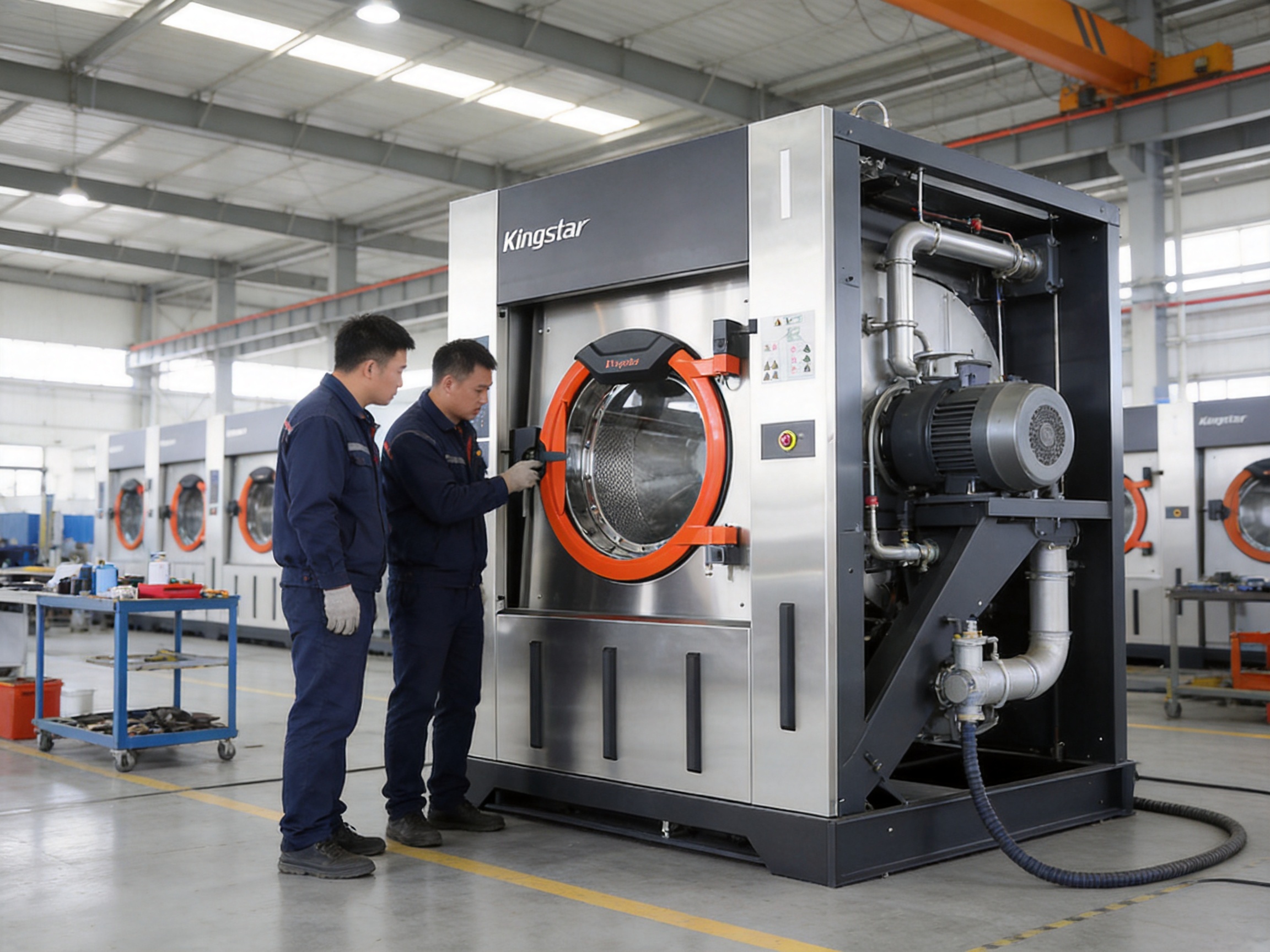
Producing a large forward-tilting washer extractor requires more than simply assembling standard components. The machine combines a large drum, a high-capacity support frame, a drive system, water and steam piping, a tilting mechanism, electrical controls, safety features, and heavy structural elements. These systems must work together accurately throughout repeated cycles.
An advanced manufacturing process begins with engineering review. The design team must evaluate load capacity, drum dimensions, rotational speed, extraction force, structural stress, center of gravity, tilting movement, utility connections, and operator access. The relationship between these factors is especially important in a machine that changes position during unloading.
Fabrication is another important stage. Large structural components require controlled cutting, forming, drilling, and welding. Accurate dimensions help ensure that the frame, drum, bearings, doors, piping, and tilting components align correctly. Consistent welding practices are important because the frame must support substantial static and dynamic loads.
Drum fabrication requires careful attention to circularity, balance, surface finish, and internal geometry. A drum operating at high extraction speed must rotate smoothly. Poor alignment or uneven mass distribution can create vibration, increase bearing stress, and reduce equipment life. Precision during manufacturing and assembly therefore contributes directly to operational stability.
After fabrication, surface finishing and protection help preserve the equipment in a humid laundry environment. Appropriate treatment can support resistance to corrosion and make surfaces easier to clean. Cleanability is particularly important in healthcare, hospitality, and food-service textile applications, where hygiene procedures may be demanding.
The electrical and control systems must be integrated with the mechanical equipment in a logical and serviceable way. Wiring should be organized, protected, and labeled appropriately. Control components should be positioned so that maintenance personnel can inspect them without unnecessary disassembly.
Final assembly should include checks of drum rotation, door closure, tilting movement, water connections, steam connections, drainage, electrical functions, and operating stability. A well-organized manufacturing process uses inspection points throughout production rather than relying only on a final visual review.
Manufacturing Strengths of the Supplier
Jiangsu Chuandao Intelligent Equipment Co., Ltd. is identified as the manufacturer of the product and operates from Nantong, Jiangsu Province, China. The company presents itself as a supplier of washing machines, laundry machinery, and washer extractors, with OEM and ODM capabilities for commercial laundry equipment.
OEM and ODM capability can be valuable to distributors, laundry-project contractors, hotel groups, hospital suppliers, and industrial users with specialized requirements. OEM cooperation may involve adapting product presentation, electrical specifications, documentation, or project configuration. ODM cooperation can involve deeper design coordination for applications requiring different capacities, layouts, controls, or utility arrangements.
The company’s product range includes industrial washing machines, hospital washing machines, industrial dryers, commercial washer extractors, stacked washer and dryer systems, stack dryers, and commercial dryers. This broader product focus can help customers plan a more complete laundry installation rather than sourcing every machine category from unrelated suppliers.
A supplier with experience across multiple laundry equipment categories can better understand the relationship between washing, extraction, drying, and finishing. For example, a high-extraction washer extractor can reduce the moisture load entering a dryer, while a suitable dryer capacity can help prevent a bottleneck after washing. Equipment planning is most effective when the entire process is evaluated as one system.
For international buyers, supplier strength also includes communication, documentation, technical consultation, spare-parts support, packaging, and export coordination. These factors may not appear in a technical specification table, but they influence the success of a commercial laundry project.
Advantages Compared with Smaller or Basic Equipment
The SHS-2120T offers several advantages over smaller washer extractors and basic washing machines when used in an appropriate industrial setting.
First, its 120kg capacity supports high-volume processing. A facility using several small machines may need more loading and unloading labor, more floor space for machine access, and more time to complete the same order. One large-capacity unit can consolidate production when the textile categories and wash formulas are compatible.
Second, the integrated extraction function reduces the need for a separate extractor. Washing and extraction in one machine can simplify the process and reduce the movement of wet textiles. This is especially useful where wet loads must travel a significant distance between machines.
Third, the forward tilt improves unloading ergonomics and production flow. Manual handling remains necessary, but the design can reduce deep reaching and make discharge more direct.
Fourth, the high G factor can reduce the moisture content entering the dryer. A lower moisture load may help reduce drying time and energy consumption, although actual savings depend on textile type, dryer efficiency, operating temperature, and local energy costs.
Fifth, steam and hot-water compatibility provides flexibility. Facilities with centralized heating systems can integrate the washer extractor into their existing utility infrastructure and process design.
Sixth, the listed noise level of no more than 70dB supports a more manageable working environment than equipment that produces excessive operating noise.
Finally, the machine’s industrial construction and heavy weight are appropriate for demanding production environments where equipment is expected to perform repeatedly over long operating periods.
Applications in Different Industries
Hotels and Resorts
Hotels process large quantities of sheets, pillowcases, towels, bathrobes, table linen, and staff uniforms. A 120kg washer extractor can help central laundries manage peak demand, particularly during high-occupancy periods or when several properties share one laundry facility.
The forward-tilting design can assist operators with unloading towels and linen into carts for drying and finishing. High extraction performance can also reduce the amount of water carried into industrial dryers, supporting a faster linen-processing cycle.
Hospitals and Healthcare Facilities
Healthcare laundries require careful separation of textile categories, appropriate chemical programs, and disciplined handling procedures. The machine can be used for suitable healthcare textile applications when configured and operated according to facility hygiene protocols.
Hospitals should establish validated wash formulas, chemical dosing procedures, temperature requirements, staff training, and contamination-control practices. The machine itself is an important part of the process, but hygiene performance depends on the complete laundry system and the procedures used by the facility.
Industrial Workwear Services
Factories, construction companies, workshops, energy facilities, and service providers may send heavily soiled workwear to a central laundry. These loads can include garments exposed to dust, oils, grease, soil, and industrial residues. The large capacity and robust construction of the washer extractor are suitable for companies that process workwear in substantial quantities.
Chemical selection is especially important in this application. Operators should choose products compatible with the textile fibers, soil type, machine materials, and wastewater requirements. Aggressive or unsuitable chemicals can damage fabrics, seals, metal surfaces, or drainage systems.
Textile Rental and Uniform Companies
Textile rental companies need predictable processing and high equipment utilization. Uniforms, towels, mats, bedding, and work garments may return to the facility every day. The SHS-2120T can support batch processing and may help reduce the number of cycles needed during busy periods.
Institutional and Commercial Laundries
Schools, prisons, military facilities, care homes, restaurants, and large catering operations may operate centralized laundry rooms. These facilities often need equipment that is simple to integrate into an established workflow and capable of handling recurring textile volumes.
Safe Operating Practices
Operators should inspect loads before placing them into the machine. Coins, tools, metal parts, stones, and other hard objects can damage the drum, door glass, seals, or internal components. Pockets should be emptied, fasteners should be checked, and items requiring special treatment should be separated.
Hard objects may create impact damage during drum rotation. They can also obstruct drains or become trapped between moving parts. A short inspection before loading is therefore an important preventive measure.
Chemical selection deserves equal attention. Detergents, alkalis, bleaches, neutralizers, and souring agents should be selected according to textile type and wash formula. Chemical products should be dosed accurately and introduced through the intended system. Mixing incompatible chemicals can create dangerous reactions or reduce cleaning effectiveness.
Operators should never exceed the rated 120kg capacity. Overloading can restrict textile movement, increase mechanical stress, reduce washing quality, and contribute to imbalance during extraction. Underloading should also be avoided where possible, since a poorly distributed load may affect stability.
Doors, covers, guards, and safety devices should be checked before operation. The machine should not be operated if a door does not close securely or if a safety interlock appears damaged. Tilting should only be performed when the machine is in the appropriate operating state and the unloading area is clear.
Maintenance personnel should isolate electrical, steam, water, and other energy sources before servicing the equipment. Residual pressure and stored mechanical energy must be controlled according to the facility’s lockout and safety procedures.
Installation Planning
Installation begins with site assessment. The facility must provide enough room for loading, unloading, operator movement, maintenance access, carts, and downstream equipment. The overall machine dimensions are 2,100mm in length, 1,850mm in width, and 2,350mm in height, but the required installation area will be larger once service clearances and workflow space are included.
The machine weighs approximately 3,830kg. The floor and foundation must be capable of supporting the equipment and the dynamic forces generated during operation. A qualified engineer or installation professional should assess the foundation before delivery.
The electrical supply is specified as 380V. Electrical compatibility should be verified against the local power system, including phase configuration, frequency, protection devices, cable sizing, grounding, and isolation requirements. Electrical work should be carried out by qualified personnel.
Steam, hot-water, cold-water, and drainage lines should be positioned according to the connection requirements. The DN25 steam connection, DN60 water inlet, DN50 hot-water connection, and DN110 drain connection should be reviewed during the layout stage. Proper valves and service access should be provided so that maintenance can be performed without shutting down unrelated equipment.
Ventilation and humidity control should also be considered. Industrial laundries release heat and moisture, especially when steam and hot water are used. Adequate ventilation can improve the working environment and help protect electrical and structural components.
Maintenance and Long-Term Value
Regular maintenance protects machine performance and supports a longer service life. Maintenance routines should include inspection of doors, seals, bearings, drive components, piping, valves, electrical connections, and tilting mechanisms.
The drum should be kept free from foreign objects and excessive residue. Chemical buildup can affect surfaces, sensors, drainage, and textile quality. Periodic cleaning according to the operating instructions helps maintain hygienic and mechanical performance.
Water and steam connections should be checked for leaks. A small leak can waste water, create slippery floors, damage nearby components, or contribute to corrosion. Steam systems require particular caution because hot surfaces and pressurized lines present safety hazards.
Drainage should be inspected regularly. Slow drainage can extend cycle times and interfere with rinsing. Lint and debris should be removed from accessible filters and channels according to the maintenance schedule.
Operators should record unusual vibration, changes in noise, temperature irregularities, delayed filling, slow drainage, and changes in extraction behavior. A maintenance log helps identify trends before they become major failures.
Preventive maintenance is generally more cost-effective than emergency repair. It can reduce unplanned downtime, protect textile quality, and make spare-parts planning easier. For a large-capacity machine, preventing a production interruption may be especially valuable because one machine can represent a significant portion of the facility’s daily processing capability.
Energy and Productivity Considerations
Productivity should be evaluated across the complete laundry process rather than by looking only at the washing cycle. The capacity of the washer extractor, extraction performance, dryer capacity, labor arrangement, chemical program, and textile flow all influence the cost per kilogram processed.
The 120kg capacity can help consolidate batches and reduce repeated loading work. The G factor of 400 may reduce residual moisture before drying. Steam and hot-water connections provide options for integrating the machine with a centralized energy system. These characteristics may support efficient production when the machine is properly matched to the facility’s workload.
Actual energy performance depends on many factors. These include water temperature, wash formula, bath levels, textile composition, load size, extraction duration, dryer technology, steam efficiency, utility prices, and operator practices. A realistic evaluation should use the facility’s own production data rather than relying only on nominal specifications.
Water conservation can also be addressed through correct load sizing and suitable wash programming. Excessive rinsing, underloaded cycles, and unnecessary reprocessing increase water use. Consistent sorting and accurate chemical dosing can help reduce rejected loads and improve first-pass quality.
Why Process Integration Matters
A washer extractor should be selected as part of a complete laundry system. The machine’s output must connect smoothly with carts, dryers, finishing equipment, storage areas, and quality-control stations.
The forward-tilting feature is particularly useful when the receiving cart or conveyor is positioned to accept the load directly. If the unloading area is poorly designed, the benefit of the tilt may be reduced. Therefore, the equipment layout should be developed around the movement of textiles rather than around machine placement alone.
For facilities using industrial dryers, the washer extractor’s extraction performance should be considered when selecting dryer capacity. If a load retains less moisture, the dryer may process it more quickly. Conversely, if the dryer is undersized relative to the washer extractor, the dryer may become the production bottleneck.
Batch identification and textile separation are also important. Large machines can process a significant quantity at once, but the facility must maintain control over which textiles are combined. A well-designed workflow supports traceability, protects textile quality, and reduces the risk of cross-contamination or chemical incompatibility.
Purchasing Considerations for International Buyers
Buyers should compare more than capacity and price when evaluating industrial washer extractors. Important questions include electrical compatibility, utility requirements, installation support, spare-parts availability, warranty terms, documentation, operator training, packaging, delivery conditions, and after-sales communication.
The manufacturer’s ability to provide OEM and ODM cooperation may be useful for buyers with project-specific needs. Before placing an order, customers should clarify the desired voltage, frequency, control language, connection standards, door arrangement, delivery scope, commissioning requirements, and local compliance obligations.
Buyers should also confirm the meaning of all technical terms and units in the final commercial documentation. Specifications such as pressure, voltage, capacity, noise, and dimensions should be reviewed carefully so that the equipment matches the planned installation.
A pre-shipment inspection may include checking dimensions, component condition, drum rotation, door operation, tilting movement, electrical labeling, piping connections, and documentation. For large equipment, clear communication before shipment can prevent costly changes at the installation site.
Quality-Oriented Production Philosophy
For a heavy-duty washer extractor, quality is the result of many controlled details. Structural accuracy, drum balance, surface finishing, correct utility connections, electrical organization, and final testing all contribute to dependable operation.
An advanced production philosophy treats the machine as an integrated system. The drum cannot be evaluated separately from the frame, and the tilting mechanism cannot be evaluated separately from the center of gravity and unloading workflow. Similarly, the extraction system must be considered together with vibration control, bearing support, foundation requirements, and load distribution.
This integrated perspective is one of the important strengths expected from an experienced industrial laundry equipment manufacturer. The company’s product range and OEM/ODM orientation indicate a business model focused on commercial applications, project requirements, and equipment solutions rather than only standardized consumer products.
For customers, the practical benefit is the ability to discuss the entire laundry application with a supplier that understands industrial washing, extraction, drying, and related machinery. Technical consultation before purchase can help identify the right capacity, utility configuration, and workflow arrangement.
Q&A
What is the rated capacity of the washer extractor?
The rated capacity is 120kg. This makes the machine suitable for high-volume commercial and industrial laundry applications.
What is the model number?
The model is SHS-2120T.
What does the forward-tilting function do?
The machine can tilt forward by up to 15 degrees to help move washed textiles toward the front during unloading. This can reduce manual reaching and support a more efficient transfer to carts or downstream equipment.
What is the maximum extraction speed?
The maximum listed speed is 745rpm. The machine has a G factor of 400, indicating strong industrial extraction capability.
Why is a high G factor important?
A high G factor can remove more water from textiles during extraction. This may reduce the moisture entering the dryer and support shorter drying times, depending on the textile type and operating program.
What is the drum volume?
The drum volume is 1,200 liters. The drum diameter is 1,310mm, and the drum depth is 950mm.
What power supply is required?
The listed voltage is 380V. Buyers should confirm the local electrical frequency, phase configuration, protection requirements, and installation conditions before ordering.
Does the machine use steam?
The machine is specified with a DN25 steam connection and a steam pressure range of 0.4 to 0.6MPa. Facilities should ensure that their steam system is correctly designed and safely installed.
Does it have a hot-water connection?
Yes. The listed hot-water connection is DN50. The hot-water supply should be matched to the facility’s pressure, temperature, flow, and safety requirements.
What water inlet pressure is required?
The specified water inlet pressure is 0.2 to 0.4MPa, with a DN60 water inlet connection.
What size is the drain connection?
The listed drain connection is DN110. The facility’s drainage system must be able to handle the volume and flow produced by a 120kg industrial washer extractor.
What is the listed noise level?
The listed noise level is no more than 70dB. Actual site noise may vary according to installation, foundation, load balance, room acoustics, and machine condition.
How much does the machine weigh?
The listed machine weight is approximately 3,830kg. The installation floor and foundation must be assessed for both static weight and operating forces.
What types of textiles can it process?
Typical applications may include hotel linen, towels, uniforms, workwear, healthcare textiles, bedding, table linen, and other commercial fabrics. The wash formula must always match the textile type and soil level.
Can hard objects be placed in the machine?
No. Coins, tools, stones, metal parts, and other hard objects should be removed before loading. They may damage the drum, door, seals, drainage system, or other components.
How should chemicals be selected?
Chemicals should be selected according to the textile material, soil type, wash temperature, machine compatibility, and facility procedures. Accurate dosing and safe chemical handling are essential.
Who manufactures this washer extractor?
The product is manufactured by Jiangsu Chuandao Intelligent Equipment Co., Ltd., a supplier of industrial and commercial laundry machinery based in Nantong, Jiangsu Province, China.
Does the manufacturer support OEM and ODM cooperation?
The supplied company information identifies OEM and ODM commercial washer extractor services as part of its business offering. Project requirements should be discussed directly with the manufacturer before ordering.
Conclusion
The 120kg Heavy-Duty Forward Tilting Washer Extractor is designed for laundry operations that require substantial capacity, strong extraction, practical unloading, and industrial-grade utility connections. Its 1,200-liter drum, 745rpm maximum speed, G factor of 400, 15kW motor, 15-degree forward tilt, steam compatibility, hot-water connection, and high-capacity drainage arrangement make it suitable for demanding commercial environments.
Its main advantages over smaller or more basic equipment include greater batch capacity, integrated washing and extraction, reduced wet-laundry handling, improved unloading ergonomics, and the potential to reduce moisture entering the drying stage. These benefits are especially relevant to hotels, hospitals, textile rental companies, workwear laundries, institutional facilities, and centralized industrial laundry plants.
The value of the machine also depends on manufacturing quality, installation accuracy, correct utility planning, safe chemical use, proper loading, and preventive maintenance. A high-capacity washer extractor performs best when it is integrated into a complete laundry workflow designed around textile movement, energy use, drainage, drying, and operator safety.
With industrial laundry machinery expertise, a broad product range, and OEM/ODM project capability, Jiangsu Chuandao Intelligent Equipment Co., Ltd. can support customers seeking commercial washing and textile-processing equipment. Buyers should evaluate their own production requirements, utility conditions, facility layout, and local compliance needs before final selection.
References
1. Product specification sheet for the SHS-2120T 120kg Heavy-Duty Forward Tilting Washer Extractor.
2. Industrial laundry equipment planning and installation principles.
3. Commercial textile washing, extraction, drying, and material-handling practices.
4. General guidelines for safe industrial chemical handling and laundry-machine operation.
5. General engineering principles for drum balance, vibration control, utility connection, and preventive maintenance.
Product: 120kg Heavy Duty Forward Tilting Washer Extractor

ADD:No.388 Xinggang Road, Chongchuan District, Nantong City, 226000, Jiangsu Province, China.
-
Phone: +86-13917089379
-
Tel:+86-13917089379
-
Fax:+86-0513-85663366
-
E-mail:louislu@kingstarlaundry.com
products