英语
英语 俄语
俄语 西班牙语
西班牙语 德语
德语
Home / Author / Yutong Cai — Customer Solutions Specialist / Professional 20/25 kg Wet Cleaning Washer for High-Efficiency Laundry Operations

Kingstar is your trusted partner for industrial and commercial laundry equipment. We specialized in the R&D and manufacturing of high-end industrial washers, commercial washers and dryers. Meanwhile, we provide global clients with comprehensive planning, layout workflow design, and software-hardware integration services for smart laundry plants.
Yutong Cai — Customer Solutions Specialist
Sep 28,2026
Professional 20/25 kg Wet Cleaning Washer for High-Efficiency Laundry Operations
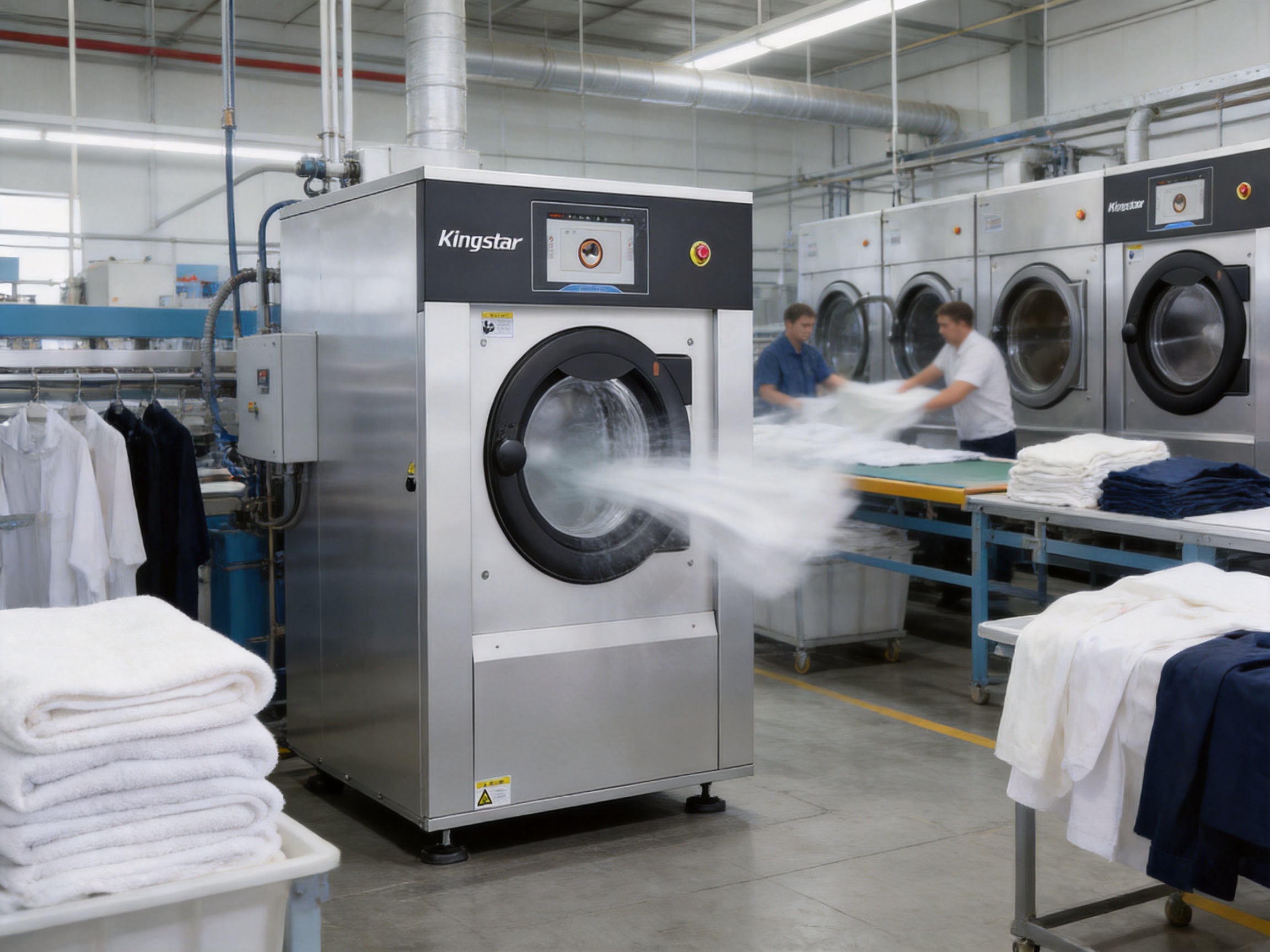
Professional laundry operations require equipment that can combine cleaning power, fabric protection, productivity, automation, and long-term reliability. A commercial washer is no longer judged only by how much linen it can hold. Operators must also consider water consumption, chemical dosing, extraction performance, labor requirements, machine stability, maintenance access, control flexibility, and the ability to process different types of textiles safely. The professional 20/25 kg wet cleaning washer has been developed to meet these increasingly demanding requirements.
Available in SHS-2020P and SHS-2025P configurations, this washer is designed for commercial laundries, hotels, hospitals, textile-care businesses, uniform services, dry-cleaning facilities, and other professional applications. Its flexible washing capacity ranges from 8 to 20 kg or 8 to 25 kg, allowing users to process smaller delicate loads as well as full production loads. The machine combines a programmable control system, high-speed extraction, intelligent weighing, automatic detergent dosing, stainless-steel construction, and carefully engineered mechanical components in one complete washing solution.
Compared with ordinary washing machines, this professional washer provides a higher degree of automation and a broader range of operating adjustments. It can be programmed for different fabric types, load conditions, temperatures, washing times, drum speeds, extraction speeds, and rinsing requirements. These functions are especially valuable for laundries that process mixed textiles and need consistent results across many different customers and applications.
1. The Role of a Professional Wet Cleaning Washer
Wet cleaning is a specialized textile-care process that uses water, carefully selected detergents, controlled mechanical action, and precise temperature management to clean garments and household textiles. It is suitable for many fabrics that require more care than conventional industrial washing can provide. When the washing process is properly controlled, wet cleaning can remove soil efficiently while reducing unnecessary stress on fibers, seams, buttons, zippers, and surface finishes.
A professional wet cleaning washer must therefore do more than rotate a drum. It must coordinate the movement of the load, the amount of water, the concentration of detergent, the wash temperature, the rinsing sequence, and the final extraction process. It must also provide operators with sufficient flexibility to adjust the program for wool, silk, cashmere, down-filled garments, uniforms, towels, bedding, healthcare textiles, and other items.
The SHS-2020P and SHS-2025P washers are designed around this principle. Their programmable systems allow the operator to select and adjust washing actions according to textile characteristics. The washer can use gentle drum movement for delicate articles, more intensive action for heavily soiled textiles, and controlled high-speed extraction when the load requires reduced residual moisture before drying or finishing.
This level of control gives professional laundries a practical advantage over basic commercial washing machines. Instead of relying on a limited number of fixed programs, operators can adapt the process to the actual requirements of each load. That flexibility can improve cleaning quality, reduce fabric damage, lower rewash rates, and make production planning more predictable.
2. Main Models and Technical Configuration
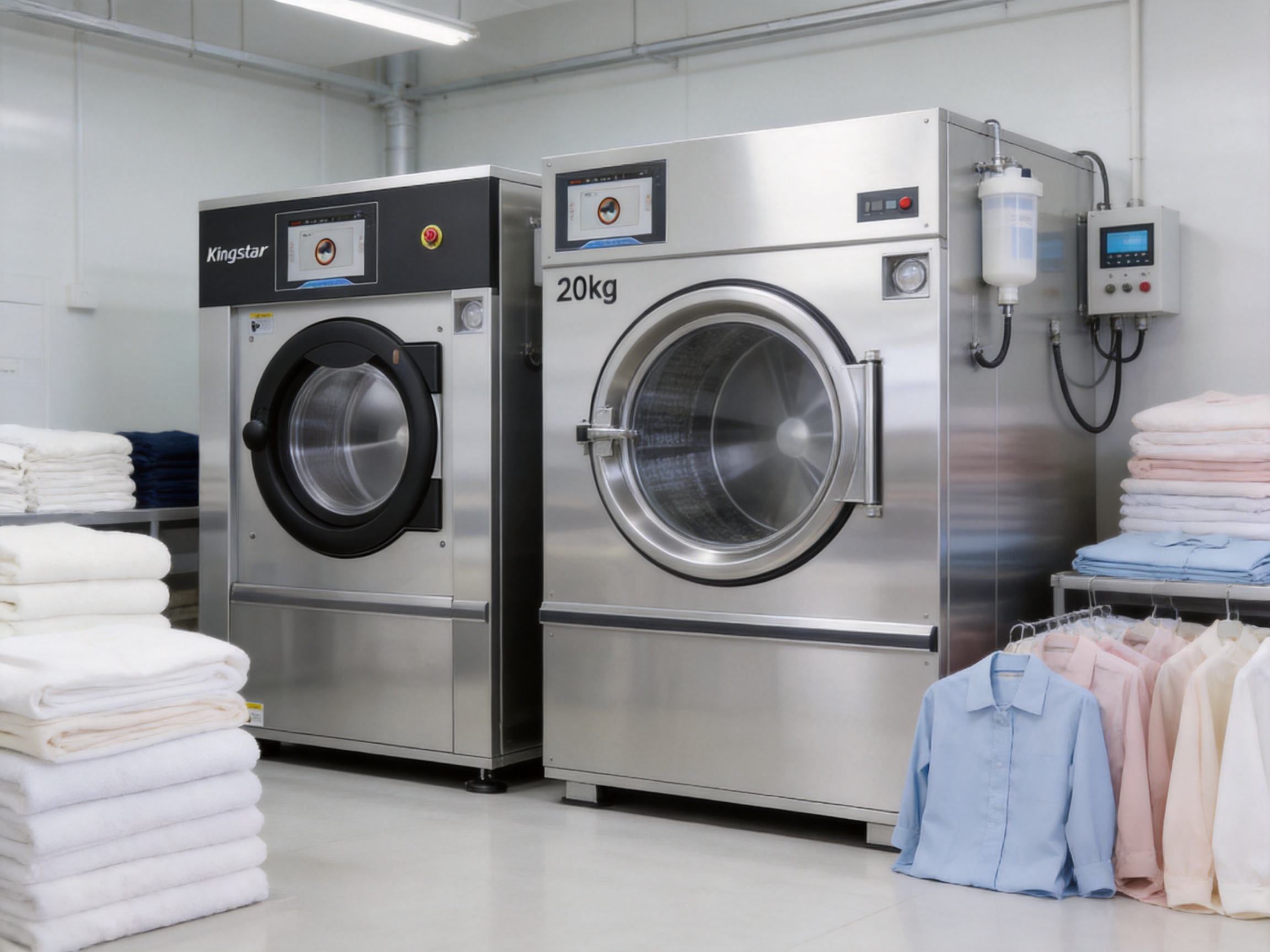
The product range includes two closely related models. The SHS-2020P is designed for loads of approximately 8 to 20 kg, while the SHS-2025P can process approximately 8 to 25 kg. Both models use a drum volume of 200 liters and operate with the same standard voltage configuration of 380 V, three-phase, 50 Hz, subject to the available voltage options and the electrical requirements of the installation location.
| Specification | SHS-2020P | SHS-2025P |
| Washing capacity | 8 to 20 kg | 8 to 25 kg |
| Drum volume | 200 liters | 200 liters |
| Washing and spinning speed | 15 to 980 rpm | 15 to 980 rpm |
| Transmission power | 2.2 kW | 3 kW |
| Electrical heating power | 18 kW | 18 kW |
| Noise level | 70 dB or lower | 70 dB or lower |
| Extraction factor | 400 G | 400 G |
| Automatic dosing ports | 9 | 9 |
| Overall dimensions | 980 × 1,050 × 1,570 mm | 980 × 1,160 × 1,570 mm |
| Total weight | 455 kg | 465 kg |
The two models share many important features, including a maximum spinning speed of 980 rpm, a 400 G extraction factor, nine automatic dosing ports, a maximum electrical heating power of 18 kW, and a noise level of 70 dB or lower. The main difference is the usable loading range and the corresponding drum depth and transmission power.
The SHS-2020P has an inner drum diameter and depth of 750 × 455 mm, while the SHS-2025P uses a deeper drum measuring 750 × 566 mm. Their overall widths and weights also differ slightly. This enables buyers to select a capacity that matches their production volume, floor space, and typical load size without purchasing a machine that is unnecessarily large for their operation.
3. Intelligent Washing and Fabric Protection
One of the most important advantages of this professional washer is its intelligent washing system. The system is designed to coordinate drum speed and rotation-to-pause ratios according to the textile being processed. These controls are essential because excessive mechanical action can shorten the useful life of delicate fabrics, while insufficient movement may result in poor soil removal.
The washer can operate at very low drum speeds, with a minimum speed of approximately 10 rpm in the intelligent washing system. This setting is useful for high-value or delicate textiles, including silk, wool, cashmere, fine garments, and other materials that require a softer washing action. At the opposite end of the operating range, the washer can deliver strong movement and high-speed extraction for more durable textiles and heavily soiled loads.
More than 70 customizable wash programs can be configured for different products and operating conditions. A laundry may create separate programs for hotel sheets, bath towels, healthcare textiles, workwear, down jackets, wool garments, delicate clothing, and customer-specific requirements. Once a suitable program has been developed, user-defined settings can be transferred across compatible machines, supporting consistent production in facilities with multiple washers.
The control system includes a 12.1-inch full-color LCD touchscreen. A large display makes it easier for operators to select programs, view cycle status, adjust parameters, and identify operating conditions. The touchscreen interface also reduces the need for complicated manual controls. A one-touch operation function can allow the operator to start a complete programmed cycle after loading and selecting the desired program.
Each program can be configured with individual settings for the main washing speed, high-speed extraction speed, wash duration, temperature, and other process stages. This is particularly useful for laundries that handle textiles with different fiber compositions or levels of soil. Operators can develop a gentle cycle for fragile garments, a balanced cycle for uniforms, and a high-performance cycle for towels and bedding without changing the machine hardware.
The interface between the inner drum and the outer cylinder is designed with rolled edges and a clearance of approximately 4 to 6 mm. A narrow, smooth transition helps reduce the likelihood of fabric becoming trapped between moving and stationary components. This is an important detail for garments with thin straps, loose edges, decorative elements, or small fasteners.
The convex glass door design helps keep garments away from the loading port. Zippers, buttons, hooks, and similar components are less likely to catch against the door opening during drum movement. In combination with the smooth drum edges, this design supports safer processing and helps reduce the risk of avoidable garment damage.
All water-contact surfaces, including the inner drum and outer cylinder, are made from 304 stainless steel. This material provides strong corrosion resistance and is suitable for repeated exposure to water, detergents, chemicals, and elevated temperatures. Stainless-steel construction also supports hygienic operation and simplifies cleaning compared with materials that can corrode, absorb contamination, or deteriorate under regular chemical exposure.
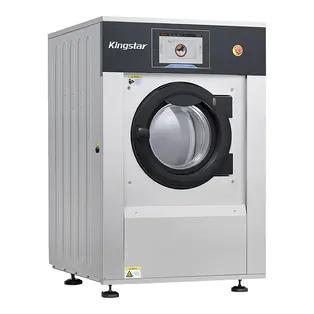
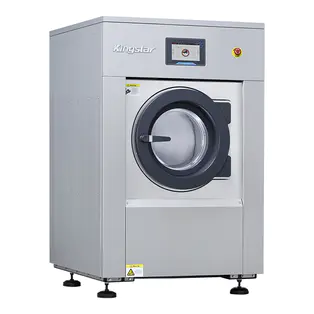
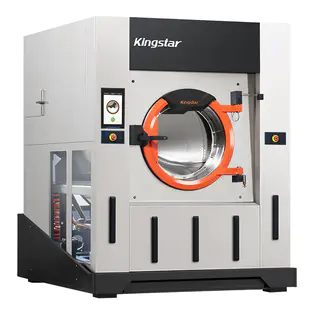
Professional Washer( Wet Cleaning Washer )20/25kg
4. Advanced Inner Drum and Integrated Spraying System
The inner drum is a central component of any commercial washer because it directly influences mechanical action, water circulation, fabric movement, and long-term durability. The drum used in this professional washer is manufactured with mold technology and specialized equipment. A controlled manufacturing process supports dimensional accuracy, structural consistency, and a smooth internal surface.
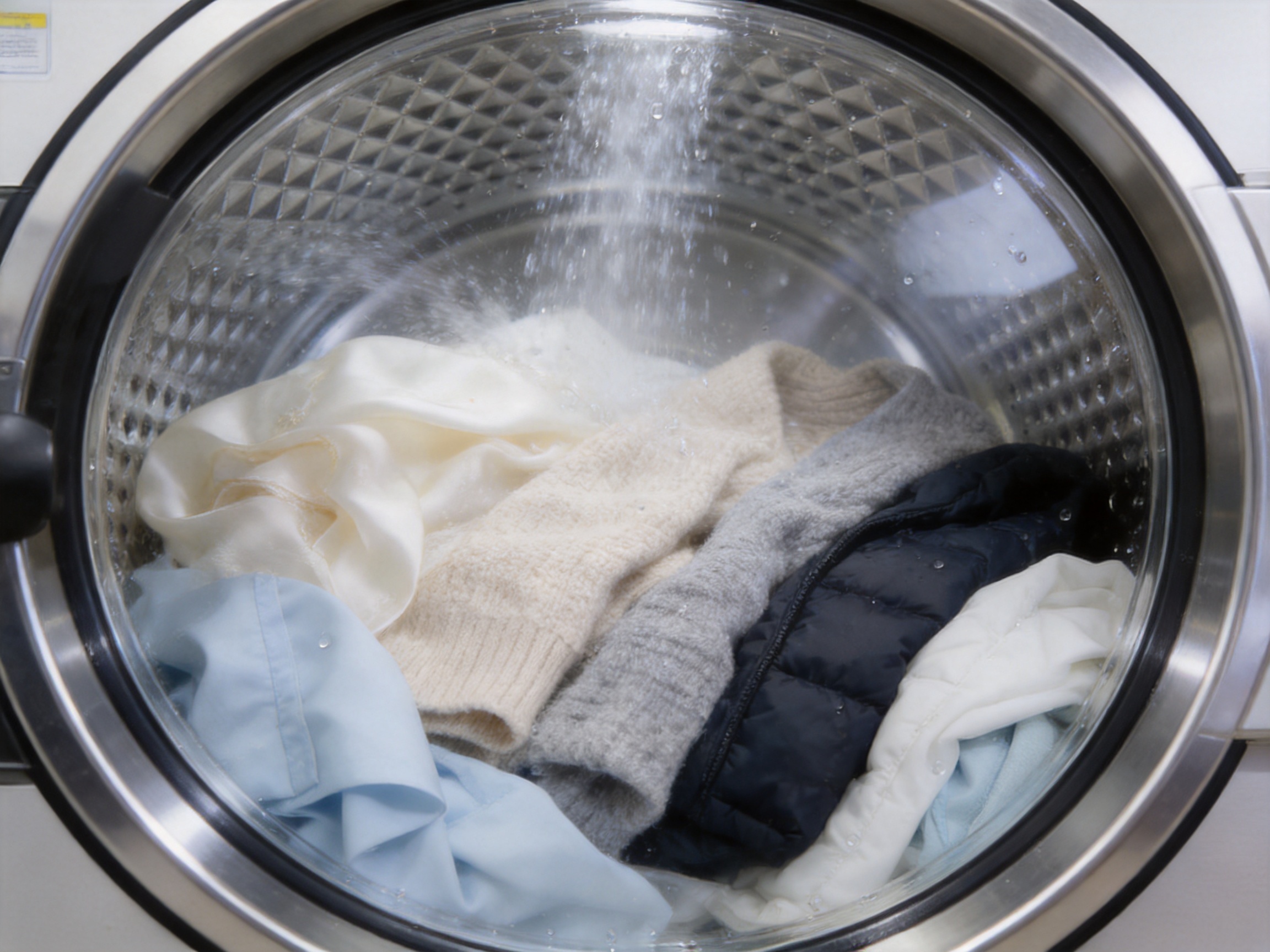
The drum uses a diamond-patterned perforated surface. The pattern increases the effective contact area between the textiles, water, detergent, and drum surface. Improved contact can support better soil release while avoiding unnecessarily aggressive mechanical action. The perforation design also contributes to water drainage and helps remove suspended particles from the load.
The product information specifies small perforation openings of approximately 3 mm for the advanced inner drum design, while the technical table lists a perforation diameter of 3.5 mm for the machine configuration. This type of carefully controlled perforation is intended to balance water flow, drainage speed, fabric support, and protection against snagging.
An integrated spray rinsing system assists in removing lint and residual detergent from the load and drum area. Spray rinsing can help improve the cleanliness of the final rinse stage and support more hygienic results. It is also useful when processing textiles that release fibers or lint during washing, such as towels, fleece materials, and certain healthcare garments.
Compared with simpler machines that depend only on drum immersion and standard water exchange, an integrated spray system can offer additional rinsing action. This may help reduce detergent residue, improve the appearance and feel of finished textiles, and support more consistent results when the washer is used in a high-throughput environment.
5. Intelligent Weighing and Resource Management
Professional laundries need to control utility costs without compromising washing quality. Water, heating energy, detergent, steam, electricity, labor, and drying capacity all contribute to the cost of each processed kilogram. The intelligent weighing system helps address this challenge by determining the actual load condition and adjusting water, detergent, and steam usage accordingly.
Many conventional washers operate with fixed quantities regardless of whether the load is near capacity or significantly smaller. This can result in wasted water and chemicals during underloaded cycles. By adjusting the process according to actual load weight, the professional washer can help the laundry use resources more proportionally.
Intelligent weighing is also valuable for maintaining consistent washing performance. A smaller load may require a different water-to-textile ratio from a full load. If the water quantity is too high, mechanical action and chemical concentration may become less effective. If the quantity is too low, textiles may not move freely or receive adequate rinsing. Automatic adjustment helps bring the process closer to the intended operating conditions.
The system can also adjust detergent and steam consumption. Automatic detergent dosing through nine dosing ports enables the machine to receive multiple liquid chemicals or treatment products at precisely controlled stages. This supports repeatable chemical delivery and reduces the risk of operator error caused by manual measuring.
Consistent dosing is important for both product quality and cost control. Too little detergent may produce poor cleaning and increase rewash rates. Excessive detergent can create residue, increase water requirements for rinsing, and raise chemical expenditure. Automated dosing helps the laundry establish repeatable recipes and monitor consumption more effectively.
The washer can also be configured for steam heating within a steam pressure range of approximately 0.2 to 0.4 MPa. Electrical heating is available at a rated power of 18 kW. The appropriate heating method depends on the facility’s energy infrastructure, operating preferences, local utility costs, and installation requirements.
6. High Extraction Performance and Lower Drying Costs
Extraction performance is one of the most influential factors in the total cost of a laundry process. After washing, textiles retain a significant amount of water. The more moisture that remains in the load, the longer the dryer must operate. A strong extraction stage can therefore reduce drying time, energy consumption, and dryer wear.
The SHS-2020P and SHS-2025P provide a rated extraction factor of 400 G and a maximum spinning speed of 980 rpm. This high extraction capability is suitable for professional operations that need to move laundry efficiently from washing to drying or finishing.
High extraction can be particularly useful for down jackets, heavy garments, towels, bedding, and other textiles that retain large quantities of water. Removing more moisture before drying can help prevent excessive drying time and reduce the risk of water spotting. It may also improve production capacity by allowing the same dryer to process more loads during a working shift.
Extraction must be balanced with load distribution and mechanical stability. The washer uses an intelligent extraction design intended to maintain low vibration, controlled noise, and stable operation during high-speed spinning. Proper loading, correct installation, and routine maintenance remain important, but the machine’s structural and control design provides a strong foundation for reliable extraction.
From a business perspective, high extraction performance can create benefits beyond energy reduction. Faster drying may shorten the time required to complete customer orders. It can also reduce bottlenecks when the dryer section has less capacity than the washing section. By removing more water in the washer, the entire production line can operate more efficiently.
7. Twenty-Two Design Optimizations for Commercial Efficiency
The professional wet cleaning washer incorporates 22 design optimizations compared with standard commercial washing equipment. These improvements cover automation control, washing-cycle structure, mechanical agitation, surface contact friction, detergent dosing, drainage, and other aspects of the washing process.
Automation control is important because it reduces dependence on individual operator technique. A consistent program can ensure that each load receives the intended sequence, temperature, duration, chemical dosing, and extraction treatment. This supports repeatable quality even when shifts change or multiple employees operate the same equipment.
Washing-cycle structure influences how quickly and thoroughly soil is removed. A well-organized cycle can include controlled wetting, prewashing, main washing, intermediate extraction, rinsing, neutralization, final rinsing, and high-speed extraction. The exact sequence can be adjusted to match the textile and the cleaning objective.
Mechanical agitation must be strong enough to release soil but controlled enough to avoid premature fiber wear. The washer’s programmable speed range and rotation-to-pause settings help operators select the appropriate level of action. This is a major advantage when the same machine is used for both durable commercial linens and delicate garments.
Surface contact friction is another important factor. The inner drum pattern, smooth edges, convex door glass, and controlled drum movement work together to promote effective contact while reducing snagging and unnecessary abrasion. The objective is to clean the textile rather than damage it during the cleaning process.
Drainage design affects both productivity and rinsing quality. Efficient drainage helps remove dirty water, suspended soil, and chemical residues before the next stage. The washer uses a drain pipe diameter of approximately 76 mm, supporting the removal of water from the machine according to the installation conditions.
These optimizations give the washer an advantage over equipment that focuses only on nominal load capacity. Two machines may both be described as 20 or 25 kg washers, but their real operating value can differ substantially depending on control accuracy, extraction performance, fabric protection, dosing reliability, and maintenance requirements.
8. Manufacturing Processes and Engineering Strengths
The performance of a commercial washer depends not only on its software and visible features but also on the quality of its manufacturing processes. A professional machine must withstand repeated loading, high-speed extraction, chemical exposure, temperature changes, vibration, and long operating hours. The manufacturer therefore places emphasis on structural design, component selection, assembly quality, and process control.
The machine frame uses a weld-free manufacturing process. Avoiding extensive welding can reduce areas of concentrated thermal stress and help limit stress-related deformation in the main structure. A stable frame supports accurate alignment of the drum, transmission, door, bearings, and other moving components.
Structural stability is especially important during high-speed extraction. If the frame or supporting components deform over time, vibration may increase and alignment may deteriorate. A carefully produced frame can help maintain stable operation, reduce noise, and protect the transmission system from unnecessary loads.
The main transmission uses a three-bearing design. This configuration is intended to support the rotating assembly and distribute operational loads more effectively. Bearings and oil seals are sourced from imported brands, helping support long service life and reducing the likelihood of premature leakage or bearing failure when the machine is correctly installed and maintained.
The product information indicates that the transmission is designed for long-term use with a potential maintenance-free period of up to five years for bearing and oil-seal replacement under appropriate operating conditions. Actual service life depends on load balance, installation, maintenance, water quality, chemical use, operating frequency, and other site conditions.
Component selection also contributes to electrical reliability. The main motor is custom-made by a listed Chinese company. Bearings are supplied by TWB, while circuit breakers, contactors, and relays are sourced from Schneider. Wires, plugs, and fasteners are also selected from established imported brands. The use of recognized components can support stable operation and make replacement or service planning more predictable.
Component quality is particularly important in a machine with automatic dosing, touchscreen control, heating, high-speed extraction, and multiple safety functions. A failure in a small electrical component can stop an entire production line. Reliable switches, relays, contactors, wiring, and protection devices help reduce unexpected downtime.
9. Advantages Over Ordinary Commercial Washers
The first advantage is control flexibility. Basic commercial washers often provide a limited number of preset cycles. This professional washer supports more than 70 customizable programs, enabling laundries to build a library of tested recipes for their main textile categories. The ability to adjust drum speed, extraction speed, time, and temperature provides greater control over both cleaning quality and fabric care.
The second advantage is intelligent resource use. Weighing and automatic adjustment help prevent the unnecessary use of water, steam, detergent, and energy. This is valuable for facilities that process different load sizes throughout the day. The machine can be used for a relatively small delicate load without requiring the same resource input as a full production load.
The third advantage is high extraction. A 400 G extraction factor can reduce residual moisture and shorten subsequent drying. Machines with lower extraction capability may transfer more water to the dryer, increasing drying time and energy consumption. The higher extraction performance of this washer can therefore improve the efficiency of the complete laundry workflow.
The fourth advantage is fabric protection. Smooth internal transitions, a narrow drum-to-cylinder clearance, a convex glass door, low-speed operation, and programmable movement help protect sensitive textiles. A machine that produces clean results while reducing garment damage can help lower replacement costs and improve customer satisfaction.
The fifth advantage is automation. Automatic detergent dosing, touchscreen control, programmable recipes, one-touch cycle operation, and intelligent weighing reduce the number of manual decisions required from operators. This can make training easier and reduce variations caused by inconsistent procedures.
The sixth advantage is durability. Stainless-steel water-contact surfaces resist corrosion, the weld-free frame supports structural stability, and the three-bearing transmission is designed for long service. These features can help the equipment remain productive over many years, making the initial investment more valuable over its operating life.
The seventh advantage is application flexibility. The washer can be used in professional laundries, hotels, hospitals, textile rental services, uniform processing centers, dry-cleaning businesses, and specialized garment-care facilities. Its combination of capacity and precise control allows it to serve both general commercial work and more demanding wet-cleaning applications.
10. Applications in Different Laundry Sectors
Hospitality and Hotel Laundry
Hotels process large quantities of sheets, pillowcases, towels, bathrobes, table linens, and staff uniforms. These items must be cleaned frequently and returned to service quickly. The 20/25 kg capacity range is suitable for medium-sized and large hotel laundry rooms that need to manage regular linen flows without using oversized equipment for every load.
Programmable washing settings allow the operator to use separate recipes for white cotton linens, colored textiles, towels, and delicate guest garments. High extraction can reduce the workload on dryers, while automatic dosing helps maintain consistent chemical concentration across repeated cycles.
Healthcare and Institutional Laundry
Hospitals, clinics, nursing homes, and care facilities require dependable washing and rinsing. Textiles may include patient garments, bed linen, towels, medical uniforms, and other items that require controlled processing. Stainless-steel water-contact surfaces, customizable programs, spray rinsing, and automated chemical delivery support consistent hygiene-oriented workflows.
Healthcare facilities can also benefit from traceable operating procedures. Once approved programs have been established, they can be used repeatedly by different shifts. This reduces reliance on individual judgment and helps maintain a standardized process.
Commercial Laundries
Commercial laundries often process orders from multiple customers with different requirements. One customer may need a gentle cycle for high-value garments, while another may require intensive washing for workwear or heavily soiled linens. More than 70 programs and adjustable mechanical action allow the same machine to handle a broad range of orders.
Automatic dosing and weighing can improve production consistency, while high extraction helps control the transition to the drying stage. Together, these functions can support higher throughput and lower operating costs.
Uniform and Workwear Services
Uniforms and workwear may contain oil, grease, dust, food residue, or industrial soil. They may also include zippers, buttons, reflective strips, labels, and reinforced seams. The washer’s adjustable washing action allows operators to select stronger cleaning when needed while maintaining a controlled process that limits avoidable mechanical stress.
Dry-Cleaning and Garment-Care Businesses
Many garment-care businesses provide both dry cleaning and wet cleaning. A programmable wet cleaning washer gives these businesses an additional service capability for garments that can be safely cleaned in water. The low-speed setting, fabric-protection features, customizable temperature control, and controlled extraction are useful when processing high-value clothing.
Textile Rental and Linen Services
Textile rental companies must process large volumes while controlling quality and cost. The washer’s 20/25 kg capacity, high extraction factor, automated dosing, and stable construction support repeated daily operation. A standardized program library can help maintain consistent results across rental textiles and customer accounts.
11. Installation and Operating Considerations
Correct installation is essential for safe and reliable operation. The machine should be installed on a suitable foundation capable of supporting its operating weight and dynamic loads. The total weight is approximately 455 kg for the SHS-2020P and 465 kg for the SHS-2025P, before accounting for water and textile loads.
The installation area should provide adequate clearance around the machine for loading, unloading, inspection, maintenance, and access to utility connections. The overall dimensions are approximately 980 × 1,050 × 1,570 mm for the SHS-2020P and 980 × 1,160 × 1,570 mm for the SHS-2025P. The deeper 25 kg model requires additional front-to-back space.
The standard operating voltage is listed as 380 V, three-phase, 50 Hz. Available voltage configurations include single-phase plus neutral or three-phase options within 200 to 240 V and 380 to 415 V ranges, depending on the supplied configuration. Buyers should confirm the required voltage before ordering and ensure that the site electrical system can support the heating, motor, control, and auxiliary loads.
Water pressure should generally be within approximately 0.2 to 0.4 MPa. Steam pressure, where steam heating is used, is also specified within approximately 0.2 to 0.4 MPa. The steam connection is DN15, the inlet water connection is DN20, and the hot-water connection is DN20. The drain connection is approximately 76 mm in diameter.
Drainage should be designed to prevent backflow and allow the machine to discharge water efficiently. Poor drainage can negatively affect rinsing, cycle time, and machine performance. Utility connections should be installed by qualified professionals in accordance with local regulations and the equipment documentation.
Operators should also be trained to distribute loads correctly. Evenly distributed loads improve extraction stability and reduce unnecessary vibration. Overloading, underloading, mixing incompatible textiles, or placing heavy items unevenly can reduce washing quality and increase mechanical stress.
12. Maintenance and Long-Term Reliability
Preventive maintenance helps protect the investment and reduce unexpected downtime. Operators should inspect the door seal, drum interior, detergent connections, filters, drain system, electrical components, and external panels at regular intervals. Any unusual noise, vibration, leakage, heating problem, or control error should be investigated promptly.
The inner drum and water-contact areas should be cleaned according to the facility’s hygiene procedures. Lint and residue should not be allowed to accumulate in the drainage or spray-rinsing system. Regular cleaning can support better washing results and reduce the risk of odor or contamination.
The automatic dosing system should be checked to ensure that hoses and injection points remain clear. Chemical containers must be connected correctly, and detergents should be compatible with the dosing equipment and textile-care process. Operators should follow chemical supplier instructions and use appropriate personal protective equipment.
Although the machine is designed for low vibration and long service, installation alignment and load balance remain important. Excessive vibration may indicate an uneven load, an installation problem, worn components, or a developing mechanical fault. Early attention can prevent a minor issue from becoming a major repair.
The product information describes a design life of approximately 20 years and a warranty of two years for the complete machine. Warranty terms should be confirmed in the sales agreement because coverage may vary according to region, installation, spare parts, labor, and operating conditions. A clear after-sales service plan is especially important for laundries that operate continuously.
13. Selecting Between the 20 kg and 25 kg Models
The SHS-2020P is appropriate for facilities whose typical loads fall within the 8 to 20 kg range. Its slightly shorter drum depth and narrower overall dimensions may be useful where floor space is limited. It can provide the same core advantages, including intelligent control, 400 G extraction, automatic dosing, and stainless-steel construction.
The SHS-2025P is suitable for facilities that regularly process loads up to 25 kg or need additional capacity for peak periods. Its deeper drum and 3 kW transmission are designed for the larger loading range. The additional capacity can reduce the number of cycles required for bedding, towels, uniforms, and other high-volume textiles.
Buyers should not select a model based only on maximum capacity. They should review the typical daily load, the number of cycles per shift, available dryer capacity, utility supply, floor space, and future business growth. A well-matched washer can operate efficiently across its normal load range, while an oversized machine may be less economical when used mainly for small batches.
Where the laundry expects significant growth or seasonal peaks, the 25 kg model may provide useful additional capacity. Where the laundry has a mixed customer base and limited space, the 20 kg model may offer a practical balance between productivity and installation flexibility.
14. Why Manufacturing Quality Matters in Commercial Laundry Equipment
Commercial laundry machines operate in a demanding environment. They are exposed to hot water, detergents, bleaching agents, acids, alkalis, vibration, repeated thermal cycles, and frequent loading and unloading. A machine that appears adequate during a short demonstration may not deliver the same value after years of daily use unless its structure and components are properly engineered.
Manufacturing quality affects the accuracy of drum alignment, the smoothness of rotation, the durability of seals, the reliability of electrical connections, and the machine’s ability to tolerate high-speed extraction. It also influences how easily technicians can diagnose and repair problems.
The manufacturer’s focus on mold-based drum production, weld-free structural processing, imported electrical and bearing components, and a three-bearing transmission demonstrates an approach centered on long-term operating stability. These features are not simply cosmetic upgrades. They address common sources of commercial laundry downtime, including corrosion, vibration, bearing wear, structural deformation, chemical dosing errors, and electrical failure.
Engineering strength also involves the integration of mechanical, electrical, and software systems. The touchscreen and programmable controller must communicate correctly with the motor, heating system, water valves, dosing pumps, drain system, and safety functions. The value of the machine comes from the coordinated performance of these systems rather than from any single component.
15. Business Benefits for Laundry Operators
A professional washer can contribute to business performance in several ways. First, higher throughput allows the laundry to process more textiles within the same working period. Second, reduced drying time can improve the utilization of downstream equipment. Third, automatic dosing and programmable operation can reduce labor intensity. Fourth, fabric protection can reduce claims, rewash costs, and premature textile replacement.
Energy and water management are also increasingly important. Laundry customers and regulators may expect operators to reduce environmental impact, while rising utility prices create pressure to control operating expenses. Intelligent weighing, adjustable programs, high extraction, and efficient cycle design can help operators move toward more responsible resource use.
Consistency is another major business benefit. Customers expect their textiles to return clean, fresh, undamaged, and ready for use. A repeatable automated process reduces variations between operators and shifts. The ability to transfer programs across machines also supports consistency when a facility expands or adds another production line.
Finally, reliable equipment protects delivery schedules. Unexpected downtime can delay hotel linen service, hospital textile processing, uniform delivery, and customer garment orders. A durable machine with dependable components and accessible after-sales support can reduce operational risk and improve confidence in production planning.
16. Frequently Asked Questions
What is the capacity of the professional wet cleaning washer?
The product range includes the SHS-2020P, with a washing capacity of approximately 8 to 20 kg, and the SHS-2025P, with a washing capacity of approximately 8 to 25 kg. The appropriate model depends on the facility’s regular load size, available space, and expected production volume.
Can the washer process delicate fabrics?
Yes. The intelligent washing system supports low drum speeds and adjustable rotation-to-pause ratios. These settings are intended for delicate and high-value textiles such as silk, wool, cashmere, and other garments that require controlled mechanical action.
How many washing programs are available?
The system supports more than 70 customizable wash programs. Operators can configure programs according to fabric type, soil level, temperature, washing speed, extraction speed, and cycle duration.
Does the machine use automatic detergent dosing?
Yes. The washer includes nine automatic dosing ports. This allows the laundry to connect and control several detergent or treatment products and helps improve dosing consistency from one cycle to the next.
What is the extraction factor?
Both models are specified with a 400 G extraction factor. High extraction helps remove more water from textiles before drying, which may reduce drying time and energy consumption.
What materials are used for the water-contact surfaces?
The inner drum, outer cylinder, and other water-contact surfaces are constructed from 304 stainless steel. This material provides corrosion resistance and supports hygienic, long-term operation.
What heating options are available?
The machine is specified with an electrical heating power of 18 kW and can also operate with steam within an approximate pressure range of 0.2 to 0.4 MPa, subject to the supplied configuration and site utilities.
Is the machine suitable for hospitals?
Yes. Its programmable cycles, automatic dosing, stainless-steel water-contact surfaces, spray rinsing system, and consistent operation make it suitable for healthcare and institutional laundry applications. Facilities should establish their own approved hygiene procedures and chemical protocols.
What is the noise level?
The specified noise level is 70 dB or lower. Actual sound levels can vary according to installation, floor construction, load balance, room acoustics, and operating conditions.
What warranty is provided?
The product information describes a two-year warranty for the complete machine. Warranty scope, service conditions, labor coverage, and regional terms should be confirmed with the supplier before purchase.
How long is the expected service life?
The machine is designed for an operating life of approximately 20 years under appropriate use and maintenance. Actual service life depends on installation quality, load frequency, water and chemical conditions, preventive maintenance, and replacement of wear components.
How should a buyer choose between the two models?
The 20 kg model is suitable for facilities with typical loads up to 20 kg and tighter space limitations. The 25 kg model is more appropriate for higher-volume operations, larger textile loads, or facilities planning for future growth. Buyers should compare capacity, dimensions, electrical supply, dryer capacity, and daily production requirements.
17. Conclusion
The professional 20/25 kg wet cleaning washer is designed for laundry businesses that need more than basic washing capacity. Its value comes from the combination of intelligent control, fabric-care functions, high extraction, automatic dosing, resource management, stainless-steel construction, and durable mechanical engineering.
With more than 70 customizable programs, a 12.1-inch full-color touchscreen, low-speed delicate washing, adjustable temperature and extraction, and one-touch cycle operation, the machine provides a high level of process flexibility. Its intelligent weighing system can help manage water, detergent, and steam use, while the 400 G extraction factor supports faster and more economical drying.
The manufacturing approach further strengthens the product. Mold-based inner drum production, a weld-free frame, imported electrical and bearing components, a three-bearing transmission, and carefully selected water-contact materials are intended to support stable operation over an extended service life. These features give the washer practical advantages over ordinary machines that offer fewer controls, lower extraction performance, less accurate dosing, or weaker structural protection.
For hotels, hospitals, commercial laundries, garment-care businesses, uniform services, and textile rental companies, the SHS-2020P and SHS-2025P provide scalable options for professional washing. When correctly installed, programmed, loaded, and maintained, they can help improve cleaning consistency, protect valuable textiles, reduce downstream drying costs, and support dependable long-term laundry production.
References
1. Product technical specifications for SHS-2020P and SHS-2025P professional wet cleaning washers.
2. Manufacturer-provided information on intelligent washing control, automatic dosing, high extraction, and fabric-care functions.
3. Manufacturer-provided information on stainless-steel construction, drum design, spraying and rinsing systems, and structural manufacturing processes.
4. General commercial laundry engineering principles concerning washing capacity, moisture extraction, textile protection, utility consumption, and preventive maintenance.
5. General textile-care principles for wet cleaning, programmable washing, chemical dosing, temperature control, and garment protection.
Product: Professional Washer( Wet Cleaning Washer )20/25kg

ADD:No.388 Xinggang Road, Chongchuan District, Nantong City, 226000, Jiangsu Province, China.
-
Phone: +86-13917089379
-
Tel:+86-13917089379
-
Fax:+86-0513-85663366
-
E-mail:louislu@kingstarlaundry.com
products