英语
英语 俄语
俄语 西班牙语
西班牙语 德语
德语
Home / Author / Suyin Huo — Regional Sales Executive / 18kg Wet Washing Machine: High-Performance Commercial Laundry Processing for Professional Operations

Kingstar is your trusted partner for industrial and commercial laundry equipment. We specialized in the R&D and manufacturing of high-end industrial washers, commercial washers and dryers. Meanwhile, we provide global clients with comprehensive planning, layout workflow design, and software-hardware integration services for smart laundry plants.
Suyin Huo — Regional Sales Executive
Oct 08,2026
18kg Wet Washing Machine: High-Performance Commercial Laundry Processing for Professional Operations
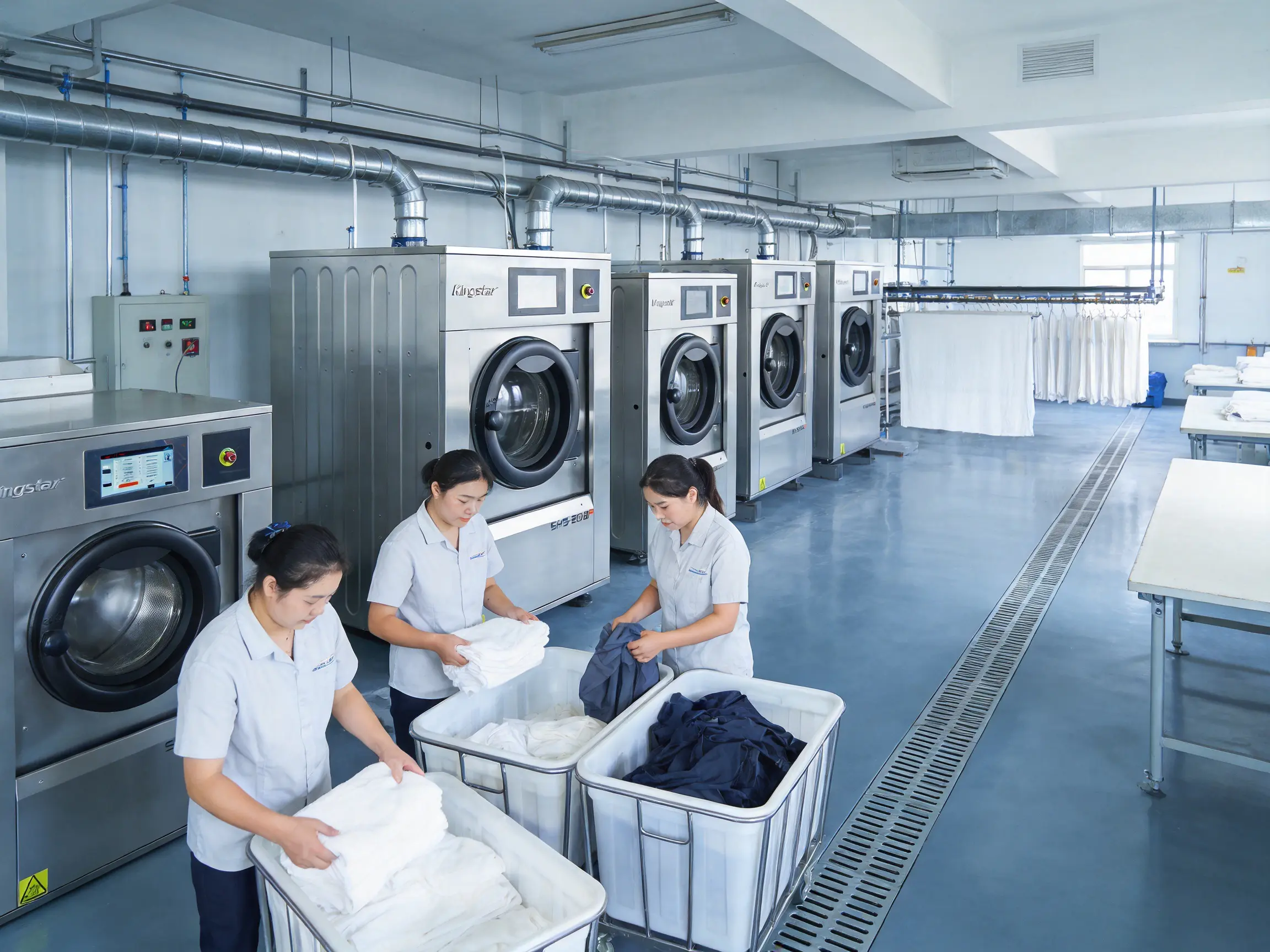
Commercial laundry operations require equipment that can deliver dependable cleaning, efficient extraction, consistent textile care, and stable performance over many working cycles. An 18kg wet washing machine is designed for businesses that need more capacity than a small commercial washer but do not require the footprint or investment associated with a very large industrial system. It offers a practical balance between productivity, flexibility, resource management, and space efficiency.
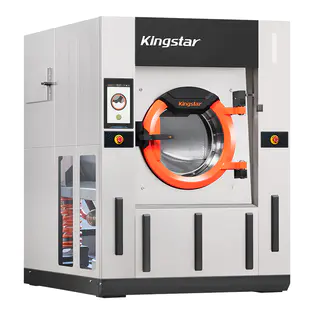
The SHS-2018P 18kg wet washing machine is developed for professional laundry environments where repeatable results and operational control are essential. With a rated capacity range of 6 to 18kg, a drum volume of 180 liters, washing and extraction speeds from 10 to 1080 rpm, and a maximum G factor of 400, the machine is suitable for processing a broad range of textiles. These capabilities allow operators to handle bedding, towels, uniforms, table linen, healthcare textiles, workwear, and other commercial laundry loads with greater efficiency.
Unlike basic washing machines designed primarily for domestic or light-duty use, this commercial washer-extractor combines programmable operation, high-speed extraction, automated chemical dispensing, and a robust structure. It is intended for professional laundries, hotels, hospitals, restaurants, care facilities, institutions, and other businesses that need reliable textile processing throughout the working day.
Commercial Laundry Requirements and the Role of an 18kg Machine
Commercial laundry is defined by volume, repetition, time pressure, and the need for consistent quality. A hotel may need to process sheets and towels every day. A restaurant may need to clean uniforms, tablecloths, napkins, and kitchen textiles between service periods. A healthcare facility must manage textiles with strict hygiene and process-control requirements. In each situation, the washing machine must do more than remove visible soil. It must provide repeatable results while minimizing unnecessary labor, water consumption, chemical waste, and downtime.
An 18kg capacity is especially useful for medium-sized and growing laundry operations. A machine with insufficient capacity may require too many cycles, increasing labor and utility costs. A machine that is too large may be inefficient when processing smaller daily loads. The 18kg format gives operators the flexibility to wash substantial quantities in a single cycle while still accommodating partial loads when required.
The 6 to 18kg usable capacity range also helps businesses manage different types of textiles. Smaller batches of delicate garments can be processed without waiting for a full load, while larger batches of durable towels or bedding can use the machine’s full rated capacity. This flexibility is valuable in facilities where laundry volumes vary throughout the day.
Because the machine incorporates washing and extraction in one system, operators do not need to transfer wet textiles manually between separate washing and spinning equipment. This reduces handling time, simplifies workflow, and supports a more organized production sequence. High-speed extraction also removes more water before drying, helping reduce dryer operating time and improving overall laundry throughput.
Key Technical Specifications
| Specification | Value |
|---|---|
| Model | SHS-2018P |
| Rated Capacity | 6 to 18kg |
| Drum Volume | 180 liters |
| Washing and Extraction Speed | 10 to 1080 rpm |
| Motor Power | 2.2kW |
| Electrical Heating Power | 18kW |
| Maximum G Factor | 400 |
| Noise Level | 70dB or less |
| Detergent Cups | 9 |
| Steam Pressure | 0.2 to 0.4MPa |
| Water Inlet Pressure | 0.2 to 0.4MPa |
| Water Inlet Pipe | 27.5mm |
| Hot Water Pipe | 27.5mm |
| Drainage Pipe | 72mm |
| Inner Drum Diameter and Depth | 750 × 410mm |
| Overall Dimensions | 950 × 905 × 1465mm |
| Net Weight | 426kg |
| Electrical Supply | 380V |
These specifications illustrate the machine’s position between light commercial equipment and larger industrial laundry systems. The 180-liter drum provides useful processing volume, while the variable-speed range allows operators to select appropriate washing and extraction conditions for different textiles. The 400 G factor supports effective moisture removal during the extraction stage, which is particularly important for facilities seeking to control drying costs and improve daily output.
The 18kW electrical heating option supports efficient temperature control where electrically heated operation is selected. The machine can also operate with steam pressure within the specified range, giving facilities the ability to configure the heating method according to available utilities and process requirements. Water and hot-water connections are designed for integration into a professional laundry installation.
Advanced Controls for Repeatable Washing Results
One of the most important differences between professional washer-extractors and ordinary washing machines is the degree of process control. Domestic or basic machines often provide a limited number of preset cycles. Commercial laundry equipment must support different fabric types, soil levels, temperatures, chemical programs, water levels, wash actions, rinsing stages, and extraction speeds.
The machine is equipped with a 10-inch full LCD touch screen designed to provide a clear and user-friendly operating interface. A large display allows operators to review programs, select functions, and monitor the washing process without relying on complicated mechanical controls. This can make training easier, particularly in facilities with multiple operators or rotating shifts.
The control system supports 56 washing programs and allows users to create and save customized programs, with space for up to 70 customized washing cycles. This capability is valuable because different laundry loads often require different treatment. A hotel may need a high-capacity towel program, a low-temperature linen program, and a special cycle for colored uniforms. A healthcare facility may require controlled washing and rinsing sequences for specific textile categories. A restaurant may use separate programs for heavily soiled kitchen cloths and lightly soiled table linen.
Programmability also improves consistency. When a validated process is saved in the control system, operators can repeat the same sequence instead of manually estimating water levels, wash times, or extraction speeds. Standardized programs help reduce variation between shifts and support better quality control.
The interface is also associated with a simplified, one-click cleaning concept. Automated chemical dispensing and streamlined program operation can reduce the number of manual steps needed to start and complete a cycle. This helps operators maintain a smoother workflow and reduces the risk of incorrect dosing or incorrect program selection.
Flexible Speed Control for Different Fabrics
The washing and extraction speed range of 10 to 1080 rpm gives the machine considerable flexibility. Low-speed operation can be used for gentle washing actions and delicate textiles, while higher speeds can be selected for effective moisture removal from durable fabrics.
Textiles such as silk, wool, and cashmere require careful handling because excessive mechanical action or unsuitable extraction can affect shape, surface texture, or fiber integrity. A programmable low-speed cycle can help operators process these materials more carefully. At the other end of the range, towels, workwear, and durable cotton textiles may benefit from stronger mechanical action and higher-speed extraction.
The ability to adjust speed also allows laundry managers to create programs based on the condition and composition of each load. The machine does not force every textile through a single fixed process. Instead, the operator can match the cycle to the material, soil level, and desired moisture content after extraction.
High extraction speed contributes directly to productivity. Water remaining in the textile after washing must eventually be removed through drying, pressing, or natural evaporation. The more water removed during extraction, the less work is required in the next stage. With a maximum G factor of 400, the machine is designed to provide strong centrifugal moisture removal for suitable loads.
Extraction settings should always be selected according to textile manufacturer instructions and load balance. Delicate goods may require lower speeds, while robust fabrics can generally tolerate more intensive extraction. The programmable nature of the machine allows the operator to make these distinctions within the wash process.
Automated Chemical Dispensing and Process Management
Correct chemical dosing is essential to cleaning performance, textile preservation, worker safety, and operating cost. Too little detergent may leave soil and odors behind. Too much detergent can increase rinsing requirements, cause residue, raise costs, and potentially affect fabric performance.
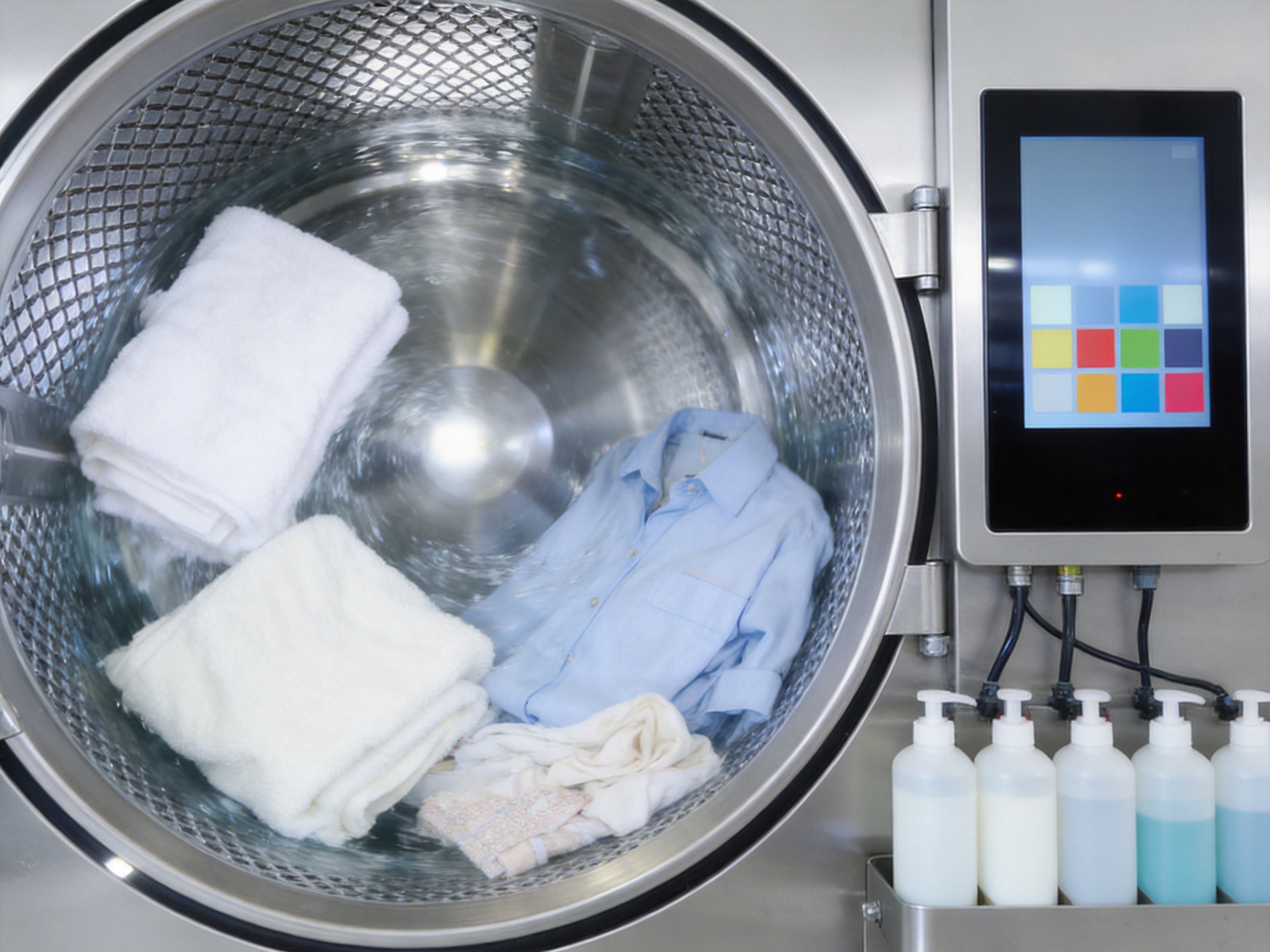
The machine includes nine detergent cups and supports an automated chemical dispensing system. This arrangement enables laundry facilities to organize multiple chemical inputs according to their selected programs. Depending on the application and chemical supplier, separate products may be used for main washing, pre-washing, bleaching, neutralizing, softening, or specialized treatment.
Automated dosing makes the process more repeatable than manual pouring. It can help operators avoid inconsistent quantities and reduce direct handling of concentrated chemicals. When integrated with properly configured washing programs, automatic dispensing also supports more predictable results across different loads.
Commercial users should work with qualified chemical suppliers when setting up dosing equipment. Detergent concentration, water hardness, textile type, soil level, temperature, and required hygiene standards all influence the correct chemical program. The machine provides the control platform, while the final chemical recipe should be established through testing and professional laundry guidance.
Durable One-Piece Tub Construction
Long-term structural reliability is a central consideration when comparing commercial washing machines. Laundry equipment is exposed to repeated vibration, changing loads, moisture, heat, detergents, and high-speed rotation. Weak joints, poor alignment, or inconsistent fabrication can eventually cause leaks, distortion, vibration, and maintenance problems.
The inner and outer tubs of the machine are manufactured using specialized professional machinery and a welding-free one-piece forming approach. This manufacturing method is intended to improve structural consistency and reduce the deformation risks associated with conventional welding processes.
Welding can introduce localized heat and stress into metal components. If not controlled carefully, these effects may contribute to distortion or inconsistencies during production. A one-piece, welding-free construction method can provide more uniform geometry and support standardized production quality.
The benefit is not limited to appearance. Correct tub geometry is important for drum alignment, water retention, rotation stability, and long-term operation. A precisely formed tub can help maintain the relationship between the inner drum, outer tub, bearings, seals, and drive system.
For commercial laundry operators, structural consistency can support predictable maintenance planning. A machine that is manufactured to stable dimensional standards is easier to install, inspect, and service. It also reduces the likelihood that small production variations will affect operating performance.
Welding-Free Structural Technology
The welding-free approach is applied to the overall structure of the washing machine as part of the manufacturer’s effort to improve durability and standardization. Conventional welding remains widely used in industrial equipment, but it can cause localized deformation if heat input, clamping, cooling, and post-processing are not carefully managed.
In a commercial washer-extractor, structural deformation can affect the frame, tub supports, door alignment, vibration behavior, and service life of connected components. A manufacturing process that minimizes these risks is valuable for equipment that must operate repeatedly under demanding conditions.
The use of specialized forming and production equipment allows components to be produced with closer consistency. This supports quality control across multiple units and is particularly important for a manufacturer serving OEM and ODM customers. Commercial buyers need confidence that machines supplied in different production batches will maintain comparable performance and dimensions.
Advanced manufacturing is not limited to the individual machine. It also includes production planning, component inspection, assembly accuracy, process documentation, and final testing. A strong manufacturing system helps transform design features into repeatable commercial products rather than isolated prototypes.
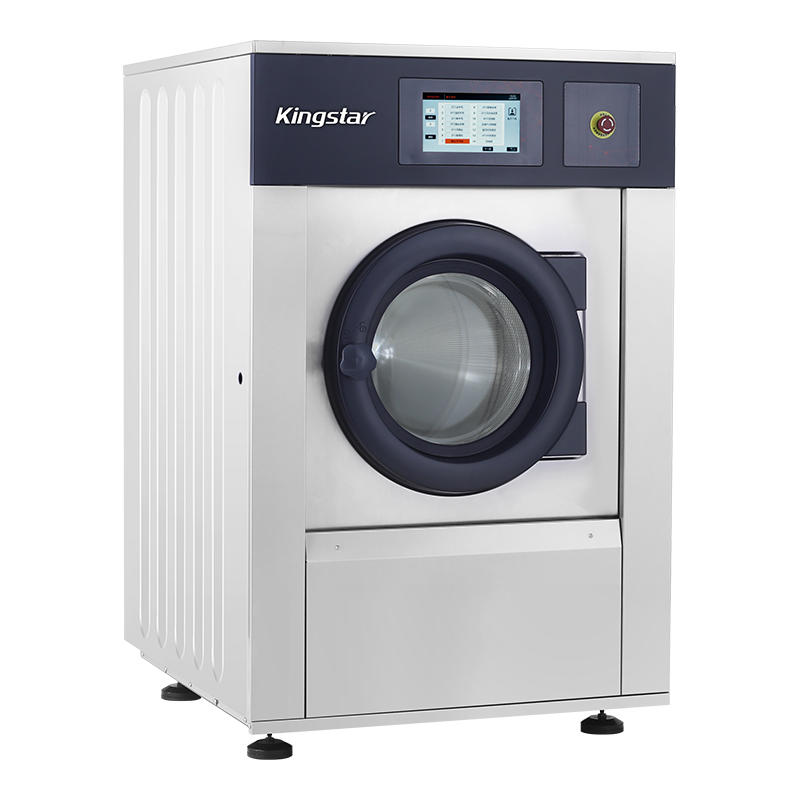
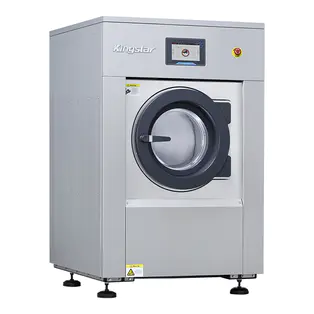
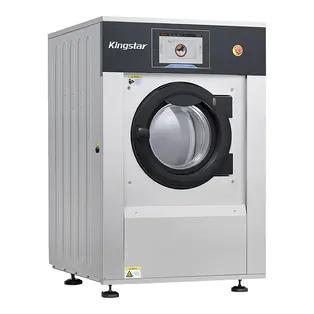
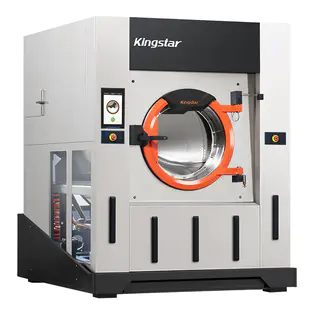
18kg Wet Washing Machine
Protective Diamond-Mesh Inner Drum Design
Textile protection is another important difference between professional equipment and ordinary washing machines. Zippers, buttons, hooks, and other garment accessories can become caught in poorly finished drum surfaces or oversized perforations. This may damage clothing, create snags, or result in small components becoming trapped.
The inner drum uses a 3mm diamond-mesh design intended to reduce the risk of zippers and buttons becoming stuck. The surface helps support smoother interaction between textiles and the drum during washing and extraction. This feature is especially useful for commercial facilities processing uniforms, workwear, hospitality garments, and other clothing with fasteners.
Commercial laundry loads often contain mixed items, and operators may not be able to inspect every button, zipper, or accessory before washing. A carefully designed inner drum can provide an additional layer of protection. It does not replace proper sorting and garment inspection, but it helps reduce avoidable damage during routine operation.
The inner drum must also provide sufficient water circulation and mechanical action. The design therefore needs to balance textile protection with cleaning performance. A properly engineered perforated surface allows water and detergent solution to move through the load while limiting sharp contact points.
Noise Control and Working Environment
The specified noise level of 70dB or less supports a more comfortable commercial laundry environment. Noise is an important consideration in hotels, hospitals, care facilities, and laundries located near occupied areas. Excessive noise can affect employee comfort, communication, and the overall working atmosphere.
Actual sound levels may vary depending on installation conditions, floor construction, load balance, machine positioning, and surrounding equipment. Correct installation and regular maintenance remain essential. The machine should be placed on a suitable foundation, leveled correctly, and operated with properly distributed loads.
Noise can also provide an early indication of operating problems. Sudden changes in sound may suggest an unbalanced load, worn bearing, loose fastener, or other issue. Operators should be trained to recognize abnormal noise and follow the recommended inspection procedure rather than continuing operation without investigation.
Efficiency Advantages in Commercial Laundry Operations
The productivity advantages of an 18kg wet washing machine result from several features working together. Capacity reduces the number of cycles required. Programmability reduces manual setup time. High-speed extraction shortens drying requirements. Automated chemical dispensing improves dosing consistency. Durable construction helps reduce interruptions related to structural problems or premature wear.
Consider a facility processing several hundred kilograms of laundry per day. If the equipment is too small, staff may spend a significant portion of the day loading, unloading, and restarting multiple cycles. An 18kg machine can consolidate more textiles into each suitable load, allowing the same workforce to process more laundry within available working hours.
Reduced handling is another important advantage. When washing and extraction take place in one machine, operators do not need to move wet goods to a separate extractor. Fewer transfers mean less physical effort, less risk of dropping or contaminating textiles, and a more direct path from soiled goods to clean processing.
Efficiency should not be measured only by cycle time. A fast cycle that produces poor cleaning results may create rewash work and increase total operating costs. The more useful measure is the amount of acceptable, clean, properly extracted laundry produced per unit of labor, water, energy, and chemical use. Programmable commercial equipment supports this broader definition of productivity.
Applications Across Multiple Industries
Hotels and Hospitality Facilities
Hotels require reliable processing of bed sheets, pillowcases, towels, bath mats, robes, uniforms, and restaurant linen. These items may have different soil levels and fabric compositions, so a flexible machine is more useful than a single fixed-cycle washer.
The 18kg capacity is suitable for daily batches generated by guest rooms and food-service operations. Separate programs can be created for white cotton linen, colored uniforms, towels, delicate decorative textiles, and heavily soiled housekeeping items. High extraction performance can help reduce the time required before textiles are sent to dryers, presses, or finishing equipment.
Healthcare and Care Facilities
Hospitals, clinics, nursing homes, and care facilities require careful segregation and controlled processing of textiles. The machine’s programmable controls allow operators to establish defined cycles for different categories of laundry. Temperature, washing time, rinsing, chemical injection, and extraction settings can be organized according to facility procedures and textile requirements.
Healthcare operators must follow applicable hygiene regulations and validated laundry protocols. Equipment features alone do not replace proper sorting, chemical management, staff training, or infection-control procedures. However, a programmable washer-extractor can provide the process consistency needed to support a professional healthcare laundry system.
Restaurants and Catering Businesses
Restaurants and catering companies regularly wash aprons, chef jackets, kitchen cloths, tablecloths, napkins, and other food-service textiles. Grease, food residue, and organic soil may require specialized chemical and temperature settings. The machine can store separate programs for heavily soiled kitchen materials and lighter table linen.
Processing larger loads in one cycle can be especially valuable when laundry must be completed between service periods. A reliable washer-extractor helps businesses maintain clean textiles without sending every item to an external laundry provider.
Industrial and Manufacturing Workplaces
Factories, workshops, garages, and construction-related businesses may need to clean uniforms and workwear exposed to dust, oil, grease, or industrial soil. These textiles require strong cleaning performance, but they may also contain zippers, buttons, reflective materials, or reinforced sections.
The selectable speed range and programmable chemical stages allow operators to design suitable processes for different workwear categories. The protective inner drum design can help reduce snagging risks, while the machine’s robust construction is suited to repeated commercial use.
Professional Laundries and Textile Service Providers
Commercial laundries serving multiple customers benefit from flexible programming and repeatable production. A single machine may process textiles from hospitality, healthcare, food service, and industrial clients, each with different requirements.
Saved programs make it easier to organize customer-specific processes and reduce the risk of operator error. The 18kg capacity also works well as part of a modular laundry line, where several machines can be operated together to increase total throughput without relying on one very large unit.
Comparison with Ordinary Washing Machines
Ordinary washing machines are generally designed for household use or limited-duty environments. Their capacities, cycle options, construction, control systems, and extraction performance may not be suitable for continuous commercial operation.
The 18kg wet washing machine provides several advantages over such equipment. Its commercial capacity reduces the number of cycles needed for large laundry volumes. Its programmable control system supports more specialized textile treatment. Its high extraction speed helps prepare goods for drying. Its nine-cup chemical arrangement is more appropriate for professional dosing systems. Its one-piece tub and welding-free construction are intended for a more demanding operating environment.
Another difference is the ability to standardize processes. Household equipment is typically operated by selecting a general program. Commercial machinery is expected to support defined procedures that can be documented, repeated, reviewed, and adjusted. This is important when a business needs consistent results across shifts, locations, or customer accounts.
Compared with larger industrial machines, the 18kg model may offer a more practical footprint and lower entry requirement for medium-sized operations. The overall dimensions of 950 × 905 × 1465mm provide substantial capacity while allowing installation in facilities where space is limited. Businesses can also expand capacity by installing multiple units as demand increases.
Installation and Utility Planning
Proper installation is essential for safe and efficient operation. The machine is specified for a 380V electrical supply and should be connected by qualified personnel in accordance with local electrical regulations. The installation area should provide sufficient ventilation, drainage access, water connections, service clearance, and a stable foundation.
Water inlet and hot-water pipe connections are specified at 27.5mm, while the drainage pipe is specified at 72mm. These dimensions should be considered during the design of the laundry room. Water pressure should be maintained within the specified range of 0.2 to 0.4MPa. Steam installations, where used, should also operate within the specified pressure range of 0.2 to 0.4MPa.
Drainage capacity is particularly important because a commercial washer-extractor discharges significant volumes of water during washing and rinsing. The drain should be correctly sized and positioned to prevent backflow, standing water, or unnecessary strain on the pump and drainage system.
Clearance around the machine should allow operators to open the door, load and unload textiles, inspect connections, and conduct routine maintenance. A crowded installation may reduce safety and make service more difficult. The 426kg machine weight should also be considered when evaluating floor capacity and access routes.
Utility planning should include peak demand calculations. If several machines, dryers, boilers, or electric heaters operate simultaneously, the facility may need additional electrical capacity. Professional installation helps ensure that the machine operates within its intended technical parameters.
Maintenance and Long-Term Reliability
Regular maintenance supports stable performance and extends equipment life. Operators should inspect the door seal, detergent system, water connections, drainage path, drum surface, and external structure as part of a routine maintenance schedule. Any buildup of detergent residue, lint, or foreign material should be removed promptly.
Loads should be distributed evenly inside the drum. Severe imbalance can create excessive vibration, increase noise, and place additional stress on mechanical components. Operators should avoid overloading the machine beyond its rated capacity and should select programs appropriate to the type and weight of the textiles.
Water quality also affects maintenance. Hard water can create mineral deposits on heating elements, valves, and internal surfaces. The facility may need water treatment or a chemical adjustment program depending on local conditions. Detergent selection should be compatible with the machine and the textile process.
The control system can assist operators by making programs more structured and easier to repeat, but it should not replace routine inspection. Preventive maintenance is usually less expensive than emergency repairs and production interruption. Businesses should maintain service records, note abnormal sounds or vibrations, and replace worn parts according to professional recommendations.
Maintenance personnel should disconnect utilities and follow safe procedures before servicing the machine. Electrical, steam, hot-water, and chemical systems can all present hazards. Only trained and authorized technicians should work on internal components.
How the Manufacturer Supports Commercial Buyers
Jiangsu Chuandao Intelligent Equipment Co., Ltd. focuses on washing machinery and commercial laundry equipment, including washer-extractors and related laundry systems. Its product development approach combines functional design, manufacturing consistency, and application-oriented customization.
The company’s manufacturing strengths are reflected in the machine’s one-piece tub construction, welding-free structural approach, programmable control system, and commercial-duty configuration. These are not isolated features; together they show an emphasis on producing equipment that can be integrated into real laundry workflows.
OEM and ODM capability is also important for commercial buyers and distribution partners. Different markets may require different electrical standards, heating configurations, control languages, chemical systems, door arrangements, or installation layouts. A manufacturer with experience in customized laundry machinery can help adapt equipment to project requirements while maintaining core performance and quality controls.
Product standardization is especially valuable for businesses operating multiple sites. Consistent machine dimensions, program structures, spare parts, and operating procedures can simplify staff training and maintenance management. It can also help laundry managers compare performance between facilities.
Customers evaluating a supplier should consider more than the listed capacity. They should examine manufacturing processes, quality inspection, technical support, spare-parts availability, installation guidance, and the supplier’s ability to understand the intended application. These factors influence the total value of commercial laundry equipment over its service life.
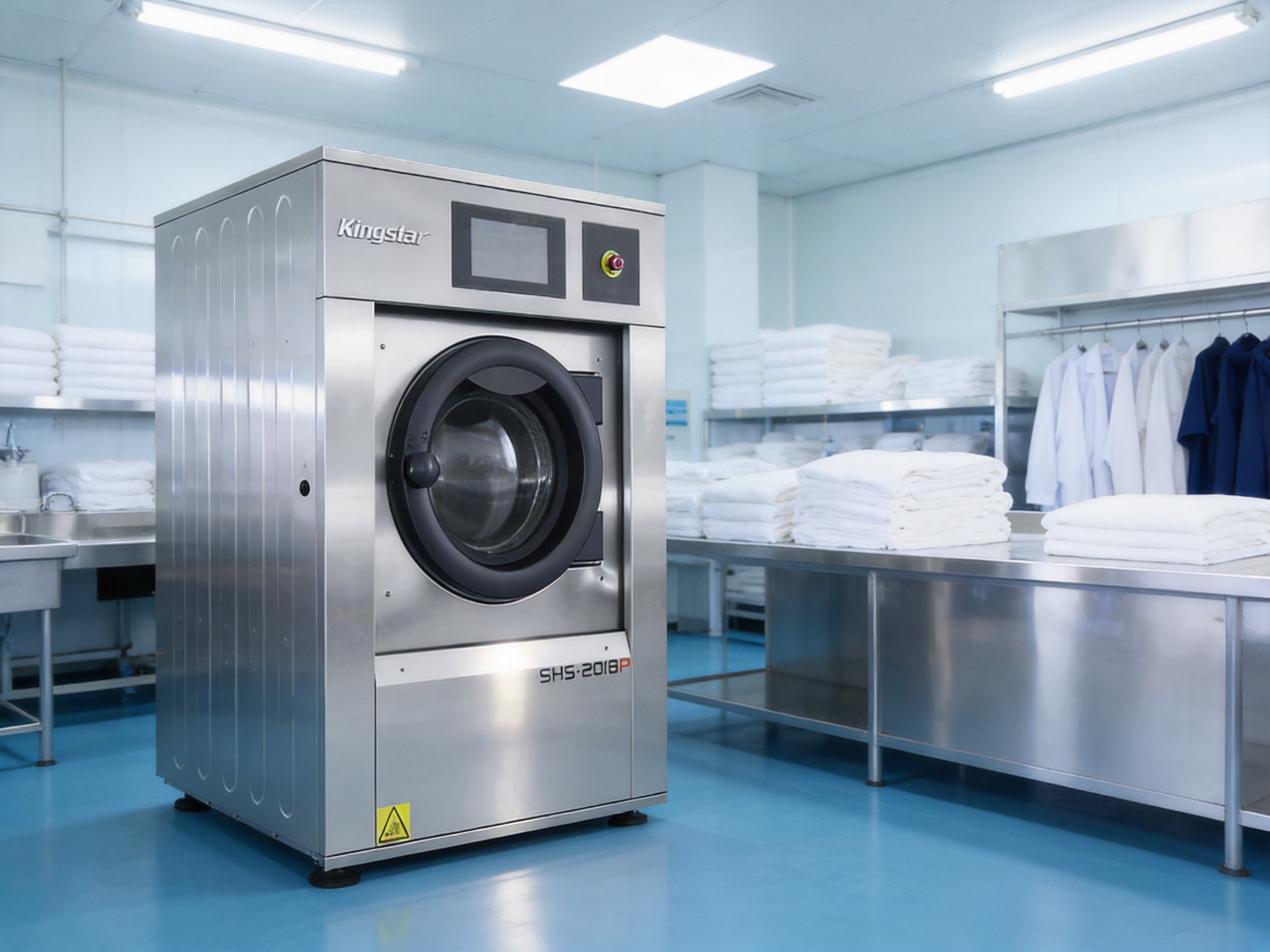
Choosing the Correct Washing Programs
The best results come from matching each program to the textile type and degree of soiling. Durable cotton towels may require a different wash action, temperature, chemical sequence, and extraction speed than delicate garments. Mixing incompatible items can cause uneven cleaning or unnecessary textile wear.
A practical program structure may include separate cycles for lightly soiled linen, heavily soiled towels, uniforms, delicate textiles, healthcare goods, kitchen textiles, and finishing-sensitive fabrics. Each program should be tested before routine production and reviewed periodically.
Operators should record key process information, including load category, approximate weight, selected program, chemical system, and any unusual observations. This information can help identify causes of rewash, staining, color transfer, or excessive textile wear.
The machine’s capacity range allows partial loads, but partial loads should still be large enough to maintain appropriate mechanical action. Very small or poorly distributed loads may reduce washing efficiency or cause imbalance during extraction. Load instructions should be established for each textile category.
Resource Efficiency and Sustainability
Water, energy, detergent, and labor are major operating costs in commercial laundry. A machine that uses resources efficiently can provide financial benefits while reducing environmental impact. The most sustainable process is not necessarily the one with the shortest wash time; it is the one that delivers acceptable cleaning with minimal rewash, over-dosing, unnecessary heating, and excessive drying.
Appropriate capacity utilization is an important starting point. Running many small loads in an oversized machine may waste water and energy. Running an undersized machine at maximum frequency may increase labor and maintenance costs. The 6 to 18kg operating range gives facilities more flexibility to select a load size appropriate to daily demand.
High extraction performance can reduce the moisture content of textiles before drying. Because dryers must evaporate remaining water, effective extraction may help reduce drying time and associated energy use. The actual benefit depends on fabric type, extraction setting, dryer design, and operating conditions.
Programmable chemical dosing can also support sustainability by reducing overuse of detergents and finishing chemicals. Operators should use tested formulas and adjust them according to water hardness, soil level, and textile requirements. Automatic dosing is most effective when paired with regular calibration and chemical supplier support.
Facilities should monitor water and energy usage over time rather than relying only on theoretical specifications. Tracking kilograms processed, cycles completed, rewash rates, drying time, and utility consumption can show whether the equipment is delivering the expected operational benefits.
Operator Safety and Workflow Control
Commercial laundry safety depends on equipment design, installation, procedures, and training. Operators should be taught how to load the drum, select programs, use chemical systems, respond to alarms, and identify abnormal operating conditions.
The door should remain closed and properly secured during operation. Operators must never attempt to open the machine while the drum is rotating or while hot water, steam, or chemical solutions are present. Loading and unloading procedures should minimize lifting injuries and prevent contact with contaminated textiles or concentrated chemicals.
A clearly organized laundry room can improve safety and productivity. Soiled textiles should move in one direction toward washing, while clean textiles should be protected from recontamination. Chemical containers should be labeled and stored according to safety requirements. Floor drainage and ventilation should be adequate for the operating environment.
The touch-screen interface is designed to simplify operation, but access permissions and program management should still be controlled. Managers may restrict program editing to trained personnel while allowing general operators to select approved cycles. This helps protect validated processes from accidental changes.
What Makes the 18kg Configuration Commercially Valuable?
The 18kg configuration is valuable because it addresses a common gap between small commercial machines and high-capacity industrial systems. It provides meaningful production capacity while remaining suitable for facilities with moderate space and demand.
For a growing laundry business, the machine can serve as a core production unit. For a large laundry, it can operate as part of a bank of machines to provide load flexibility and redundancy. For a hotel or hospital, it can process dedicated textile categories without requiring every item to be combined into one large load.
Its 180-liter drum volume, 400 G extraction capability, extensive program storage, nine detergent cups, and commercial structural design make it more than a simple high-capacity washer. It is a process-control platform that can support different textile workflows.
The machine’s dimensions also make planning easier. With a footprint of approximately 950 × 905mm, it can be incorporated into many professional laundry layouts, subject to utility and access requirements. Buyers should still confirm doorways, elevators, floor loading, service space, and installation conditions before purchase.
Q&A: Common Questions About the 18kg Wet Washing Machine
What is the recommended maximum load?
The rated capacity is up to 18kg. The practical load should be selected according to textile type, bulk, moisture absorption, and program requirements. Bulky items may need a lower weight than compact textiles to allow adequate movement and water circulation.
Can the machine process loads smaller than 18kg?
Yes. The specified capacity range is 6 to 18kg, allowing operators to process smaller loads when required. The load should be distributed evenly, and the selected program should match the actual quantity and textile type.
How many washing programs are available?
The control system can store 56 washing programs, and users can create and save customized programs, with support for up to 70 customized washing cycles. This allows different textile categories and customer requirements to be managed through dedicated settings.
Is the machine suitable for delicate textiles?
It can support delicate textile processing when operators select suitable washing action, temperature, chemical settings, and extraction speed. The variable speed range includes low-speed operation, but textile manufacturers’ care instructions should always be followed.
What is the maximum extraction speed?
The washing and extraction speed range is 10 to 1080 rpm. The correct speed depends on fabric type, load balance, and the desired moisture content after extraction.
What does a G factor of 400 mean?
The G factor indicates the centrifugal force applied during extraction. A maximum G factor of 400 supports effective moisture removal from suitable loads. It does not mean that every textile should be extracted at the maximum setting.
Does the machine support automatic chemical dispensing?
Yes. The machine is designed with an automated chemical dispensing system and nine detergent cups. Chemical formulas should be configured and calibrated with qualified laundry chemical professionals.
What heating options are available?
The machine includes an electrical heating power specification of 18kW and supports steam pressure from 0.2 to 0.4MPa. The appropriate heating configuration depends on the installation and utilities available at the customer’s facility.
How does the one-piece tub design benefit users?
The inner and outer tubs are produced using a welding-free one-piece approach intended to improve dimensional consistency, durability, and standardized production quality. A stable tub structure can support reliable alignment and long-term operation.
How does the diamond-mesh drum help protect clothing?
The 3mm diamond-mesh inner drum is designed to reduce the risk of zippers and buttons becoming trapped or snagged. Proper sorting and garment inspection remain necessary, but the drum design provides additional protection during washing.
Is the machine quiet enough for hotels or healthcare facilities?
The specified noise level is 70dB or less. Actual sound depends on installation, floor conditions, load balance, and maintenance. Correct leveling and proper loading are important for controlling vibration and noise.
What should buyers consider before installation?
Buyers should confirm the 380V electrical supply, water pressure, pipe connections, drainage capacity, heating method, floor strength, room access, ventilation, service clearance, and local safety requirements. Professional installation is recommended.
Can the machine be used for healthcare laundry?
It can support healthcare laundry applications when used within an appropriate facility process. Healthcare operators must establish validated procedures for sorting, chemical dosing, temperature, disinfection, rinsing, handling, and documentation according to applicable regulations.
Why choose an 18kg machine instead of a larger industrial washer?
An 18kg machine may be more suitable when the facility has moderate laundry volumes, limited floor space, or a need for flexible batch sizes. Multiple 18kg units can also provide modular capacity and operational redundancy.
What maintenance is required?
Routine maintenance includes checking seals, drainage, water connections, detergent systems, drum surfaces, fasteners, vibration, and control functions. Preventive inspections and professional servicing should be scheduled according to operating frequency and manufacturer guidance.
Purchasing Considerations for Businesses
Before purchasing, businesses should estimate average and peak laundry volumes, textile categories, daily operating hours, available utilities, room layout, labor availability, and future expansion plans. A machine should be selected based on the complete workflow rather than capacity alone.
Buyers should request technical confirmation for electrical supply, heating configuration, water pressure, drainage, chemical connections, and control options. They should also clarify installation responsibilities, operator training, warranty coverage, spare-parts support, maintenance procedures, and expected delivery conditions.
For international projects, the buyer should confirm local electrical and safety requirements before finalizing the order. The machine’s standard specification may need to be adapted to the destination market. OEM and ODM discussions should include documentation, labeling, control language, packaging, inspection, and after-sales support.
It is also useful to evaluate the supplier’s manufacturing process. Questions about tub forming, structural quality control, final testing, program verification, and component sourcing can help buyers distinguish a professional equipment manufacturer from a general machinery trader.
Conclusion
The 18kg wet washing machine is designed to provide a dependable, flexible, and commercially practical solution for professional laundry operations. Its 6 to 18kg capacity range, 180-liter drum, 10 to 1080 rpm speed range, and maximum G factor of 400 support efficient processing across a wide range of textiles.
Its strongest advantages come from the combination of capacity and control. The 10-inch LCD touch screen, 56 standard programs, support for up to 70 customized cycles, automated chemical dispensing, and adjustable extraction make it possible to create repeatable processes for different laundry requirements.
The machine’s manufacturing approach further strengthens its commercial value. Welding-free one-piece tub construction, specialized forming technology, and a 3mm diamond-mesh inner drum are intended to improve structural consistency, durability, and textile protection. These features distinguish the equipment from ordinary washing machines that may not be designed for continuous professional use.
For hotels, healthcare facilities, restaurants, industrial workplaces, professional laundries, and institutional users, the machine can help reduce handling, improve throughput, and support more consistent cleaning results. When correctly installed, programmed, loaded, and maintained, it provides a balanced solution for businesses seeking commercial washing performance without the footprint of a much larger industrial system.
Jiangsu Chuandao Intelligent Equipment Co., Ltd. combines commercial laundry equipment development with manufacturing capabilities focused on practical operation and standardized quality. Its approach to washer-extractor design supports customers looking for reliable equipment, configurable programs, and a platform suitable for OEM, ODM, and professional laundry applications.
References
1. Commercial Laundry Equipment Selection Principles, professional laundry operations reference materials.
2. Textile Care and Washing Process Management, technical guidance for commercial laundries.
3. Industrial Washer-Extractor Installation and Maintenance Practices, equipment service references.
4. Water, Energy, and Chemical Efficiency in Professional Laundry Processing, laundry management guidance.
5. Occupational Safety Procedures for Commercial Laundry Facilities, workplace safety reference materials.
6. Fabric Care Recommendations for Cotton, Wool, Silk, and Synthetic Textiles, textile handling references.
7. Jiangsu Chuandao Intelligent Equipment Co., Ltd. Product Specifications for the SHS-2018P 18kg Wet Washing Machine.
Product: 18kg Wet Washing Machine

ADD:No.388 Xinggang Road, Chongchuan District, Nantong City, 226000, Jiangsu Province, China.
-
Phone: +86-13917089379
-
Tel:+86-13917089379
-
Fax:+86-0513-85663366
-
E-mail:louislu@kingstarlaundry.com
products