英语
英语 俄语
俄语 西班牙语
西班牙语 德语
德语
Home / Author / Yutong Cai — Customer Solutions Specialist / Industrial Coin-Operated Hardmount Washers: A Reliable 15–25 kg Commercial Laundry Solution

Kingstar is your trusted partner for industrial and commercial laundry equipment. We specialized in the R&D and manufacturing of high-end industrial washers, commercial washers and dryers. Meanwhile, we provide global clients with comprehensive planning, layout workflow design, and software-hardware integration services for smart laundry plants.
Yutong Cai — Customer Solutions Specialist
Oct 18,2026
Industrial Coin-Operated Hardmount Washers: A Reliable 15–25 kg Commercial Laundry Solution
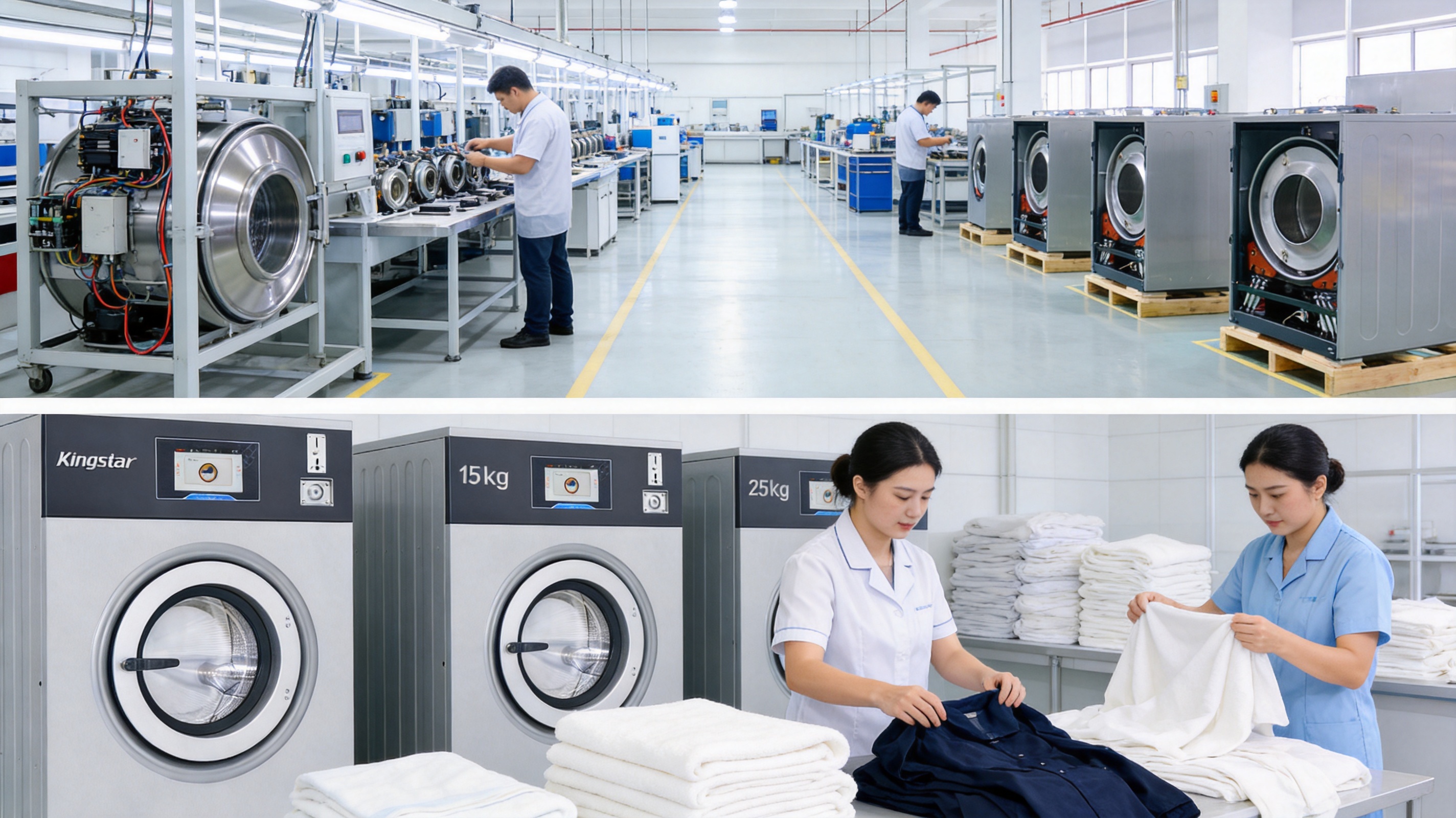
Commercial laundry operators need equipment that can process large volumes of textiles, withstand repeated use, control operating costs, and remain simple for customers and staff to operate. The coin-operated hardmount washer in the 15 kg, 20 kg, and 25 kg capacity range is designed to meet these requirements in laundromats, apartment laundry rooms, hotels, healthcare facilities, fitness centers, universities, and other demanding environments.
This commercial washer combines a robust hardmount structure, 304 stainless steel water-contacting components, programmable electronic control, high-speed extraction, automatic weighing, flexible payment options, and an optional chemical-dosing interface. Together, these features create a practical platform for self-service and professional laundry operations.
Unlike a basic household washing machine adapted for commercial use, this product is developed around the demands of continuous operation. Its construction, transmission system, electronic controls, extraction performance, and payment configuration are intended to support a longer service life and more predictable operating results. The three available models provide washing capacities from 5 to 25 kg, allowing operators to select a machine according to floor space, customer demand, and textile volume.
Commercial Laundry Equipment Designed for Real Operating Conditions
A commercial washer must do more than wash clothing. It must deliver repeatable performance throughout the day, protect users and laundry-room property, simplify maintenance, and support a business model in which each cycle must be efficient and dependable. Downtime can lead to lost revenue, customer dissatisfaction, emergency service costs, and disruption to hotel, healthcare, or institutional operations.
The coin-operated hardmount washer addresses these concerns through a combination of mechanical durability and intelligent operating functions. The product is available in three main configurations:
| Model | Nominal Capacity | Drum Volume | Maximum Spin Speed | Extraction Factor |
|---|---|---|---|---|
| SMS-2015C | 5–15 kg | 150 L | 740 rpm | 200 G |
| SMS-2020C | 8–20 kg | 200 L | 690 rpm | 200 G |
| SMS-2025C | 8–25 kg | 250 L | 690 rpm | 200 G |
The variable load ranges offer useful flexibility. An operator can process smaller loads without always having to use the largest machine, while the larger models can accommodate bedding, towels, uniforms, workwear, and other bulky items. This helps laundry businesses create a balanced equipment layout rather than relying on one machine size for every application.
The hardmount configuration is also suitable for facilities that prefer a stable, fixed installation. Proper site preparation and installation remain important, but the solid structure provides a dependable base for repetitive washing and high-speed extraction.
Key Advantages Compared with Standard Commercial Washers
Purpose-built for self-service and revenue-generating laundry
One of the primary advantages of a coin-operated commercial washer is that it supports direct customer operation. In a laundromat or apartment laundry room, the machine can be configured for coin payment, card payment, QR-code payment, or other available payment methods. This reduces the need for constant staff supervision and allows the equipment to operate as part of a self-service business model.
The anti-pry coin control box adds an additional layer of protection for operators. Payment equipment is a sensitive part of any self-service installation, and physical protection can help reduce the risk of unauthorized access or damage. Multiple payment choices also improve convenience for users who may not carry coins or who prefer cashless payment methods.
Higher extraction performance than conventional low-speed washers
The washer is designed with a 200 G extraction factor. High extraction removes more water from textiles at the end of the wash cycle, reducing residual moisture before drying. This can shorten dryer operating time and lower the energy required for the complete laundry process.
Extraction performance is especially valuable when processing towels, bedding, uniforms, and other heavy textiles. A washer that leaves less water in the load can improve the overall productivity of a laundry room. It may also help operators make better use of existing dryers by reducing the duration of each drying cycle.
High-speed extraction must be supported by suitable mechanical design, precise control, and effective safety interlocks. The electronic door lock is programmed to prevent opening until high-speed extraction has fully stopped. This protects users from attempting to access a moving drum and demonstrates the importance of integrating safety into the control system rather than treating it as an optional accessory.
Improved resistance to corrosion and chemical exposure
The inner drum, outer cylinder, and other water-contacting components are made from 304 stainless steel. This material is widely valued in commercial laundry equipment because it offers strong resistance to rust and corrosion under normal operating conditions.
Commercial washers regularly encounter water, detergents, oxygen-based products, alkaline chemicals, and other laundry formulations. If water-contacting surfaces corrode, the problem can affect appearance, maintenance requirements, textile quality, and equipment life. Stainless steel construction helps provide a cleaner and more durable washing environment.
The use of 304 stainless steel also supports applications where hygiene and cleanliness are important. Hotels, healthcare facilities, restaurants, care homes, and institutional laundries can benefit from smooth, corrosion-resistant surfaces that are easier to keep clean than lower-grade materials.
Automatic weighing for more controlled resource use
The intelligent weighing system automatically adjusts the water volume according to the weight of each load. This is a practical advantage over machines that use one fixed water level for every cycle, regardless of the quantity of textiles inside the drum.
When the load is smaller, using an appropriate water volume can help reduce water consumption, heating demand, and detergent use. When the load is larger, the system can provide the resources needed for effective washing. More accurate resource allocation supports stable cleaning performance while helping operators manage utility costs.
Automatic weighing is particularly useful in self-service laundry environments, where customers may not understand how to select the correct water level manually. It also benefits commercial operators who process different textile types and load sizes throughout the day.
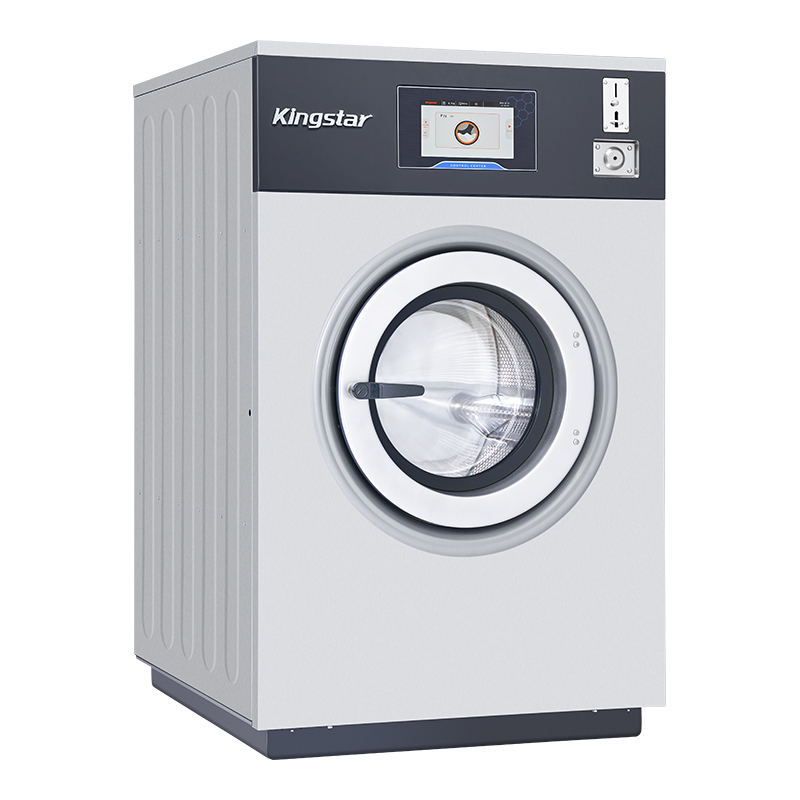
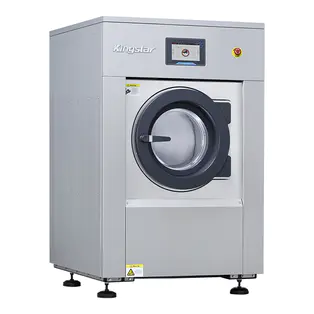
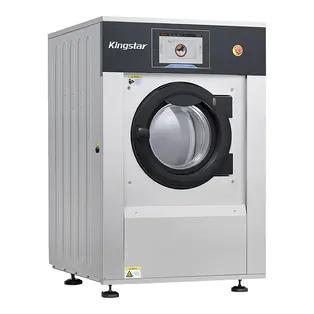
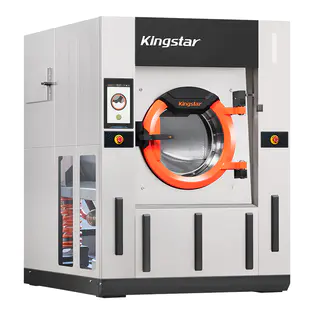
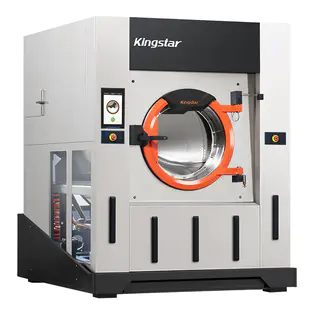
Coin-Operated Hardmount Washer(15/20/25kg)
Advanced Operating and Control Functions
Seven-inch high-definition LCD interface
The washer is equipped with a seven-inch high-definition full LCD screen. The interface supports customizable programming and one-touch washing, giving operators the ability to configure cycles according to their business and textile requirements.
A clear visual interface can simplify training and reduce operating errors. Laundromat customers can follow straightforward cycle instructions, while hotel or institutional staff can select preconfigured programs without adjusting multiple mechanical controls. Customizable programming also allows an operator to distinguish between general laundry, heavily soiled workwear, towels, bedding, and other categories.
Program flexibility is important because no two laundry businesses operate in exactly the same way. Water quality, textile types, detergent systems, hygiene procedures, cycle times, and customer expectations can vary. A programmable control platform allows the machine to be adapted to actual operating conditions instead of forcing every facility to use the same fixed wash routine.
Open interface for automatic chemical dosing
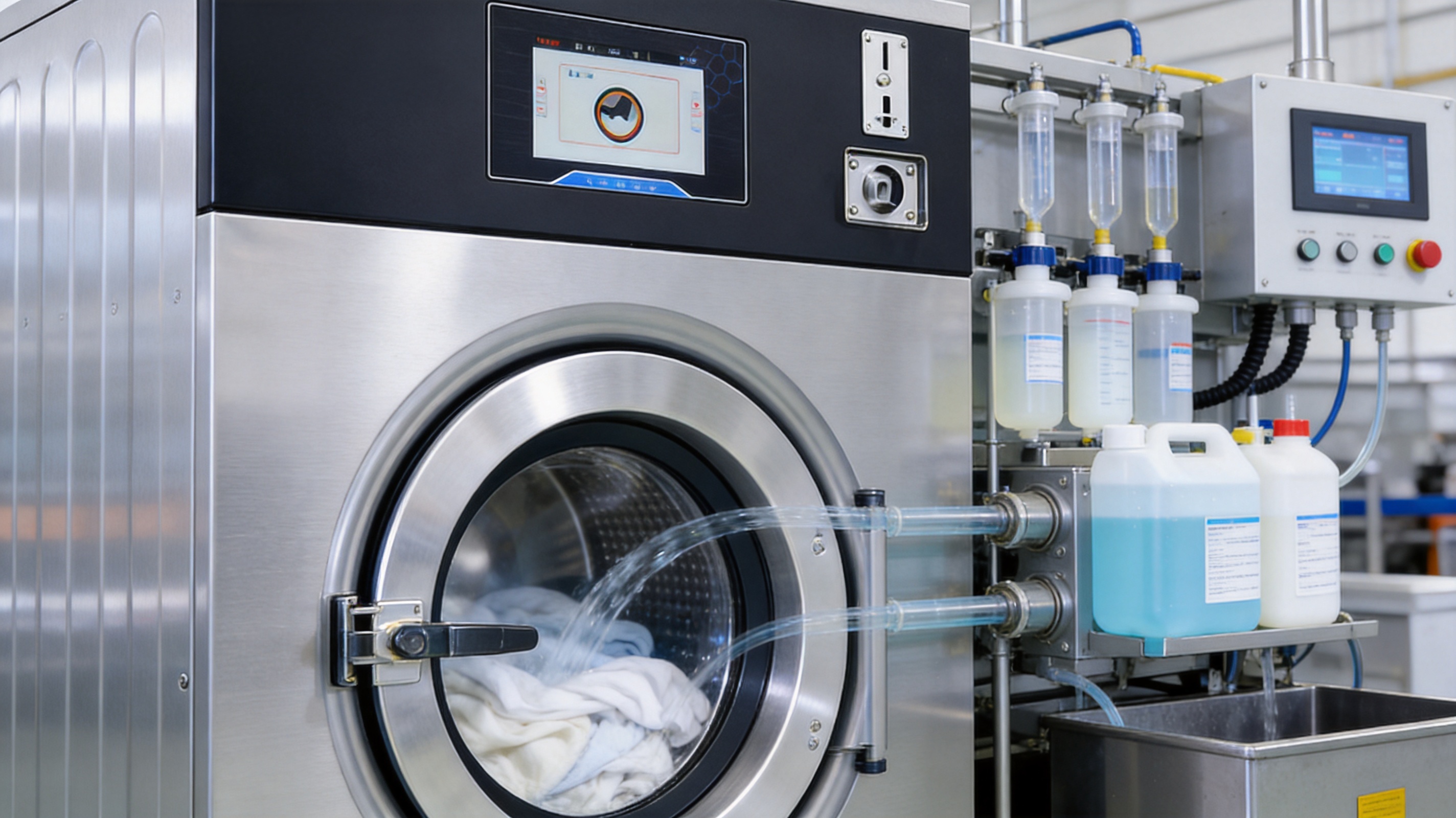
The optional automatic dosing system uses an open signal interface that can work with dispensers from different brands. This gives operators greater freedom when selecting chemical suppliers and dosing equipment.
Accurate chemical dosing offers several benefits. It reduces the risk of overuse, limits chemical waste, improves consistency between cycles, and decreases the amount of manual measuring required from staff. In a busy commercial laundry, small dosing errors repeated over hundreds of cycles can create significant cost differences.
An automatic dosing connection can also help create more repeatable washing results. When the correct detergent, alkali, bleach, neutralizer, or softener is introduced at the correct stage, the machine can provide a more controlled process. This is valuable for professional laundry customers who need consistent appearance, cleanliness, and textile care.
Multiple payment configurations
The payment system is designed to support several methods, including coin payment, QR-code payment, credit card payment, and rechargeable card payment. The exact payment configuration can be selected according to the target market, local payment habits, and facility management system.
Offering multiple payment methods makes the machine more accessible. Some users prefer traditional coins, while others expect contactless or digital options. For apartment buildings and managed laundry rooms, rechargeable cards may help property managers organize access and payment. For laundromats, a combination of coin and cashless options can serve a broader customer base.
Payment flexibility can also improve business administration. Digital payment systems may make it easier to review usage, identify busy periods, and plan maintenance. The washer therefore functions not only as a cleaning appliance but also as part of a commercial service platform.
Electronic door-lock safety
The electronic door-lock design is controlled by the machine’s computer program. The door remains locked during operation and cannot be opened until the high-speed extraction phase has stopped completely.
This function is essential because the drum may contain substantial mechanical energy during extraction. Preventing premature access protects customers and staff while also helping prevent damage to the door, lock, or drum assembly. A clear safety sequence contributes to user confidence, especially in unattended or semi-attended laundry rooms.
Safety design is one area where commercial equipment should not be compared only by purchase price. A lower-cost machine may appear attractive initially, but inadequate interlocks, weak door hardware, or poorly controlled extraction can create unacceptable operational risks. The integrated lock and control system are therefore important competitive advantages.
Mechanical Construction and Long-Term Durability
Three-bearing main transmission design
The washer uses a three-bearing main transmission design intended to provide strong support for the rotating assembly. A properly supported transmission can help manage the loads generated during washing and high-speed extraction.
Commercial laundry machines experience repeated acceleration, deceleration, vibration, and load imbalance. The mechanical system must tolerate these forces over many cycles. A multi-bearing transmission arrangement is designed to improve stability and reduce stress on key rotating components.
The product information describes the transmission design as supporting up to ten years of maintenance-free operation under appropriate conditions. Actual service life depends on installation quality, load practices, water conditions, chemical compatibility, operating frequency, and scheduled maintenance. Nevertheless, the design objective demonstrates that the machine is intended for long-term commercial use rather than occasional domestic operation.
Durable drum design
The three models use inner drum mesh thicknesses of 1.2 mm for the 15 kg and 20 kg versions and 1.5 mm for the 25 kg version. The drum hole diameter is 3.5 mm. These specifications are selected to balance water flow, textile handling, drainage, and structural strength.
The drum dimensions vary according to capacity. The 15 kg model uses an inner drum measuring approximately 650 mm in diameter by 465 mm in depth. The 20 kg model uses a drum measuring approximately 750 mm by 457 mm, while the 25 kg model uses approximately 750 mm by 566 mm.
Correct drum sizing is important for washing quality. A drum that is too small may compress textiles and limit mechanical action. A drum that is appropriately matched to the load can provide better movement, improved contact with water and chemicals, and more consistent results.
Imported electrical and mechanical components
The washer is specified with internationally recognized electrical and mechanical components, including imported bearings and Schneider contactors. The product information also identifies imported wiring and plugs as part of the electrical configuration.
Component quality affects reliability throughout the machine. Bearings must support repetitive rotational loads. Contactors and electrical switching devices must handle the required power safely. Wiring and plugs must be suitable for the operating environment and correctly matched to the machine’s electrical design.
Using established component suppliers can also support easier servicing and replacement. Commercial operators benefit when technicians can identify and source compatible parts through recognized industrial supply channels. Component selection is therefore an important part of the manufacturer’s broader quality strategy.
Designed for an extended service life
The machine is described as being designed for a service life of up to 20 years, with a whole-machine warranty specified in the product information. The supplied materials contain different warranty references, including two years and three years. Buyers should confirm the applicable warranty term, exclusions, labor coverage, and parts coverage in the final quotation or sales contract.
A long-life design can improve the total cost of ownership. Commercial laundry equipment should be evaluated according to purchase price, expected service life, energy use, water use, chemical consumption, maintenance requirements, productivity, and residual value. A durable machine may provide a better investment even if its initial cost is higher than that of a light-duty alternative.
Performance and Resource Efficiency
High extraction reduces downstream drying demand
Washing and drying are connected processes. The amount of moisture left in a load after washing directly affects dryer workload. With a 200 G extraction factor, the washer is designed to remove a substantial amount of water before the textiles reach the dryer.
Lower residual moisture can reduce dryer cycle time and energy consumption. It may also help increase dryer availability during peak periods. For laundromats, this can improve customer turnover. For hotels, hospitals, and institutional facilities, it can help maintain a more predictable linen-processing schedule.
Load-based water management
The automatic weighing function supports more accurate water use. Traditional machines that apply one water volume to every load can consume unnecessary resources when customers wash smaller quantities. By measuring the load, the washer can adjust water volume and help maintain a better balance between cleaning performance and efficiency.
Water savings can also reduce heating demand when electrically heated water is used. Every reduction in unnecessary water volume may reduce the energy required to bring the wash liquor to the desired temperature. This makes intelligent weighing relevant not only to water conservation but also to total operating cost.
Electric heating configuration
The washer is available with electric heating. The listed electrical heating power is 12 kW for the SMS-2015C and 18 kW for both the SMS-2020C and SMS-2025C. Electric heating can be useful in facilities where a suitable electrical supply is available and where independent on-site water heating is preferred.
Operators should evaluate the building’s electrical capacity, utility rates, ventilation requirements, and operating schedule before selecting a heating configuration. The specified operating voltage is 380 V, three phase, 50 Hz, while the available voltage options include several single-phase and three-phase arrangements from 200–240 V and 380–415 V. Electrical configuration must be confirmed with the manufacturer before ordering, because installation requirements vary by market.
Noise control
The listed noise level is no more than 70 dB. Noise performance is important in apartment buildings, hotels, healthcare environments, and other facilities where laundry rooms may be located near occupied areas.
Actual perceived noise depends on installation, floor structure, load balance, drain configuration, room acoustics, and maintenance condition. Correct leveling and installation are essential. When properly installed, a commercial washer with controlled noise can provide a more comfortable environment for customers and staff.
Manufacturing Strengths and Quality-Oriented Production
Manufacturing experience in laundry machinery
The supplier is a Chinese manufacturer of washing machines, laundry machinery, and washer extractors, with a product range intended for commercial and industrial applications. Its experience is reflected in the product’s emphasis on mechanical structure, stainless steel construction, programmable control, payment systems, extraction performance, and chemical dosing compatibility.
Manufacturing strength in this sector requires more than assembling a drum, motor, and control panel. The machine must integrate mechanical engineering, electrical control, software programming, user-interface design, safety systems, water handling, heating, payment technology, and after-sales support.
A manufacturer with a focused laundry-equipment product line can refine these systems through repeated development and customer feedback. This helps create equipment that is more closely aligned with real commercial workflows than a general appliance manufacturer’s product.
Integration of mechanical and electronic systems
The washer demonstrates an integrated approach to product development. The hardmount frame and transmission provide the mechanical foundation, while the LCD control panel, electronic door lock, weighing function, payment module, and dosing interface provide the operating intelligence.
These systems must work together. For example, the control system must prevent door opening during extraction, manage motor speed, coordinate heating, control water levels, regulate chemical signals, and communicate with the payment system. The quality of the final product depends on how well these functions are integrated rather than on the performance of any single component.
Manufacturing processes must therefore include careful wiring, control-panel assembly, software configuration, functional testing, and safety verification. A commercial washer intended for continuous operation should be checked for correct drum rotation, water inlet behavior, drainage, heating response, extraction control, door locking, payment activation, and fault handling before shipment.
Material selection and fabrication
The use of 304 stainless steel in the inner drum, outer cylinder, and water-contacting parts requires appropriate material handling and fabrication practices. Stainless steel components must be formed, joined, finished, and inspected carefully to avoid sharp edges, weak seams, surface contamination, or areas that retain dirt and moisture.
Drum balance is also critical. An uneven rotating assembly can create vibration, noise, bearing stress, and premature wear. Manufacturing and assembly processes should maintain dimensional accuracy and ensure that rotating components are aligned correctly. The result is a washer that can operate more smoothly during high-speed extraction.
The large 25 kg model uses a thicker inner drum mesh than the smaller models, reflecting the need to match construction details to capacity and load demands. This type of model-specific engineering is preferable to using one generic design across every size.
Quality control and functional testing
Commercial laundry equipment should undergo inspection at several stages of production. Incoming components can be checked for specification and quality. Fabricated assemblies can be examined for dimensions, weld quality, surface finish, and alignment. Electrical systems can be tested for correct connection, insulation, control response, and component operation.
Final testing should include a complete operating sequence. This may include water filling, heating, washing rotation, programmed speed changes, drainage, extraction, door locking, weighing response, payment activation, and fault protection. Testing is especially important for machines with customized voltage, payment, dosing, and control requirements.
Strong manufacturing is demonstrated not only by the external appearance of the machine but also by the repeatability of internal processes. Consistent assembly, documented inspection, traceable components, and disciplined final testing help reduce variation between units and support more dependable field performance.
OEM and ODM flexibility
The company’s stated focus includes OEM and ODM commercial washer extractors. This can benefit distributors, laundry-equipment dealers, property developers, hotel groups, and regional brands that need customized equipment or private-label solutions.
Customization may include payment configuration, electrical specifications, control-language settings, branding, program parameters, chemical-dosing connections, and installation accessories. A flexible manufacturer can help customers adapt the product to local market conditions rather than requiring every buyer to accept a fixed specification.
Customization should be managed through clear technical documentation. Buyers should confirm all requested changes before production, including voltage, frequency, heating power, drain arrangement, inlet connections, payment hardware, software language, and warranty terms.
Applications Across Commercial and Institutional Markets
Laundromats
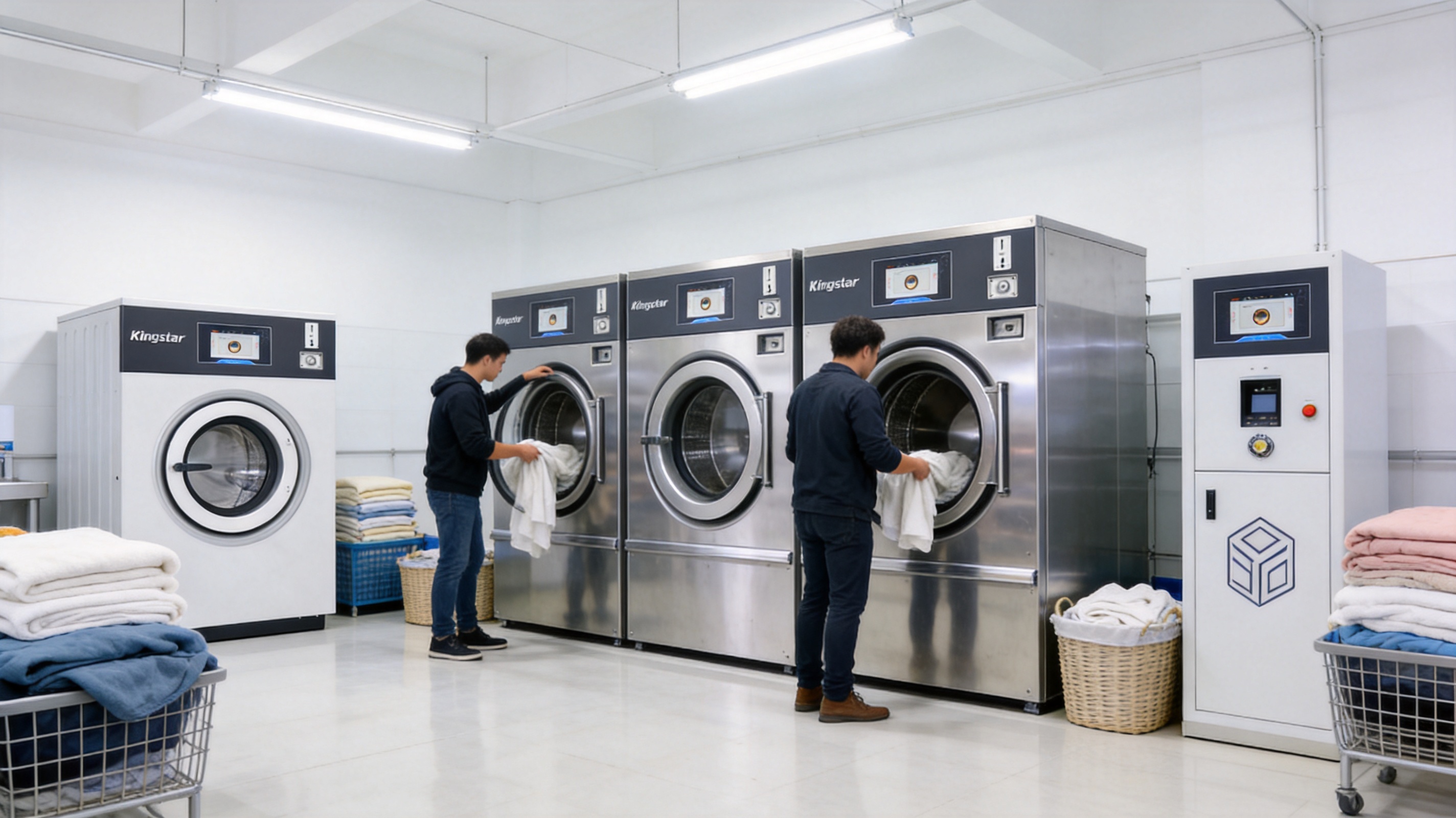
In a laundromat, customers expect machines to be easy to use, available when needed, and capable of handling ordinary clothing as well as larger household textiles. The 15 kg model can serve customers with moderate loads, while the 20 kg and 25 kg models can accommodate blankets, bedding, towels, and family-size laundry.
Multiple payment methods can increase convenience and reduce barriers to use. High-speed extraction can also improve turnover by helping customers complete the washing and drying process more quickly. The stainless steel drum and robust transmission are suited to repeated cycles throughout the day.
Apartment and residential laundry rooms
Apartment complexes often need durable equipment that can operate with limited staff supervision. Coin, card, or QR-code payment enables residents to use the laundry room independently. The anti-pry coin control box and programmable control system can help property managers protect equipment and maintain a consistent user experience.
Noise performance and installation quality are particularly important in residential properties. The machine should be installed on a properly prepared floor, with suitable drainage and electrical protection, to minimize vibration and disturbance.
Hotels and hospitality facilities
Hotels process towels, sheets, pillowcases, uniforms, bathrobes, and other textiles on a regular schedule. A commercial washer with load-based water control, high extraction, and automatic dosing compatibility can support more consistent linen processing.
The machine can be incorporated into a hotel’s own laundry operation or used in a staff laundry room. Programmable cycles allow operators to configure settings for different textile groups, while the robust construction supports recurring daily use.
Healthcare and care facilities
Healthcare and care environments require dependable washing processes and careful handling of textiles. The 304 stainless steel water-contacting construction, programmable cycles, automatic dosing compatibility, and controlled door-lock system are useful features for these applications.
Facilities should establish their own validated laundry procedures, chemical specifications, hygiene requirements, and operating controls. The washer provides the equipment platform, but effective infection-control and textile-care procedures must be defined by the facility and its professional advisors.
Restaurants, gyms, and service businesses
Restaurants may need to wash kitchen towels, table linens, uniforms, and cleaning textiles. Gyms, spas, and swimming facilities process towels and staff garments. In these settings, a 15–25 kg washer can provide greater capacity than domestic equipment while occupying less space than a large industrial installation.
The ability to customize cycles and connect an automatic dosing system helps operators create repeatable results for different textile categories. High extraction can also reduce the time required before textiles are ready for reuse.
Product Specifications in Detail
| Specification | SMS-2015C | SMS-2020C | SMS-2025C |
|---|---|---|---|
| Operating voltage | 380 V / 3 phase / 50 Hz | 380 V / 3 phase / 50 Hz | 380 V / 3 phase / 50 Hz |
| Washing capacity | 5–15 kg | 8–20 kg | 8–25 kg |
| Drum volume | 150 L | 200 L | 250 L |
| Washing and spinning speed | 30–740 rpm | 30–690 rpm | 30–690 rpm |
| Transmission power | 1.5 kW | 2.2 kW | 3 kW |
| Electric heating power | 12 kW | 18 kW | 18 kW |
| Heating method | Electric | Electric | Electric |
| Noise level | ≤70 dB | ≤70 dB | ≤70 dB |
| Automatic dosing ports | 8 | 8 | 8 |
| Inlet water pressure | 0.2–0.4 MPa | 0.2–0.4 MPa | 0.2–0.4 MPa |
| Inlet pipe diameter | DN20 | DN20 | DN20 |
| Hot water pipe diameter | DN20 | DN20 | DN20 |
| Drain pipe diameter | 76 mm | 76 mm | 76 mm |
| Dehydration factor | 200 G | 200 G | 200 G |
| Approximate dimensions | 800 × 1,100 × 1,300 mm | 920 × 1,115 × 1,475 mm | 920 × 1,235 × 1,475 mm |
| Approximate weight | 328 kg | 362 kg | 385 kg |
| Drain center-to-floor height | 86.61 mm | 98 mm | 98 mm |
The specifications should be reviewed together with the installation drawing and final technical quotation. In particular, buyers should verify the actual electrical configuration, heating arrangement, shipping dimensions, door clearance, drain layout, water pressure, and foundation requirements before preparing the site.
Installation, Maintenance, and Ownership Considerations
Prepare the site before delivery
A successful installation begins with site planning. The floor must be capable of supporting the machine’s operating weight and dynamic forces. Adequate space should be provided around the washer for loading, unloading, service access, ventilation, and safe movement of staff or customers.
Electrical installation should be completed by qualified personnel. The supply must match the ordered voltage, phase, frequency, heating power, and protection requirements. Water inlet pressure should remain within the specified range, and drainage must be capable of handling the machine’s discharge volume without backing up.
Use appropriate loading practices
Operators should avoid both overloading and underloading. Overloading can restrict textile movement, reduce cleaning quality, increase mechanical stress, and create imbalance during extraction. Underloading may reduce productivity and can sometimes contribute to uneven distribution inside the drum.
Loads should be sorted according to textile type, color, contamination level, and chemical requirements. Heavy and light items should not be combined carelessly. Proper sorting helps the machine deliver better washing results and protects fabrics from unnecessary wear.
Maintain the water-contacting and drainage systems
Regular cleaning of the drum, door seal, detergent area, and drainage path helps maintain hygiene and machine performance. Operators should inspect for lint, foreign objects, detergent residue, and obstructions.
Water quality can affect equipment performance. Hard water may create scale in heating elements, valves, and internal passages. Facilities should evaluate water treatment or descaling procedures when local water conditions require them. Chemical suppliers should also confirm that detergents and additives are compatible with stainless steel and the machine’s seals and components.
Inspect mechanical and electrical components
Preventive maintenance should include inspection of bearings, belts or drive components where applicable, door hardware, hoses, valves, electrical connections, and safety interlocks. Unusual noise, vibration, leakage, heating behavior, or extraction performance should be investigated promptly.
Although the machine is designed for durability, no commercial washer is maintenance-free under every operating condition. Preventive inspection is less expensive and less disruptive than waiting for a major breakdown. Maintenance records can also help identify usage patterns and plan replacement of wear components.
Why This Washer Is a Strong Competitive Choice
The product’s main competitive advantage is the way its features support the complete laundry workflow. It is not limited to basic washing. It combines capacity flexibility, high extraction, load-based water control, payment technology, programmable operation, automatic dosing compatibility, stainless steel construction, and commercial-grade safety features.
Compared with light-duty equipment, it offers stronger suitability for repeated commercial use. Compared with highly specialized industrial machines, the 15–25 kg capacity range may be more practical for facilities with moderate textile volumes or limited floor space. Compared with fixed-function equipment, its customizable controls and payment choices provide greater operational flexibility.
The manufacturing approach adds further value. The use of imported electrical components, durable water-contacting materials, a three-bearing transmission, and model-specific drum construction indicates attention to long-term reliability. OEM and ODM capabilities can also help distributors and project customers obtain configurations suited to regional markets.
Most importantly, the washer is designed around measurable business benefits: more efficient resource use, faster downstream drying, reduced manual dosing, simpler customer operation, safer extraction, and the ability to process different load sizes. These advantages can contribute to a lower total cost of ownership and a more dependable laundry service.
Frequently Asked Questions
What capacities are available?
The product range includes 15 kg, 20 kg, and 25 kg commercial models. The listed washing capacity ranges are 5–15 kg for the SMS-2015C, 8–20 kg for the SMS-2020C, and 8–25 kg for the SMS-2025C.
Is the washer suitable for laundromats?
Yes. The washer is designed for self-service applications and can support coin, QR-code, credit-card, and rechargeable-card payment configurations, subject to the selected system and local requirements.
Can the machine be used in hotels and apartment buildings?
Yes. Its programmable operation, flexible payment methods, stainless steel water-contacting parts, high extraction, and commercial construction make it suitable for hotels, apartment laundry rooms, and other shared or staff-operated facilities.
What is the extraction factor?
All three listed models have a 200 G dehydration or extraction factor. High extraction can reduce the moisture remaining in textiles and may shorten subsequent drying time.
Does the washer support automatic detergent dosing?
Yes. The washer has eight automatic dosing ports and an open signal interface intended to support dispensers from different brands. The final dosing configuration should be confirmed before ordering.
What material is used for the drum and water-contacting components?
The inner drum, outer cylinder, and other water-contacting components are made from 304 stainless steel, providing corrosion resistance and a durable washing environment.
Can users open the door during extraction?
No. The electronic door lock is controlled by the machine’s program and prevents opening until high-speed extraction has fully stopped.
What heating method is used?
The listed models use electric heating. The specified heating power is 12 kW for the 15 kg model and 18 kW for both the 20 kg and 25 kg models.
What electrical supply is required?
The standard listed operating supply is 380 V, three phase, 50 Hz. The product information also lists various 200–240 V and 380–415 V options. Buyers must confirm the exact voltage, phase, frequency, and heating configuration with the manufacturer before purchase.
How loud is the washer?
The listed noise level is no more than 70 dB. Actual results depend on installation, floor construction, load balance, operating condition, and room acoustics.
What is the expected service life?
The machine is described as designed for a service life of up to 20 years, subject to correct installation, appropriate use, and maintenance. The actual life of any machine depends on operating frequency, load practices, water quality, chemicals, and service conditions.
What warranty is available?
The supplied product information includes different warranty references. Buyers should request confirmation of the applicable warranty period, coverage, exclusions, spare-parts policy, and service responsibilities in the official quotation or contract.
Can the product be customized?
OEM and ODM solutions are available in principle. Possible customization may include payment methods, voltage, programming, branding, language, dosing systems, and other project requirements. All modifications should be documented and approved before production.
Conclusion
The coin-operated hardmount washer provides a balanced solution for commercial and institutional laundry operations requiring durability, flexible capacity, convenient payment, efficient extraction, and straightforward control. Available in 15 kg, 20 kg, and 25 kg configurations, it can serve both self-service customers and professional laundry staff.
Its 304 stainless steel construction, 200 G extraction, intelligent weighing, programmable LCD control, electronic door lock, automatic dosing interface, imported components, and three-bearing transmission design give it advantages over simpler commercial and household alternatives. The machine is also supported by a manufacturing approach focused on material selection, integrated systems, customization, and long-term commercial performance.
For laundromats, apartment complexes, hotels, healthcare facilities, restaurants, gyms, and other organizations, the most important question is not simply how much a washer costs to purchase. The more meaningful question is how reliably it can convert water, energy, detergent, labor, and floor space into clean, ready-to-use textiles over many years. With appropriate installation and maintenance, this product is engineered to support that objective.
References
1. Product technical specification sheet for SMS-2015C, SMS-2020C, and SMS-2025C commercial washers.
2. Commercial laundry equipment operating and maintenance principles.
3. Industrial stainless steel selection guidelines for water-contacting equipment.
4. Commercial washer-extractor safety and installation practices.
5. Laundry process efficiency principles for water management, chemical dosing, extraction, and drying.
Product: Coin-Operated Hardmount Washer(15/20/25kg)

ADD:No.388 Xinggang Road, Chongchuan District, Nantong City, 226000, Jiangsu Province, China.
-
Phone: +86-13917089379
-
Tel:+86-13917089379
-
Fax:+86-0513-85663366
-
E-mail:louislu@kingstarlaundry.com
products