英语
英语 俄语
俄语 西班牙语
西班牙语 德语
德语
Home / Author / Yutong Cai — Customer Solutions Specialist / 25 kg Quiet Wet Washing Machine: High-Performance Washer Extraction for Modern Commercial Laundry Operations

Kingstar is your trusted partner for industrial and commercial laundry equipment. We specialized in the R&D and manufacturing of high-end industrial washers, commercial washers and dryers. Meanwhile, we provide global clients with comprehensive planning, layout workflow design, and software-hardware integration services for smart laundry plants.
Yutong Cai — Customer Solutions Specialist
Aug 21,2026
25 kg Quiet Wet Washing Machine: High-Performance Washer Extraction for Modern Commercial Laundry Operations
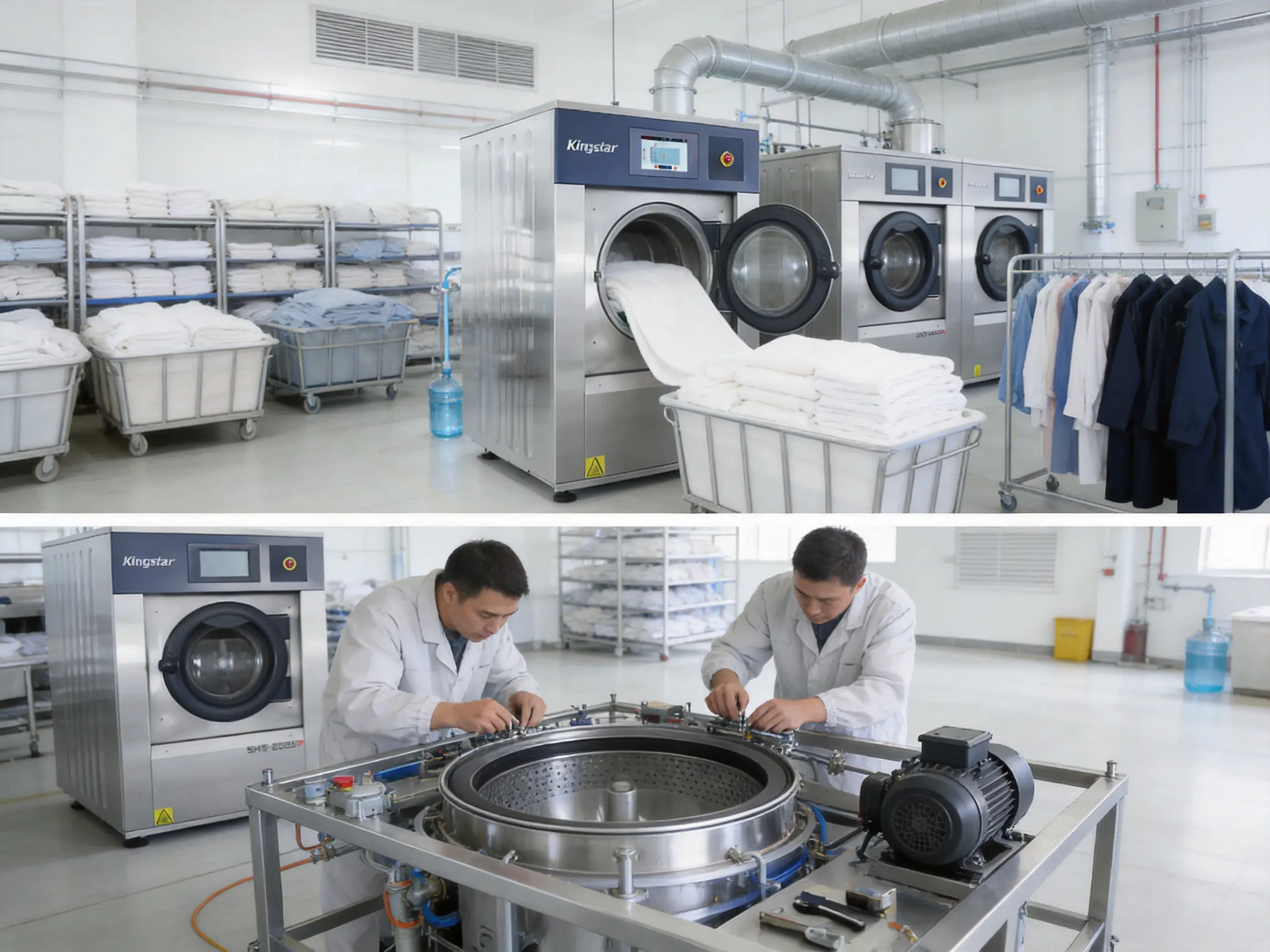
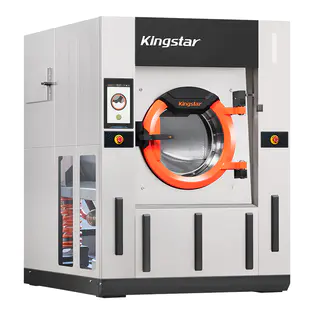
Commercial laundry operations require equipment that can process large volumes of textiles while maintaining consistent washing quality, efficient extraction, safe operation, and dependable long-term performance. The 25 kg Quiet Wet Washing Machine is designed for demanding environments such as hotels, hospitals, nursing facilities, industrial laundries, uniform services, textile care centers, and other professional laundry applications.
With a variable capacity of 8 to 25 kg, a 250-liter drum volume, extraction speeds of up to 1,080 revolutions per minute, and a G factor of 400, this washer extractor provides a practical balance between productivity and fabric care. Its quiet operating specification of no more than 70 dB also makes it suitable for facilities where noise control is important.
The machine is engineered for professional users who need more than basic washing. It combines washing, rinsing, and high-speed extraction in one commercial platform, helping reduce water retained in textiles before drying. This can shorten dryer cycles, lower energy consumption during finishing, and improve the overall throughput of a laundry department.
Manufactured by Jiangsu Chuandao Intelligent Equipment Co., Ltd., the machine reflects a manufacturing approach centered on industrial durability, controlled performance, practical installation, and flexible application. The company serves the commercial laundry machinery sector and provides equipment designed for businesses that require reliable production rather than occasional domestic use.
What Makes a 25 kg Washer Extractor Important?
Capacity is one of the most important considerations when selecting commercial laundry equipment. A machine that is too small may force operators to run excessive numbers of cycles, increasing labor, water consumption, and operating time. A machine that is too large may waste resources when daily loads are moderate. A 25 kg washer extractor offers a useful middle-to-large capacity range for facilities that need substantial output without immediately moving to the largest industrial systems.
The 8 to 25 kg operating range gives laundry managers greater flexibility. Smaller loads can be processed without requiring the machine to be filled to its maximum capacity, while larger batches can take advantage of the full drum volume. This is especially useful for mixed textile schedules, where towels, bed linen, uniforms, healthcare garments, and cleaning cloths may need to be washed at different times.
The 250-liter drum volume supports the rated capacity and provides space for textiles to move through the wash liquor. Proper textile movement is essential for detergent distribution, mechanical action, rinsing, and even extraction. When a drum is designed around commercial washing requirements, the result can be more consistent treatment across the load than is typically possible with smaller consumer-oriented machines.
A commercial washer extractor also reduces the number of transfers required during processing. In a conventional workflow, textiles may need to move from a washing machine to a separate extractor before entering a dryer. A combined washer extractor completes the washing and moisture-removal stages in one unit. This can reduce handling, save floor space, and simplify the movement of wet textiles through the laundry.
Core Technical Specifications
| Specification | Technical Value | Operational Meaning |
|---|---|---|
| Model | SHS-2025P | Commercial washer extractor configuration |
| Rated capacity | 8 to 25 kg | Suitable for variable commercial loads |
| Drum volume | 250 liters | Supports large textile batches and effective load movement |
| Washing and extraction speed | 10 to 1,080 rpm | Allows low-speed washing and high-speed moisture extraction |
| Motor power | 3 kW | Provides drive power for washing and extraction operation |
| Electrical heating power | 18 kW | Supports electrically heated washing processes where required |
| Noise level | 70 dB or lower | Helps support a more comfortable working environment |
| G factor | 400 | Indicates strong centrifugal moisture removal capability |
| Detergent cups | 9 | Provides multiple chemical dispensing positions |
| Steam pressure | 0.2 to 0.4 MPa | Supports facilities using steam heating |
| Water inlet pressure | 0.2 to 0.4 MPa | Defines the recommended water supply pressure range |
| Water inlet pipe | 27.5 mm | Connection size for water supply installation |
| Hot water pipe | 27.5 mm | Connection size for hot water supply |
| Drainage pipe | 72 mm | Large outlet size for effective drainage |
| Inner drum diameter and depth | 750 × 566 mm | Provides a professional washing chamber configuration |
| Overall dimensions | 1,055 × 1,055 × 1,465 mm | Defines the required installation footprint |
| Weight | 463 kg | Reflects a substantial commercial machine structure |
| Electrical supply | 380 V | Designed for compatible industrial or commercial electrical systems |
The specifications show that this machine is intended for facilities with appropriate industrial utilities. Before installation, the buyer should confirm electrical compatibility, water pressure, drainage, ventilation, access routes, and any local safety requirements. Correct site preparation helps protect the equipment and supports stable performance over its working life.
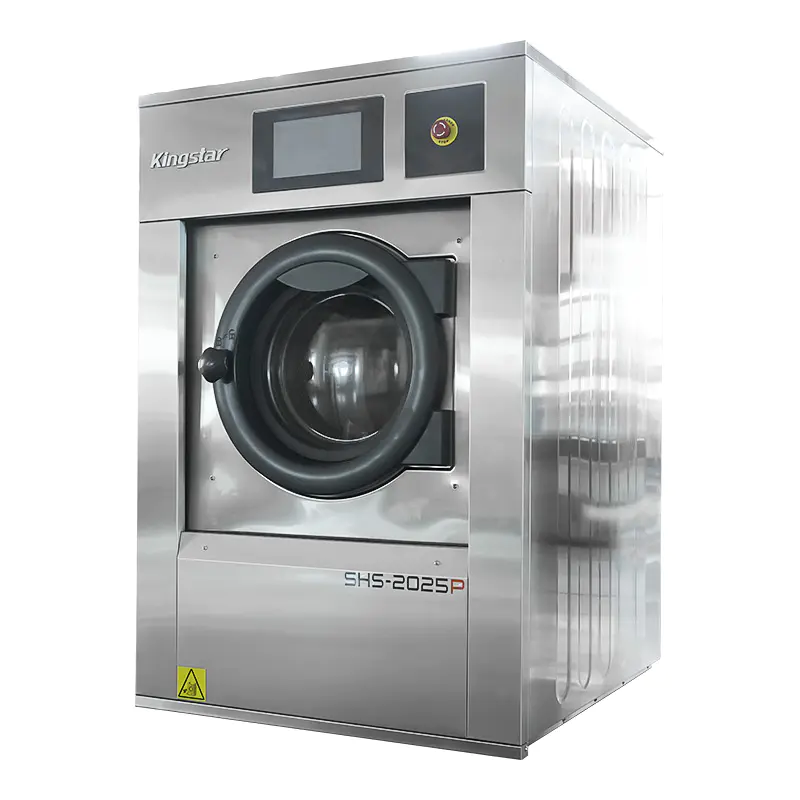
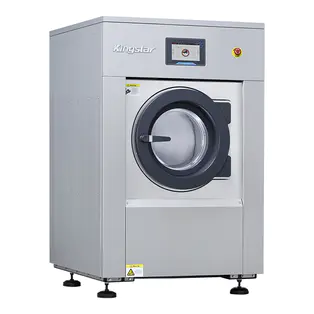
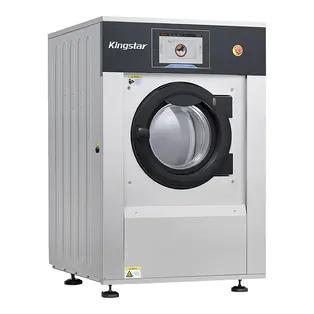
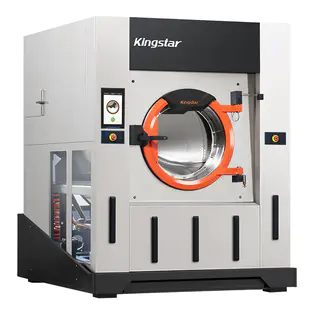
25kg Quiet Wet Washing Machine
Quiet Operation for Better Laundry Environments
Noise is often overlooked when comparing commercial laundry equipment. However, a laundry machine may operate for many hours each day, sometimes near offices, hotel service areas, healthcare departments, staff rooms, or customer-accessible spaces. Excessive noise can make communication difficult, increase workplace discomfort, and create an unfavorable impression of the facility.
The 25 kg Quiet Wet Washing Machine is specified at no more than 70 dB. This does not mean that the machine is silent, because washing, water filling, drainage, drum rotation, and high-speed extraction naturally produce operating sound. Instead, the specification indicates a controlled noise level suitable for a professional environment when the machine is correctly installed and maintained.
Quiet operation can be supported by several engineering factors. These include balanced drum rotation, a stable frame, appropriate bearing design, accurate assembly, controlled drive operation, and proper installation. A level foundation is particularly important. If the machine is installed on an unsuitable or uneven surface, vibration and noise may increase even when the machine itself is correctly manufactured.
Lower operating noise can also improve productivity. Operators can communicate more easily, identify unusual sounds more quickly, and work in a less stressful environment. For hospitals, hotels, and care facilities, controlling laundry noise can be especially valuable because these organizations may operate around the clock.
High-Speed Extraction and the G Factor
Washing removes soil, stains, body oils, and other contaminants from textiles, but the process is not complete until excess water is removed. The extraction stage has a major effect on the time and energy required for drying. The SHS-2025P provides extraction speeds from the washing range up to 1,080 rpm and a G factor of 400.
The G factor describes the centrifugal force applied to textiles during extraction. A higher G factor generally allows more water to leave the textile load. The practical benefit is lower residual moisture after washing. Textiles entering the dryer with less retained water can require shorter drying times, depending on fabric type, load size, dryer configuration, and operating conditions.
Efficient extraction can contribute to lower total laundry costs. Dryers commonly consume significant energy because they must evaporate water from the load. If the washer extractor removes more moisture mechanically, the dryer has less work to perform. This can improve throughput and support more efficient use of gas, electricity, steam, or other heating sources.
Extraction speed must always be matched to the textile type and load balance. Delicate items may require lower speeds, while durable towels, workwear, and bed linen may tolerate stronger extraction. The broad speed range provides operators with the flexibility to select an appropriate process rather than applying one fixed speed to every textile category.
Load distribution is also essential. Operators should not overload the drum, mix unsuitable textile categories, or place a heavily unbalanced load into a high-speed extraction cycle. Correct loading improves extraction results, reduces mechanical stress, and supports quieter operation.
Flexible Heating Options
The machine includes 18 kW of electrical heating power and supports steam pressure from 0.2 to 0.4 MPa. This gives facilities the ability to select a heating approach that matches their available utilities and process requirements. Electrical heating may be practical in facilities with suitable electrical capacity, while steam heating can be beneficial in laundries that already operate a central boiler or steam distribution system.
Heating flexibility is important because commercial laundries differ significantly in infrastructure. A hotel may use electric systems, a hospital may have centralized steam, and an industrial laundry may integrate several heating sources depending on its production layout. Supporting both electrical and steam-related specifications can make the machine easier to integrate into different facility designs.
Temperature control is important for cleaning performance, chemical effectiveness, and textile protection. Different fabrics and contamination types require different wash temperatures. Operators should follow textile-care instructions, detergent recommendations, and applicable hygiene procedures when selecting a program.
Heating performance also depends on incoming water temperature, water pressure, load size, insulation, and utility stability. The stated heating power provides a technical reference, but actual heating time will vary according to site conditions. Professional installation and commissioning help ensure that the heating system operates as intended.
Multiple Detergent Cups for Process Control
The machine is equipped with nine detergent cups. Multiple chemical compartments provide a practical way to organize washing chemicals and introduce them at suitable stages of the program. Depending on the application, operators may use separate compartments for main detergent, prewash detergent, oxygen-based products, fabric treatment agents, or other approved laundry chemicals.
Separate detergent positions can improve process consistency. Instead of manually adding every chemical at uncertain times, the operator can prepare the compartments according to the selected washing procedure. This helps reduce dosing errors and may improve repeatability between loads.
Commercial laundry managers should establish written chemical procedures. These procedures should specify the chemical product, dose, loading point, timing, textile category, and safety precautions. Chemicals should never be mixed directly unless the manufacturer specifically approves the combination. Proper training is essential, particularly in healthcare and industrial environments where chemical handling requirements may be strict.
The nine-cup arrangement also supports different customer requirements in outsourced laundry operations. A service provider may process hotel linen, restaurant textiles, uniforms, and healthcare items under separate formulas. Multiple chemical positions make it easier to configure these processes without redesigning the entire equipment layout.
Designed for Hotels and Hospitality Laundry
Hotels and resorts need reliable laundry equipment because linen quality directly affects guest satisfaction. Sheets, pillowcases, towels, bathrobes, table linen, and housekeeping textiles must be cleaned regularly and returned to service quickly. Delayed laundry production can affect room turnover, event preparation, and daily operations.
The 25 kg capacity is suitable for many hotel laundry departments that need a strong production machine without occupying the space required by a much larger industrial system. Its high extraction performance can help reduce drying time for towels and bed linen, while its variable capacity allows smaller batches to be processed when occupancy or event demand changes.
Quiet operation can also benefit hotels with laundry rooms located near guest areas or staff facilities. Although installation location remains important, a controlled sound specification can help reduce the impact of machine operation on the surrounding environment.
Hotels may also benefit from the machine’s ability to handle different process temperatures, detergent configurations, and extraction settings. A suitable program can be selected for each textile group, helping maintain fabric appearance and prolonging the usable life of linen.
Suitable for Healthcare and Hospital Laundry
Hospitals, clinics, nursing homes, and other healthcare facilities require disciplined textile processing. Bedding, patient garments, staff uniforms, towels, surgical textiles, and cleaning materials may be exposed to different types of contamination and must be handled according to institutional procedures.
A commercial washer extractor can support healthcare laundry by providing repeatable washing and extraction stages. The 25 kg capacity allows a facility to separate textile categories more effectively than a small domestic machine. For example, patient linen, staff garments, and general cleaning cloths can be scheduled under different approved procedures.
Healthcare operators must define their own hygiene standards and validate wash programs according to local regulations and professional guidance. The machine itself is not a substitute for a complete infection-control system. Proper sorting, pre-treatment, chemical selection, temperature control, drying, finishing, storage, and staff training all remain essential.
The machine’s heating options and chemical compartment arrangement can support a variety of professional procedures. Its high-speed extraction can reduce the moisture content of washed textiles, allowing them to move efficiently to drying and finishing operations.
Noise control is another practical advantage in healthcare settings. Laundry areas may be located near patient-care functions, and minimizing unnecessary operating noise can support a more comfortable environment for patients and staff.
Industrial and Uniform Laundry Applications
Industrial facilities often need to clean workwear, protective garments, uniforms, wiping cloths, shop towels, and other textiles exposed to oils, dust, grease, chemicals, or heavy soil. These materials may be more demanding than ordinary household laundry and may require strong mechanical action, controlled chemical dosing, and dependable extraction.
The 250-liter drum and 25 kg maximum capacity make the machine suitable for many internal industrial laundry departments and specialized service providers. The adjustable washing and extraction speeds enable operators to create different processes for durable fabrics and more sensitive workwear.
Industrial users should carefully review garment labels and contamination risks before processing. Some substances may require pre-treatment, special segregation, or dedicated equipment. Textiles contaminated with hazardous materials must be handled under appropriate workplace safety procedures.
For uniform rental and textile service companies, consistency is particularly important. Customers expect garments to be returned clean, presentable, dry, and ready for use. A washer extractor that delivers repeatable washing and moisture removal can support service quality and help operators plan production more effectively.
Advantages Compared with Basic Commercial Washing Machines
Combined Washing and Extraction
A basic washing machine may clean textiles but leave them with a high amount of retained water. The operator may then need to transfer the load to a separate extractor. The washer extractor combines these stages, reducing handling and saving floor space.
Higher Professional Capacity
Consumer machines are generally designed for household loads and intermittent use. A 25 kg commercial machine is built around larger batch processing and professional workflow requirements. Its drum volume and structural weight support a more substantial operating scale.
Higher Extraction Potential
The maximum speed of 1,080 rpm and G factor of 400 provide stronger extraction capability than many basic washing machines. This can reduce the burden placed on downstream dryers and improve the speed of the overall laundry cycle.
More Process Flexibility
The speed range, multiple detergent cups, heating options, and broad capacity range allow the machine to handle different textile types and operating procedures. This is more adaptable than equipment with only one fixed wash speed or limited chemical access.
Noise-Conscious Design
A specified noise level of 70 dB or lower demonstrates attention to the working environment. Businesses comparing machines should consider not only capacity and price but also the effect of daily operating noise on staff, customers, and nearby departments.
Commercial Construction
With a listed weight of 463 kg and industrial dimensions, the machine is clearly intended as a substantial commercial installation rather than a lightweight domestic appliance. A robust structure can help support stability during washing and high-speed extraction when the machine is correctly installed and loaded.
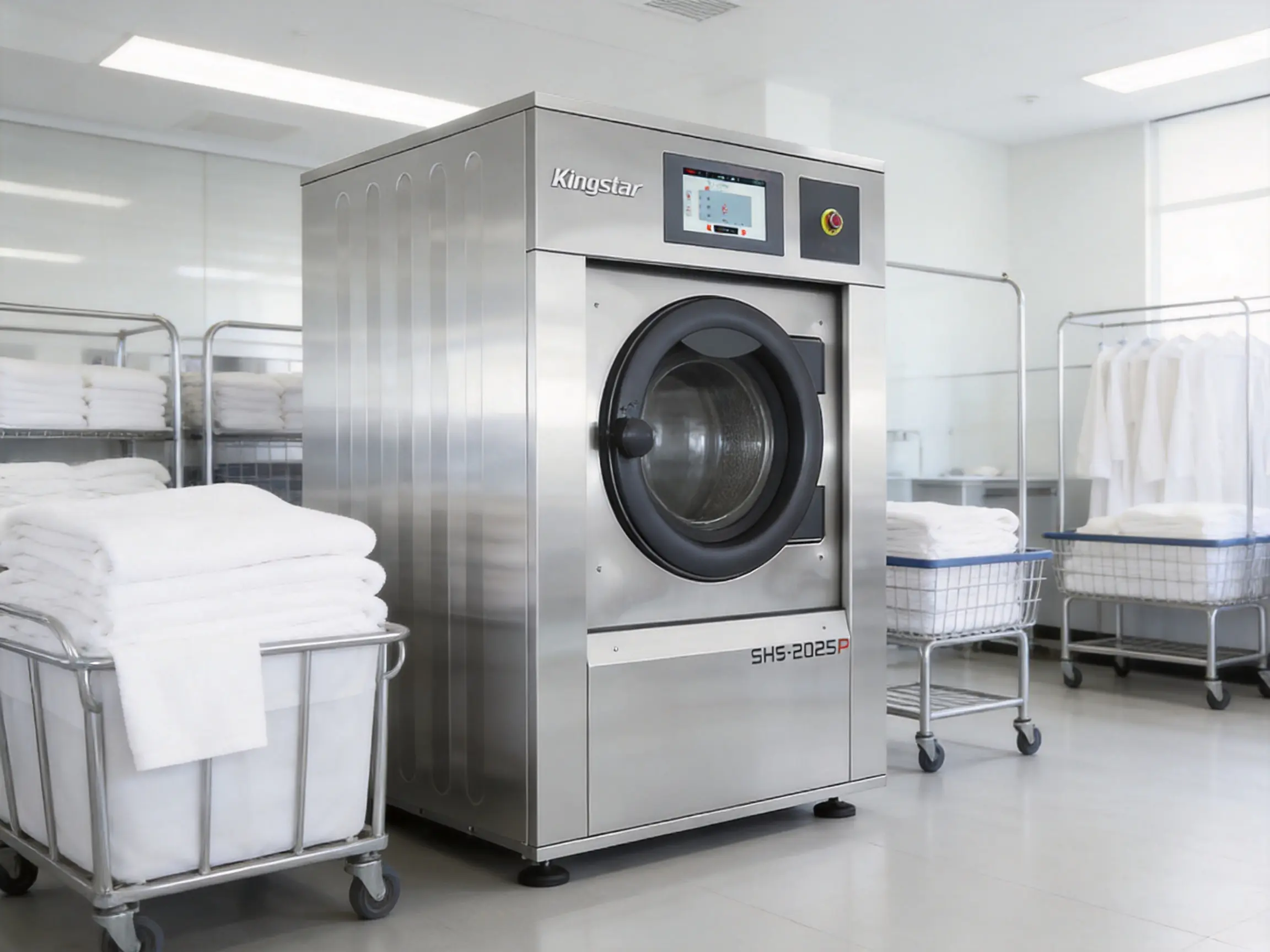
Manufacturing Strengths and Production Approach
Jiangsu Chuandao Intelligent Equipment Co., Ltd. operates in the commercial laundry machinery field, supplying washing machines, washer extractors, dryers, and related laundry equipment. Its product range reflects a focus on professional textile-care applications rather than household appliances.
Advanced manufacturing is not limited to one machine tool or one production step. It includes design verification, component selection, welding and fabrication, machining, assembly, electrical integration, performance testing, quality control, packaging, and technical support. For a commercial washer extractor, each stage affects reliability and operating stability.
Engineering Based on Commercial Use
Commercial laundry equipment must be designed around repeated daily operation. This requires attention to drum balance, drive transmission, bearing loads, frame rigidity, water management, heating, drainage, chemical exposure, and operator safety. A professional manufacturer evaluates these factors as part of the complete machine rather than treating them as isolated features.
The SHS-2025P specification demonstrates a design intended to support a range of commercial processes. Its 250-liter drum, variable-speed operation, strong extraction capability, multiple detergent cups, and dual heating-related provisions indicate that the machine is developed for facilities with different workflow and utility requirements.
Fabrication and Structural Stability
The machine’s substantial 463 kg weight reflects the need for a stable commercial structure. A washer extractor must control forces generated during drum rotation, especially when operating at high extraction speed. Structural fabrication, frame alignment, component fit, and installation accuracy all contribute to this objective.
Manufacturing quality in the frame and drum assembly is important because small alignment errors can become more noticeable during high-speed operation. Controlled fabrication and careful assembly help support smoother rotation, lower vibration, and more consistent performance.
Precision Assembly
Commercial machinery depends on the correct relationship between mechanical, electrical, hydraulic, and control components. Assembly technicians must ensure that the drum, drive system, water valves, heating components, drainage system, panels, and safety devices work together as a complete unit.
Precision assembly also makes maintenance easier. Clearly organized connections, accessible service points, and consistent component placement can reduce troubleshooting time. For commercial users, shorter maintenance interventions can make a meaningful difference to production schedules.
Performance Testing
Testing is a central part of responsible commercial equipment manufacturing. A washer extractor should be evaluated for water filling, drainage, rotation, extraction, heating response, electrical safety, vibration behavior, and operating noise. Testing helps identify problems before equipment is shipped to a customer.
Manufacturers serving international customers must also consider differences in site utilities, electrical systems, installation practices, and regulatory expectations. Clear technical data allows distributors, engineers, and buyers to evaluate compatibility before purchase.
Quality-Oriented Component Selection
Component selection influences the machine’s service life and maintenance requirements. Motors, bearings, seals, valves, heating elements, control components, fasteners, and drainage parts must be chosen for a wet, chemically active, and frequently used environment.
A quality-oriented manufacturer considers not only initial performance but also replacement availability, compatibility, service access, and the effect of component wear on the rest of the machine. This approach supports a more practical total cost of ownership.
Installation Requirements
The recommended installation environment should be dry, clean, and well ventilated. This basic instruction is important because commercial laundry machines operate with water, heat, electricity, detergents, and moving mechanical parts. A suitable environment helps protect the machine and creates safer working conditions for operators.
The floor should be capable of supporting the machine’s operating weight and dynamic forces. The installation surface should be level and stable. The machine’s dimensions are approximately 1,055 mm in width, 1,055 mm in depth, and 1,465 mm in height, but additional clearance is required for doors, hoses, electrical access, maintenance, ventilation, and operator movement.
The 380 V electrical supply must be confirmed before installation. Electrical work should be completed by qualified professionals in accordance with local regulations. Appropriate protection, grounding, disconnecting equipment, and cable sizing should be provided according to the installation design and applicable codes.
Water supply pressure should be within the stated range of 0.2 to 0.4 MPa. The water inlet and hot water pipe specifications are both 27.5 mm. The drainage connection is listed as 72 mm. Drainage must be arranged so that used water can leave the machine quickly without backflow or flooding.
Facilities using steam should confirm that the steam supply operates within the specified 0.2 to 0.4 MPa range. Steam piping should be installed with suitable valves, traps, insulation, and safety provisions according to professional engineering requirements.
Ventilation is important even when the machine is not itself a dryer. Warm, humid air and chemical odors may be present in a laundry room. Good ventilation helps protect the surrounding building, improve employee comfort, and reduce condensation.
Operating Practices for Consistent Results
Operators should sort textiles by fiber type, color, contamination level, and required process. Overloading the machine can reduce washing quality, restrict textile movement, increase imbalance, and place additional stress on mechanical components. Underloading may also affect balance during extraction, so loads should be prepared appropriately.
Detergent and chemical doses should be based on textile weight, soil level, water quality, chemical concentration, and the approved wash formula. Excess chemical use does not necessarily improve cleaning and may increase residue, textile wear, water consumption, and operating cost.
The selected extraction speed should reflect the textile. Durable cotton towels and workwear may benefit from higher extraction, while delicate materials may require gentler settings. Operators should use validated procedures rather than selecting the highest speed for every load.
Doors, seals, hoses, detergent cups, and drainage areas should be inspected routinely. Any unusual vibration, leakage, smell, sound, or heating behavior should be investigated promptly. Early attention can prevent minor issues from becoming major production interruptions.
The installation area should remain clean and dry. Detergent spills, standing water, lint accumulation, and blocked ventilation can create safety and maintenance problems. A daily cleaning and inspection routine is a simple way to support reliable operation.
Maintenance and Service Considerations
Preventive maintenance is essential for commercial laundry machinery. The exact maintenance schedule should follow the manufacturer’s service instructions and the intensity of use. A machine operating several shifts each day may require more frequent inspection than one used for a few cycles per week.
Routine checks may include inspection of door seals, hoses, clamps, drainage components, electrical connections, detergent compartments, drum condition, drive components, and structural fasteners. Operators should also observe whether extraction remains smooth and whether the machine produces unusual noise or vibration.
Water quality can affect service life. Hard water may create mineral deposits in heating components, valves, and internal surfaces. Facilities with challenging water conditions should consider suitable filtration or water-treatment measures and should monitor the effect of local water quality on the washing process.
Correct chemical selection also protects the machine. Highly corrosive, incompatible, or incorrectly dosed products can damage seals, metal surfaces, hoses, and internal components. Chemical suppliers and equipment technicians should cooperate when developing formulas for difficult soils.
A maintenance record should include cleaning, inspections, repairs, replaced parts, unusual events, and service dates. Documentation helps identify recurring problems and supports better planning for spare parts and downtime.
Total Cost of Ownership
The purchase price is only one part of the financial evaluation. Commercial laundry managers should consider water use, chemical consumption, heating cost, labor, drying time, maintenance, expected service life, installation, and production capacity.
The machine’s extraction capability may contribute to lower drying costs by reducing residual moisture. The variable capacity range may help reduce the need to run multiple small machines. The combined washing and extraction design may reduce labor associated with transferring wet loads.
Quiet operation can also have indirect value. A more comfortable work environment may support staff retention and reduce complaints from nearby departments. Reliable equipment can minimize missed production deadlines and the costs associated with outsourcing emergency laundry work.
When comparing competing machines, buyers should evaluate specifications under the same conditions. Capacity should be compared with drum volume, extraction performance with G factor, and energy claims with actual heating and operating requirements. A lower purchase price may not represent better value if the machine has limited flexibility or higher long-term service needs.
Why Manufacturer Experience Matters
Commercial laundry equipment is part of a complete workflow. The manufacturer’s understanding of washing, extraction, drying, textile handling, installation, and service can influence the success of the entire project.
A supplier with a focused laundry machinery background can help customers select equipment based on textile type, production volume, available utilities, floor space, and process goals. This is more useful than choosing a machine solely from a capacity number.
Jiangsu Chuandao Intelligent Equipment Co., Ltd. presents itself as a supplier of washing machines and laundry machinery, with capabilities that include commercial washer extractors and OEM or ODM cooperation. OEM and ODM support can be valuable for distributors, project contractors, laundry service companies, and brand owners that need customized configurations or market-specific solutions.
Manufacturing from Jiangsu, China also places the company within a major industrial supply region with access to engineering, fabrication, electrical, and logistics resources. International buyers should still confirm project-specific documentation, certifications, warranty terms, commissioning support, spare-parts arrangements, and after-sales responsibilities before placing an order.
Selection Guide for Buyers
Assess Daily Laundry Volume
Estimate the total dry textile weight processed each day and divide it according to the available operating hours. Consider peak periods, seasonal demand, future expansion, and the time required for loading, unloading, sorting, drying, and finishing.
Check Utilities Before Ordering
Confirm the availability of 380 V electrical power, water pressure between 0.2 and 0.4 MPa, suitable drainage, and either electrical or steam heating as required. Utility limitations should be identified before the machine arrives.
Measure the Full Installation Route
The published dimensions describe the machine itself, but the delivery route may include narrow doors, corridors, lifts, steps, or turns. Buyers should measure the complete access route and confirm the shipping weight and handling requirements.
Review Textile Types
Determine whether the machine will process towels, linen, uniforms, healthcare textiles, industrial garments, or mixed loads. This assessment will guide decisions about capacity, wash formulas, extraction speed, chemical dosing, and heating.
Plan the Downstream Process
The washer extractor should be evaluated together with dryers, flatwork ironers, garment finishers, folding equipment, storage areas, and transport carts. High extraction performance is most valuable when the dryer and finishing stages are also organized efficiently.
Confirm Support Requirements
Ask about installation guidance, operating manuals, spare parts, warranty coverage, technical training, troubleshooting assistance, and service response. These factors can be as important as the machine’s headline specifications.
Q&A: Frequently Asked Questions
What is the maximum load capacity?
The maximum stated capacity is 25 kg, while the operating range is 8 to 25 kg. The correct load depends on textile type, bulk, moisture absorption, and the selected washing procedure.
What is the drum volume?
The drum volume is 250 liters. This provides a substantial washing chamber for commercial textile loads and supports movement of the load through the wash process.
How fast can the drum extract water?
The listed washing and extraction speed range is 10 to 1,080 rpm. The appropriate speed should be selected according to the textile, load balance, and approved process formula.
What does a G factor of 400 mean?
A G factor of 400 indicates strong centrifugal extraction capability. In practical terms, the machine is designed to remove a significant amount of water before the textiles enter the dryer, although actual results depend on fabric, loading, speed, and operating conditions.
Is the machine suitable for hospitals?
It can be suitable for hospital and healthcare laundry applications when installed and operated under validated institutional procedures. Healthcare facilities must establish their own requirements for sorting, chemical use, temperature, hygiene validation, drying, storage, and staff safety.
Is it suitable for hotel laundry?
Yes. Its capacity, extraction performance, adjustable speeds, detergent-cup arrangement, and controlled noise specification make it suitable for many hotel, resort, and hospitality laundry departments.
What heating methods are supported?
The machine includes 18 kW of electrical heating power and lists a steam pressure range of 0.2 to 0.4 MPa. The final heating configuration should be confirmed according to the customer’s order, utility system, and installation design.
What water pressure is required?
The recommended water inlet pressure is 0.2 to 0.4 MPa. Stable pressure within this range helps support predictable filling and washing performance.
What electrical supply does it use?
The listed voltage is 380 V. Qualified electrical professionals should verify the local power system, phase configuration, protection requirements, grounding, and installation regulations before connection.
How many detergent compartments are provided?
The machine has nine detergent cups. These allow operators to organize chemicals for different stages of the wash formula, subject to the chemical supplier’s recommendations and the facility’s operating procedures.
How noisy is the machine?
The listed noise level is no more than 70 dB. Actual sound may be affected by floor quality, load balance, room acoustics, installation, maintenance, and surrounding equipment.
Can the machine process small loads?
The stated capacity range begins at 8 kg, so it can process smaller commercial loads than a full 25 kg batch. Operators should still load the drum correctly to maintain balance and washing performance.
What is the machine’s overall size?
The listed dimensions are 1,055 mm by 1,055 mm by 1,465 mm. Buyers should allow additional clearance for operation, maintenance, door opening, piping, electrical access, and ventilation.
Why is a dry, clean, and ventilated room recommended?
A clean, dry, and ventilated environment helps reduce corrosion, protect electrical components, control humidity, improve employee comfort, and extend the service life of the equipment.
How does the machine compare with a separate washer and extractor?
A combined washer extractor reduces the need to transfer wet textiles between two machines. This can save floor space, labor, and handling time. A separate washer and extractor may still be preferable for very large operations or specialized workflows, so the decision should be based on production volume and facility layout.
What should buyers ask the supplier before purchase?
Buyers should request confirmation of the final configuration, utility requirements, installation method, operating procedures, warranty terms, spare-parts availability, technical documentation, delivery conditions, and after-sales support.
Recommended Application Workflow
A successful laundry workflow begins with receiving and sorting. Textiles should be weighed or estimated accurately, checked for foreign objects, separated by category, and prepared according to the facility’s process. Proper sorting protects textiles and reduces the risk of cross-contamination or color transfer.
The next step is loading. Operators should distribute textiles appropriately and avoid exceeding the selected load limit. The door and seal should be checked before starting the program.
During washing, the selected temperature, chemical sequence, mechanical action, and time should match the textile and soil level. The nine detergent cups can help organize the chemical stages, while the available heating options support different facility utilities.
After washing and rinsing, extraction should be selected according to fabric requirements. High-speed extraction may be used for durable items, while more delicate materials may require reduced speed. Operators should monitor balance and stop the process if unusual vibration occurs.
After unloading, textiles should move promptly to drying or finishing. Efficient workflow design prevents wet loads from remaining in carts for extended periods and helps preserve production capacity.
Long-Term Value for Commercial Laundry Businesses
The value of a commercial washer extractor comes from how effectively it supports the entire laundry operation. Its capacity, extraction strength, heating flexibility, chemical organization, and quiet operation each contribute to a more controlled process.
For a hotel, this may mean faster linen turnaround. For a hospital, it may mean better separation and repeatability of textile processes. For an industrial facility, it may mean dependable cleaning of uniforms and workwear. For a textile service company, it may mean improved scheduling and customer consistency.
The machine’s performance should be supported by responsible installation, correct loading, suitable chemicals, regular maintenance, and trained operators. When these factors are combined, the equipment can deliver greater operational value than a machine selected only on purchase price.
Its commercial design also allows businesses to plan for growth. A facility that currently processes moderate volumes can use the variable capacity range, while future increases in textile demand can be supported by full-load operation, optimized extraction, and coordinated downstream drying.
Conclusion
The 25 kg Quiet Wet Washing Machine is a versatile commercial washer extractor for organizations that need dependable textile processing, strong moisture removal, flexible heating, practical chemical management, and controlled operating noise.
Its 8 to 25 kg capacity range, 250-liter drum, extraction speed of up to 1,080 rpm, G factor of 400, 18 kW electrical heating power, nine detergent cups, and noise specification of 70 dB or lower provide a strong technical foundation for professional laundry work.
Compared with basic commercial washing machines, it offers the operational advantages of combined washing and extraction, higher production capacity, more effective moisture removal, adaptable processing settings, and a structure intended for repeated industrial use. These features can help reduce handling, support dryer efficiency, improve workflow, and create a more comfortable laundry environment.
Manufactured by Jiangsu Chuandao Intelligent Equipment Co., Ltd., the machine is supported by a company focused on commercial laundry machinery and OEM or ODM cooperation. Its manufacturing strengths are reflected in a product approach that combines professional application knowledge, substantial construction, utility flexibility, organized chemical dosing, and attention to performance testing.
Before purchase, customers should confirm the final machine configuration, site utilities, floor requirements, installation access, local compliance needs, service arrangements, and process expectations. With proper preparation and operation, this washer extractor can become a valuable part of a hotel, healthcare, industrial, institutional, or textile-service laundry system.
References
1. Product technical specification sheet for model SHS-2025P, commercial washer extractor equipment.
2. International textile-care and commercial laundry operation guidelines.
3. Industrial washing, rinsing, and centrifugal extraction principles.
4. Professional laundry facility planning and utility installation practices.
5. Commercial laundry equipment maintenance and preventive service principles.
6. Textile hygiene management guidance for healthcare and institutional laundry operations.
7. General engineering practices for industrial equipment installation, grounding, drainage, and ventilation.
Product: 25kg Quiet Wet Washing Machine

ADD:No.388 Xinggang Road, Chongchuan District, Nantong City, 226000, Jiangsu Province, China.
-
Phone: +86-13917089379
-
Tel:+86-13917089379
-
Fax:+86-0513-85663366
-
E-mail:louislu@kingstarlaundry.com
products