英语
英语 俄语
俄语 西班牙语
西班牙语 德语
德语
Home / Author / Meiwen Zeng — Product After-Sales Service Manager / Coin-Operated Hardmount Washer: A Complete Guide to High-Efficiency Commercial Laundry Performance

Kingstar is your trusted partner for industrial and commercial laundry equipment. We specialized in the R&D and manufacturing of high-end industrial washers, commercial washers and dryers. Meanwhile, we provide global clients with comprehensive planning, layout workflow design, and software-hardware integration services for smart laundry plants.
Coin-Operated Hardmount Washer: A Complete Guide to High-Efficiency Commercial Laundry Performance
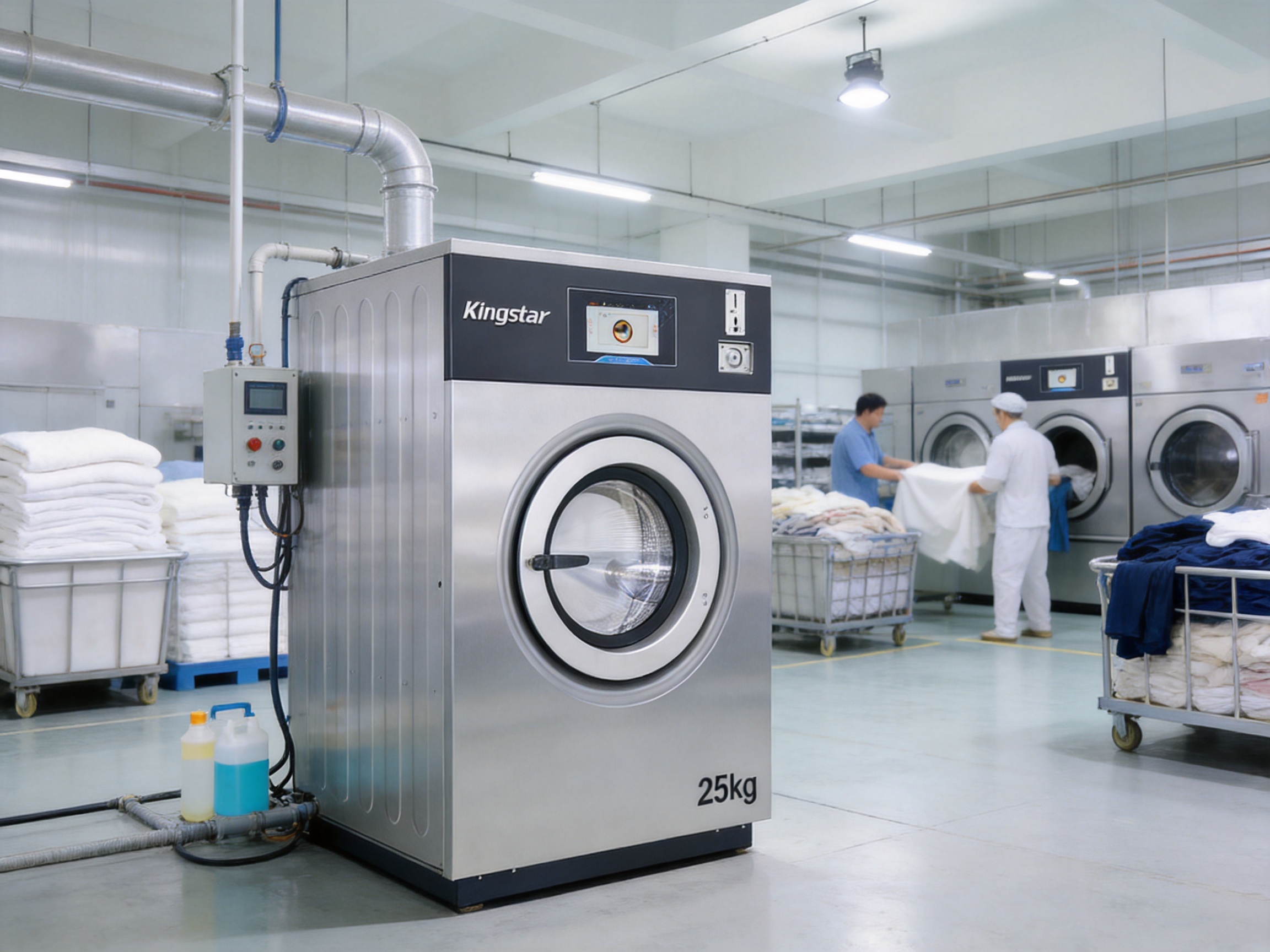
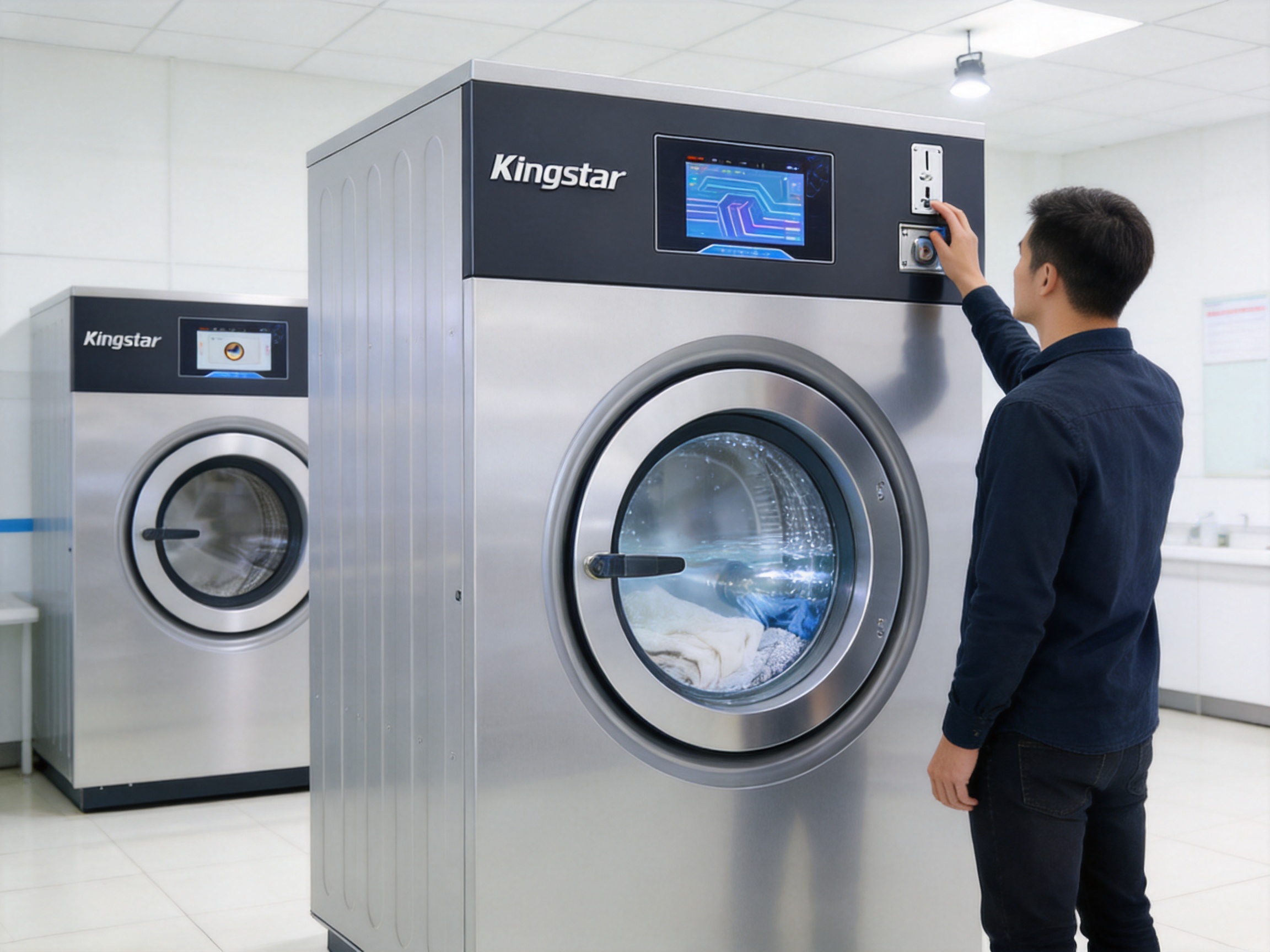
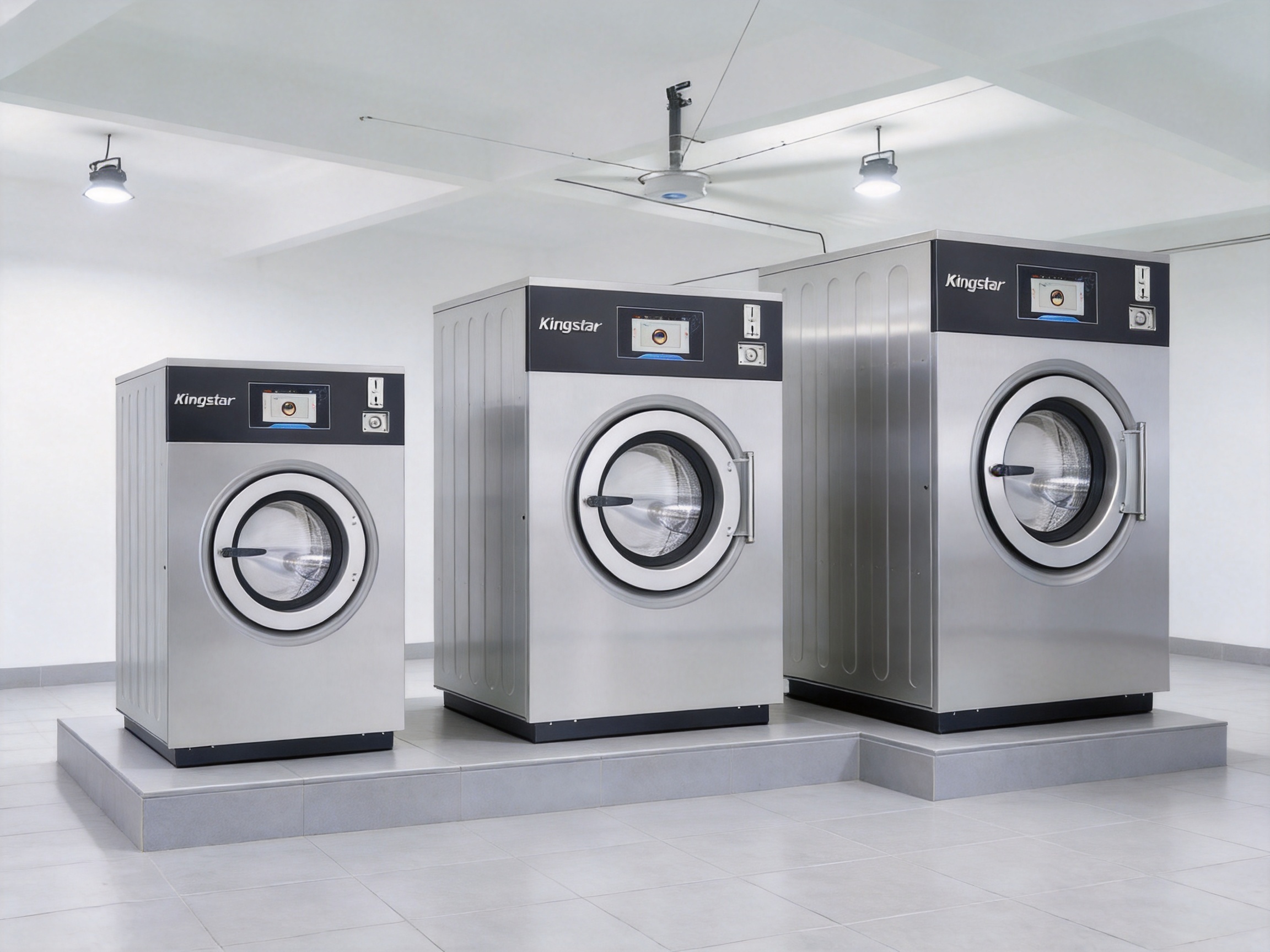
Commercial laundry operators need equipment that can process large volumes of textiles, deliver consistent washing results, control operating costs, and remain dependable under demanding daily use. The coin-operated hardmount washer in 15 kg, 20 kg, and 25 kg capacities is designed for precisely this environment. It combines industrial-grade construction, high-speed extraction, intelligent water management, flexible payment options, and programmable controls in one practical commercial washing solution.
Unlike domestic washing machines, commercial hardmount washers are built for repeated cycles, heavier loads, and extended operating hours. They are suitable for laundromats, apartment laundry rooms, hotels, hospitals, gyms, dormitories, care facilities, uniform services, and other businesses that require reliable self-service or managed laundry operations. The available models—SMS-2015C, SMS-2020C, and SMS-2025C—provide washing capacities from 5 kg to 25 kg, allowing operators to select a machine according to their available space, customer demand, and typical load size.
The product is manufactured by Jiangsu Chuandao Intelligent Equipment Co., Ltd., under the Kingstar laundry equipment range. Its design reflects the needs of professional laundry users: long service life, safe operation, efficient extraction, straightforward programming, and compatibility with modern payment and chemical-dosing systems.
1. Product Overview and Commercial Positioning
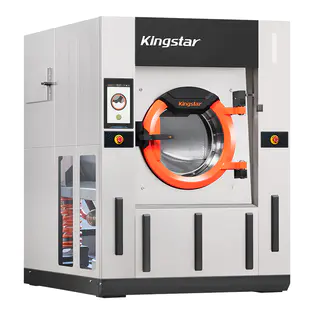
The coin-operated hardmount washer is a commercial washer-extractor that performs both washing and high-speed spinning in the same drum. Its hardmount structure provides a stable installation platform, while its industrial components are selected for regular use in commercial environments.
The product line includes three main models:
| Model | Nominal Capacity | Drum Volume | Maximum Extraction Speed | Overall Dimensions |
|---|---|---|---|---|
| SMS-2015C | 5–15 kg | 150 L | 740 rpm | 800 × 1100 × 1300 mm |
| SMS-2020C | 8–20 kg | 200 L | 690 rpm | 920 × 1115 × 1475 mm |
| SMS-2025C | 8–25 kg | 250 L | 690 rpm | 920 × 1235 × 1475 mm |
All three models use a rated operating voltage of 380 V, three phase, and 50 Hz in the listed configuration. The manufacturer also provides multiple voltage options, including single-phase and three-phase variants within 200–240 V and 380–415 V ranges. Voltage availability should be confirmed before ordering so that the selected configuration matches the local electrical infrastructure.
The machines are equipped with electric heating as standard in the published specification. Heating power is 12 kW for the 15 kg model and 18 kW for both the 20 kg and 25 kg models. The washing and spinning speed ranges are variable, allowing the operator or programmed wash formula to select appropriate movement for different textile types.
With a noise level of no more than 70 dB, the washer is designed to provide a relatively controlled operating environment for commercial facilities. This is particularly useful in apartment buildings, hotels, student residences, and other locations where laundry equipment operates near occupied spaces.
2. Why a Coin-Operated Hardmount Washer Is Valuable for Commercial Users
Coin-operated laundry equipment creates a practical business model in which users pay for each wash cycle. This arrangement is common in laundromats, rental apartments, hotels, dormitories, hostels, military housing, and shared employee accommodation. The machine owner can provide laundry services without assigning staff to collect payments or supervise every cycle.
The washer supports multiple payment methods, including coin payment, QR code payment, and card payment such as credit cards or rechargeable laundry cards. This flexibility helps operators serve different customer preferences. Coins remain convenient in many self-service laundries, while QR and card payment options can improve user convenience and reduce the need for cash handling.
A flexible payment system also supports different commercial strategies. A laundromat may charge customers per cycle, an apartment owner may connect payment to a resident account, and a hotel may use card-based access for staff or guests. The payment configuration can be selected according to the market, operating model, and local payment habits.
The anti-pry coin control box is another important operational feature. Self-service laundry equipment is exposed to public use, so protecting payment components is essential. A reinforced control area can help reduce the risk of unauthorized access and protect the revenue generated by the machine. Operators should still install the equipment in a well-monitored location and follow appropriate security procedures.
3. Industrial 304 Stainless Steel Construction
One of the most important advantages of this commercial washer is its extensive use of 304 stainless steel. The inner drum, outer cylinder, and water-contacting components are made from stainless steel designed to resist corrosion and maintain a clean washing environment.
Water, detergent, bleach, fabric softener, and varying textile soils can place continuous stress on washing-machine surfaces. Inferior materials may corrode, discolor, or deteriorate over time, especially in humid laundry rooms or facilities using heated water. Stainless steel construction helps protect the structural integrity of the washing system and reduces the possibility of rust contamination.
The inner drum mesh thickness is 1.2 mm for the SMS-2015C and SMS-2020C models and 1.5 mm for the SMS-2025C model. These specifications support a durable drum structure capable of handling repeated loading and unloading. The drum holes have a diameter of 3.5 mm, providing a balance between water circulation, drainage, and textile handling.
Stainless steel also offers maintenance advantages. Smooth, corrosion-resistant surfaces are easier to inspect and clean. This is valuable in laundromats and institutional facilities where hygiene, appearance, and regular maintenance affect customer confidence. A clean internal environment also helps prevent residue accumulation and unwanted odors when the machine is operated and maintained correctly.
Compared with machines that use more basic materials in water-contact areas, a stainless-steel commercial washer can offer stronger resistance to long-term moisture exposure. This does not eliminate the need for cleaning, descaling, inspection, or correct chemical dosing, but it provides a stronger foundation for professional operation.
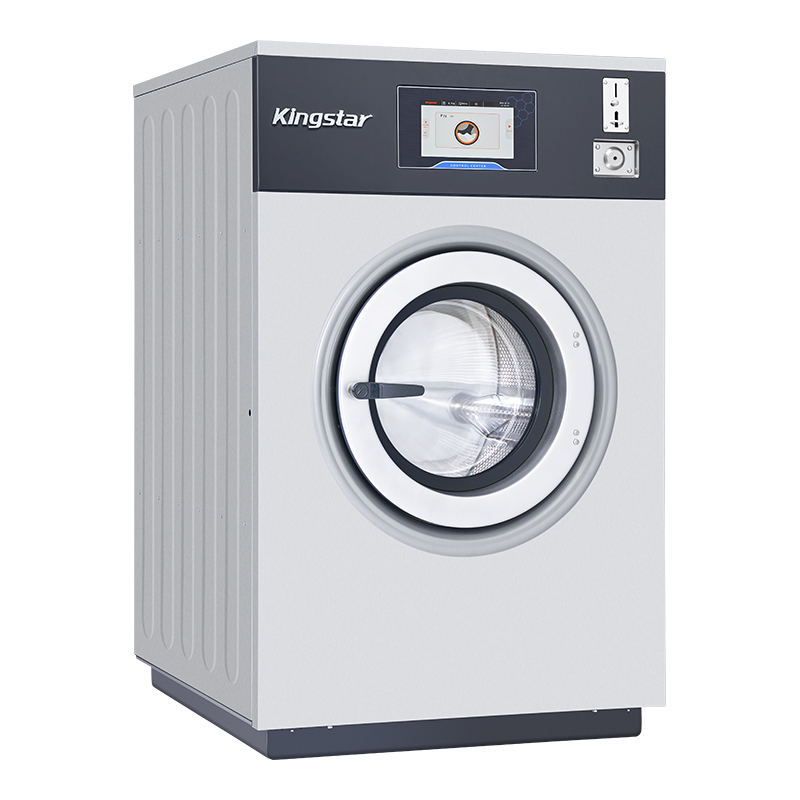
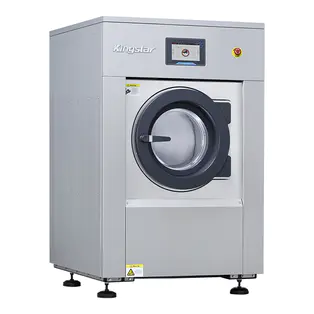
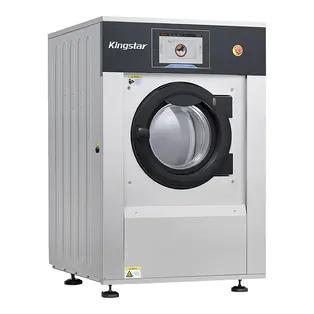
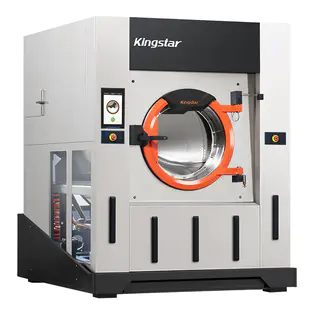
Coin-Operated Hardmount Washer(15/20/25kg)
4. High-Speed Extraction and Reduced Drying Demand
Washing is only one part of commercial laundry productivity. After the wash cycle, the amount of water left in the textiles directly affects drying time, energy consumption, and total processing capacity. The coin-operated hardmount washer is designed with a dehydration factor of 200 G, supporting strong moisture extraction before the load enters a dryer.
High-speed extraction removes more water from garments, towels, bedding, uniforms, and other washable items. As a result, the dryer can spend less time evaporating moisture. In facilities that process many loads per day, the reduction in drying demand can improve workflow and help control electricity or fuel consumption.
The SMS-2015C reaches a maximum spinning speed of 740 rpm, while the SMS-2020C and SMS-2025C reach up to 690 rpm. Actual speed selection depends on the wash program, textile type, load condition, and operating requirements. Delicate items may require lower extraction speeds, while durable towels and workwear can generally use higher extraction settings when appropriate.
The 200 G extraction design is a competitive advantage over basic commercial washers that leave a greater amount of residual water in the load. A machine that extracts effectively can help operators achieve better utilization of their downstream dryers. It can also improve customer satisfaction by shortening the total time required to complete laundry.
Extraction performance depends on correct loading. Overloading, underloading, uneven distribution, or unsuitable textiles can reduce balance and affect results. Operators should follow the recommended capacity range and ensure that users understand how to distribute items inside the drum.
5. Intelligent Weighing for Water and Chemical Efficiency
The intelligent weighing system automatically adjusts water volume according to the weight of the load. This is especially valuable in self-service and commercial laundry environments because users do not always load the machine to its maximum rated capacity.
Without load sensing, a partially filled washer may consume nearly the same amount of water, heating energy, and detergent as a full load. Intelligent weighing helps match the wash resources to the actual load. This can reduce unnecessary water consumption and lower the energy required to heat the water.
The system also supports more consistent washing quality. Too little water can prevent proper textile movement and rinsing, while excessive water may dilute chemicals and increase operating costs. By adjusting the water level according to load weight, the machine helps maintain a more stable relationship between textiles, water, detergent, and mechanical action.
For laundromat owners, resource efficiency has a direct effect on profitability. Water, electricity, detergent, wastewater treatment, and dryer operation all contribute to the cost of each cycle. Even modest savings per load can become significant when multiplied across hundreds or thousands of cycles each month.
Intelligent weighing is also useful for hotels, hospitals, and care facilities, where load sizes can vary substantially. Towels, sheets, uniforms, and personal garments may be processed in different quantities. Automatic adjustment allows the machine to respond to these variations without requiring operators to manually estimate the water level for every load.
6. Programmable Control Through a 7-Inch HD LCD Screen
The 7-inch high-definition full LCD screen provides a modern interface for operating and managing the washer. Users can select programs, view operating information, and follow the progress of a cycle from a clear display.
Programmability is important because different textiles require different treatment. A hotel may need separate formulas for towels, bed linens, colored garments, and delicate fabrics. A hospital or care facility may require controlled programs with specific washing temperatures, rinsing stages, and chemical sequences. A laundromat may prefer simple customer-facing programs with clear descriptions and predictable cycle times.
The one-touch washing function simplifies operation for customers who want a straightforward self-service experience. At the same time, the control system allows operators to customize programs according to their facility’s requirements. This combination of simplicity and flexibility gives the machine a broader application range than equipment with fixed, non-adjustable cycles.
Custom programming can help operators standardize results across different shifts and locations. Instead of relying on individual staff judgment, the facility can establish approved formulas for common load categories. This improves repeatability and can reduce the risk of unsuitable temperature, speed, or chemical selections.
A clear display is also beneficial for service and troubleshooting. Operating instructions, error information, and program data can help maintenance personnel identify problems more quickly. Good interface design reduces training requirements and makes it easier for new employees or customers to use the machine correctly.
7. Flexible Automatic Dosing Compatibility
The washer includes an open signal interface for automatic dosing systems from different brands. This gives operators flexibility when selecting chemical dispensers and allows the machine to work with an existing laundry chemical management system.
Automatic dosing delivers detergent, bleach, neutralizer, softener, and other chemicals at controlled points in the wash program. Compared with manual dosing, an automatic system can improve accuracy, reduce waste, and help maintain consistent washing quality.
Precise chemical dosing is particularly important in commercial laundry. Too much detergent increases cost, can leave residue, and may require additional rinsing. Too little detergent can lead to poor soil removal, odor, or an unsatisfactory appearance. Automatic dosing helps establish a repeatable chemical process for each selected program.
The open interface is a practical advantage over machines that are limited to one proprietary dispenser system. Operators can choose a chemical supplier based on local availability, technical support, price, or specialized application requirements. They can also integrate the washer into a broader laundry management system.
In hotels and healthcare facilities, accurate dosing supports standardized processing. In laundromats, it reduces the possibility that customers will add unsuitable amounts of detergent themselves. In industrial laundry operations, it can support process records and better control of chemical consumption.
8. Safety Features for Public and Institutional Environments
Commercial laundry equipment must protect users, staff, textiles, and the surrounding facility. The electronic door-lock design prevents the door from being opened while the drum is rotating at high speed. The door can be released only after extraction has completely stopped.
This safety principle is essential because a rotating drum contains significant mechanical energy. Preventing access during operation reduces the risk of contact with moving components and helps protect users from injury. It also prevents the accidental release of water or textiles before the cycle is complete.
The hardmount structure provides a stable base for the machine when correctly installed on an appropriate foundation. Professional installation is still necessary. The floor must support the machine’s operating weight, and the washer must be leveled according to the manufacturer’s instructions. Water, drainage, electrical, and ventilation arrangements should also be completed by qualified personnel.
The machine’s listed noise level of no more than 70 dB supports use in shared commercial environments. However, installation quality, floor construction, load balance, and maintenance can influence actual noise and vibration. Proper leveling and correct loading are important for stable operation.
The control system, door lock, payment hardware, and electrical components should be inspected as part of a regular preventive maintenance program. Safety features should never be bypassed. Any abnormal noise, repeated imbalance, damaged wiring, leaking seal, or door-lock fault should be addressed before continued operation.
9. Imported Electrical and Mechanical Components
The product materials identify the use of internationally recognized electrical and mechanical components. Listed components include Schneider contactors, imported wiring and plugs, and branded bearings. These components are selected to support stable electrical control and long-term mechanical operation.
Bearings are especially important in a washer-extractor because they support the rotating drum under repeated loads, high-speed spinning, moisture exposure, and changing operating conditions. High-quality bearings can contribute to smoother rotation and lower maintenance risk when correctly installed, lubricated where required, and protected from water ingress.
Electrical components also influence reliability. Contactors, wiring, plugs, control devices, and protective components must withstand the machine’s electrical load and operating cycle. The use of recognized components can simplify replacement and service, particularly when local technicians are familiar with major international brands.
Component quality alone does not guarantee equipment reliability. The overall machine design, assembly accuracy, welding quality, sealing, alignment, electrical protection, software control, and maintenance program all contribute to service life. The strength of this washer lies in combining selected components with a commercial-duty structure and a controlled manufacturing process.
10. Three-Bearing Main Transmission Design
The three-bearing main transmission design is intended to provide strong support for the rotating assembly. A commercial washer experiences repeated acceleration, deceleration, water loading, textile imbalance, and high-speed extraction. The transmission system must manage these forces while maintaining drum alignment.
A multi-bearing arrangement can distribute mechanical loads more effectively than a simpler support structure. This may reduce stress on individual components and contribute to stable drum rotation. It can also help protect the transmission system when the machine is operated frequently in demanding environments.
The manufacturer describes the transmission structure as high strength and designed for extended service. Published product information refers to a design target of up to 10 years of maintenance-free operation and an overall machine design life of approximately 20 years. Actual service life depends on installation, operating conditions, load practices, water quality, chemical selection, maintenance, and replacement of wear parts.
For buyers comparing commercial washers, the transmission design should be evaluated together with access to spare parts, technical support, maintenance documentation, and warranty terms. A robust mechanical design is most valuable when it is supported by a dependable service network.
11. Manufacturing Strengths and Quality Control
The manufacturer’s ability to produce commercial laundry equipment involves more than assembling a cabinet around a drum. Reliable washer-extractors require coordinated engineering across mechanical design, stainless-steel fabrication, welding, electrical control, software, safety systems, and final testing.
11.1 Engineering for Different Load Capacities
The three models use different drum volumes, dimensions, motor powers, heating capacities, and structural specifications. This indicates a product family developed for different commercial load requirements rather than a single machine with superficial capacity changes.
The 150-liter drum is suitable for smaller self-service rooms and facilities with moderate demand. The 200-liter model offers additional capacity for apartment buildings, hotels, and shared laundry rooms. The 250-liter model is appropriate for operators processing larger quantities of towels, bedding, uniforms, and other bulky textiles.
Engineering each model requires appropriate matching of drum size, transmission power, extraction speed, heating power, water flow, drainage, and control parameters. Correct matching helps ensure that the machine delivers useful performance without placing unnecessary stress on its components.
11.2 Stainless-Steel Fabrication
Stainless-steel construction requires accurate cutting, forming, welding, polishing, and inspection. Water-contacting parts must be assembled with attention to sealing and surface quality. Poorly finished welds or misaligned panels can create areas where residue accumulates or where corrosion resistance is reduced.
A professional manufacturing process should include dimensional checks, weld inspection, surface treatment, drum balance verification, and leak testing. These steps help ensure that the inner drum, outer cylinder, water connections, and drainage components work together correctly.
11.3 Electrical Assembly and Control Integration
Electrical control panels must be assembled according to the selected voltage and heating configuration. Wiring should be routed securely, protected from moisture and vibration, and clearly identified for service. The control system must coordinate the motor, heating elements, water valves, drainage, door lock, payment interface, dosing signals, and user display.
Factory testing can include insulation checks, electrical continuity testing, control-function verification, emergency and door-lock checks, heating tests, water inlet tests, drainage tests, and simulated wash programs. These procedures help identify manufacturing defects before shipment.
11.4 Drum Balance and Mechanical Testing
High-speed extraction requires accurate drum balance and correct alignment of the rotating assembly. The manufacturer should verify balance, bearing operation, transmission behavior, and vibration performance before the machine leaves the factory.
Mechanical testing is particularly important for hardmount machines because commercial users expect stable performance over repeated cycles. Testing under representative load conditions can help identify excessive noise, vibration, leakage, or extraction problems.
11.5 Software and Program Verification
The LCD control system is an important part of the product. Program verification should confirm that temperature settings, water levels, wash times, spin speeds, chemical signals, payment commands, and door-lock functions operate as intended.
A well-configured control system also helps protect the machine. For example, the washer can prevent high-speed extraction when the door is not securely locked or when an unsafe condition is detected. Software and hardware must work together to provide a controlled and predictable operating sequence.
12. Competitive Advantages Compared with Basic Commercial Washers
The coin-operated hardmount washer competes not only on capacity but also on the combination of features included in one platform. Its competitive advantages can be summarized in several areas.
12.1 More Flexible Customer Access
Multiple payment methods allow the equipment to serve a wider range of users. A machine limited to coins may be less convenient in markets where mobile payment or prepaid cards are common. The combination of coin, QR code, and card payment supports a more adaptable self-service model.
12.2 Better Resource Management
Intelligent weighing helps reduce unnecessary water, heating, and detergent consumption. High-speed extraction reduces residual moisture and can lower dryer workload. These two features address both the washing stage and the downstream drying stage, giving operators more opportunities to reduce operating expenses.
12.3 Broader Chemical-System Compatibility
The open dosing interface allows connection to automatic dispensers from different suppliers. This can be more practical than a closed system that forces the operator to purchase one particular dispenser or chemical package.
12.4 Stronger Corrosion Resistance
The use of 304 stainless steel in the inner drum, outer cylinder, and water-contacting parts provides a more durable foundation than equipment that relies heavily on lower-grade or coated materials in wet areas.
12.5 Improved User and Operator Safety
The electronic door lock, controlled extraction, stable structure, and clear display help reduce operating risks. Safety is especially important in public laundry rooms, where the equipment may be used by people with different levels of technical knowledge.
12.6 Easier Program Customization
Programmable controls allow the washer to serve different textile categories and industries. A fixed-program machine may be adequate for a narrow application, but a configurable machine is more useful when the operator processes diverse loads.
13. Recommended Applications
13.1 Laundromats
Laundromats require equipment that is easy for customers to understand, resistant to frequent use, and compatible with payment collection. The LCD interface and multiple payment options support a convenient customer experience. The 15 kg model may suit smaller laundry shops, while the 20 kg and 25 kg models can handle larger household loads, bedding, and bulky items.
13.2 Apartment and Residential Laundry Rooms
Property owners can install coin-operated washers in apartment buildings to provide residents with an on-site service. Payment features help convert laundry activity into a manageable revenue stream, while the commercial construction is designed for more frequent use than household equipment.
13.3 Hotels and Hospitality Facilities
Hotels process towels, sheets, pillowcases, uniforms, and housekeeping textiles. Strong extraction can reduce dryer time, and programmable cycles can help create separate formulas for different textile categories. Capacity selection should be based on room count, occupancy, laundry collection frequency, and available space.
13.4 Hospitals and Care Facilities
Healthcare and care facilities require consistent processes, controlled dosing, and reliable equipment. The washer’s stainless-steel water-contacting parts, programmable cycles, automatic dosing compatibility, and high extraction capability can support institutional laundry workflows. Facility-specific hygiene protocols and chemical requirements should be integrated into the final wash formulas.
13.5 Dormitories and Shared Accommodation
Student residences, hostels, worker housing, and military accommodation often need robust self-service laundry equipment. Multiple payment options and simple one-touch programs make the machine accessible to a large number of users with minimal staff involvement.
13.6 Gyms, Spas, and Sports Facilities
Gyms and sports facilities regularly wash towels, uniforms, cleaning cloths, and other textile items. The 15 kg or 20 kg models can provide a practical balance between capacity and floor-space requirements. High extraction is useful when fast turnaround is necessary.
14. Installation and Utility Requirements
Correct installation is essential to achieve the machine’s intended performance. The listed inlet water pressure is 0.2–0.4 MPa, and the inlet pipe diameter is DN20. The hot-water pipe diameter is also DN20 where hot-water connection is used or required by the selected configuration. Drainage is specified at a diameter of Φ76.
The drainage system must be able to remove water quickly enough to prevent backflow or standing water. The drain route should be properly supported, accessible for inspection, and designed according to local plumbing requirements.
Electrical installation should match the selected voltage, phase, frequency, heating capacity, and local safety regulations. A qualified electrician should install suitable protection, grounding, disconnecting equipment, and cable sizes. The 12 kW or 18 kW electric heating load must be considered when planning the facility’s total electrical capacity.
The machine must be positioned on a firm, level surface capable of supporting its weight and operating forces. The listed machine weights range from 328 kg to 385 kg, before adding water and textiles. Adequate access should be provided around the machine for loading, cleaning, inspection, and service.
Before commissioning, the installer should verify water connections, drain connections, electrical connections, machine leveling, door operation, emergency functions, payment settings, dosing signals, and program configuration. A test cycle should be completed before the equipment is made available to customers.
15. Maintenance and Operating Best Practices
Preventive maintenance is essential for preserving commercial washer performance. Operators should inspect the door seal, drum, detergent connections, water valves, drain system, hoses, electrical connections, payment hardware, and display on a regular schedule.
The drum and door area should be cleaned routinely to remove lint, detergent residue, and other deposits. Leaving the door slightly open after a completed cycle, where permitted by the facility’s safety procedures, can help the internal area dry and reduce odor formation.
Filters and drainage areas should be checked for foreign objects. Coins, buttons, hair, paper, and other debris can obstruct drainage or damage pumps and valves. Users should be instructed to empty pockets and separate unsuitable items before loading the machine.
Correct loading is equally important. Loads should remain within the specified capacity range and should not be compressed excessively into the drum. Overloading can reduce washing quality, cause imbalance, increase mechanical stress, and prevent proper water circulation. Underloading can also create imbalance during extraction, so operators should follow recommended loading practices.
Water hardness should be considered when selecting detergents and setting chemical programs. Hard water may cause scale on heating elements, valves, and internal surfaces. A suitable water-treatment strategy and regular descaling schedule can help protect the equipment.
Any unusual vibration, bearing noise, burning smell, water leak, repeated payment error, heating fault, or door-lock issue should be investigated promptly. Early service intervention can prevent a minor fault from developing into a more expensive failure.
16. Choosing Between the 15 kg, 20 kg, and 25 kg Models
The SMS-2015C, SMS-2020C, and SMS-2025C models share many core features, but their capacities and physical dimensions differ.
| Selection Factor | 15 kg Model | 20 kg Model | 25 kg Model |
|---|---|---|---|
| Typical Use | Small laundromats, apartments, gyms | Hotels, dormitories, medium laundry rooms | Hotels, institutions, bulky textile processing |
| Drum Volume | 150 L | 200 L | 250 L |
| Transmission Power | 1.5 kW | 2.2 kW | 3 kW |
| Electric Heating Power | 12 kW | 18 kW | 18 kW |
| Machine Weight | 328 kg | 362 kg | 385 kg |
The 15 kg version is generally easier to place where floor area and electrical capacity are limited. It can be a good choice for apartment laundry rooms, smaller self-service shops, and facilities with predominantly personal garments and moderate linen loads.
The 20 kg version offers a useful middle position. It provides more capacity for bedding and towels while remaining smaller than the 25 kg machine. It may be suitable for medium-sized hotels, dormitories, and commercial laundry rooms.
The 25 kg version is appropriate when processing bulky loads is a priority. Its larger 250-liter drum can help reduce the number of cycles required for large quantities of towels, sheets, uniforms, or other textiles. Buyers must allow for its larger dimensions, greater weight, and higher installation requirements.
17. Total Cost of Ownership Considerations
The purchase price is only one part of the cost of a commercial washer. Buyers should evaluate the total cost of ownership, including installation, water, electricity, detergent, maintenance, spare parts, downtime, and payment-system operation.
The intelligent weighing system can help control water and chemical use on partial loads. The 200 G extraction capability can reduce the energy required for drying. Durable stainless-steel construction and selected electrical components may help extend service intervals when combined with proper maintenance.
Payment flexibility can also affect revenue and user retention. Customers are more likely to use a service that accepts familiar payment methods. A convenient payment process can reduce abandoned cycles and lower staff involvement in cash collection.
Downtime is another major cost. A machine that is unavailable cannot generate revenue or support facility operations. Buyers should therefore consider the manufacturer’s technical support, spare-parts availability, training, documentation, and response time when comparing suppliers.
Warranty terms should be confirmed in the commercial contract because product materials may describe different warranty periods for different configurations or publications. The buyer should obtain written clarification regarding coverage, exclusions, labor, parts, transport, and installation responsibilities.
18. Questions Buyers Should Ask Before Ordering
Before purchasing, buyers should confirm the exact voltage, phase, frequency, heating method, payment hardware, drum capacity, delivery configuration, and available options. They should also clarify whether the machine supports local QR payment platforms, bank cards, prepaid cards, or a specific payment-management system.
It is important to ask whether automatic dosing equipment is included or supplied separately. If supplied separately, the buyer should confirm signal compatibility, connection requirements, chemical pump capacity, and installation responsibility.
Buyers should request installation drawings showing machine dimensions, service clearances, drain position, water connections, electrical access, and drain-center height. The listed drain-center-to-floor height varies between models, so this information should be reviewed during facility planning.
For projects involving multiple machines, buyers should confirm production lead time, packaging, shipping weight, container loading, commissioning support, operator training, and spare-parts recommendations. These details can strongly influence project completion and future maintenance.
19. Q&A About the Coin-Operated Hardmount Washer
Q1: What capacities are available?
The product line includes 15 kg, 20 kg, and 25 kg nominal capacities. The published washing ranges are 5–15 kg, 8–20 kg, and 8–25 kg respectively.
Q2: Which industries can use this washer?
It is suitable for laundromats, apartment buildings, hotels, hospitals, dormitories, hostels, gyms, spas, care facilities, and other commercial or institutional laundry environments.
Q3: Does the machine support self-service payment?
Yes. The washer can be configured for coin payment, QR code payment, and card payment, including credit cards or rechargeable laundry cards, subject to the selected payment system and local compatibility.
Q4: What is the extraction performance?
The washer is designed with a dehydration factor of 200 G. The maximum listed spinning speed is 740 rpm for the 15 kg model and 690 rpm for the 20 kg and 25 kg models.
Q5: How does intelligent weighing reduce operating costs?
The weighing system adjusts the water volume according to the load weight. This can reduce unnecessary water, heating energy, and detergent consumption when the drum is not fully loaded.
Q6: Can the washer connect to an automatic chemical dispenser?
Yes. An open signal interface is provided for automatic dosing systems from different brands. The exact dispenser wiring and signal requirements should be confirmed before installation.
Q7: What materials are used in the wet areas?
The inner drum, outer cylinder, and water-contacting components are made from 304 stainless steel, which provides resistance to rust and corrosion when the machine is properly operated and maintained.
Q8: Is the door safe during high-speed extraction?
The electronic door lock prevents the door from being opened while the drum is rotating at high speed. The door can be released after extraction has completely stopped.
Q9: What heating method is available?
The listed configuration uses electric heating. The 15 kg model has 12 kW of electric heating power, while the 20 kg and 25 kg models have 18 kW. Other utility configurations should be confirmed with the manufacturer.
Q10: What water pressure is required?
The listed inlet water pressure is 0.2–0.4 MPa. Local water supply conditions should be checked before installation.
Q11: What is the required drain size?
The published drain pipe diameter is Φ76. The drain system must also be designed to handle the machine’s discharge volume without backflow.
Q12: What warranty is provided?
Warranty information should be confirmed in the final quotation and purchase agreement. Product materials refer to extended whole-machine warranty coverage, but the exact period and conditions should be verified for the selected model and market.
Q13: Can the programs be customized?
Yes. The 7-inch LCD control system supports programmable operation and one-touch washing. Programs can be adjusted for different textile types and facility requirements.
Q14: How should buyers select the correct model?
Selection should be based on average load size, peak laundry volume, available floor space, electrical capacity, drain design, textile type, and future expansion plans. A capacity that is too small may cause queues, while an oversized machine may be inefficient for consistently small loads.
20. Conclusion
The coin-operated hardmount washer is a practical commercial laundry solution that combines durable construction, flexible capacity, modern controls, self-service payment capability, and resource-conscious operation. The 15 kg, 20 kg, and 25 kg models allow businesses and institutions to select a configuration that fits their workload and facility conditions.
Its main advantages include 304 stainless-steel water-contacting components, a 200 G extraction design, intelligent weighing, programmable LCD controls, automatic dosing compatibility, multiple payment methods, electronic door locking, and a three-bearing transmission structure. Together, these features support efficient washing, reduced downstream drying demand, safer operation, and easier management.
The manufacturer’s strengths extend beyond individual features. Commercial laundry equipment requires coordinated manufacturing across engineering, stainless-steel fabrication, electrical assembly, control integration, mechanical balancing, quality inspection, and after-sales support. When these processes are properly controlled, the result is a machine capable of serving demanding laundromats, hospitality businesses, healthcare facilities, and institutional laundry rooms.
For the best result, buyers should match the machine capacity to actual laundry demand, verify utilities and payment compatibility, plan professional installation, and establish a preventive maintenance program. With the correct configuration and operating practices, this washer can become a dependable part of a high-volume laundry workflow while helping operators manage water, energy, detergent, labor, and service costs.
References
Commercial Laundry Equipment Product Specification Sheet.
Industrial Washing Machine Operating and Maintenance Guidelines.
Commercial Washer-Extractor Safety and Installation Practices.
Stainless Steel Selection Principles for Water-Contacting Industrial Equipment.
Professional Laundry Chemical Dosing and Process-Control Recommendations.
Institutional Laundry Energy-Efficiency and Moisture-Extraction Practices.
Product: Coin-Operated Hardmount Washer(15/20/25kg)

ADD:No.388 Xinggang Road, Chongchuan District, Nantong City, 226000, Jiangsu Province, China.
-
Phone: +86-13917089379
-
Tel:+86-13917089379
-
Fax:+86-0513-85663366
-
E-mail:louislu@kingstarlaundry.com
products