英语
英语 俄语
俄语 西班牙语
西班牙语 德语
德语
Home / Author / Meiwen Zeng — Product After-Sales Service Manager / 25kg Quiet Wet Washing Machine: High-Capacity Commercial Washer-Extractor for Efficient Professional Laundry Operations

Kingstar is your trusted partner for industrial and commercial laundry equipment. We specialized in the R&D and manufacturing of high-end industrial washers, commercial washers and dryers. Meanwhile, we provide global clients with comprehensive planning, layout workflow design, and software-hardware integration services for smart laundry plants.
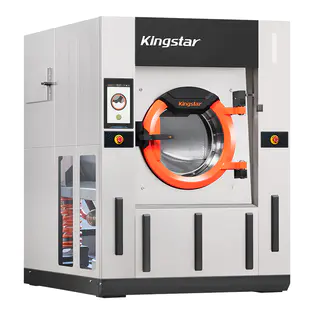
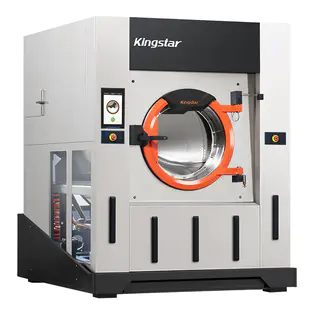
25kg Quiet Wet Washing Machine: High-Capacity Commercial Washer-Extractor for Efficient Professional Laundry Operations
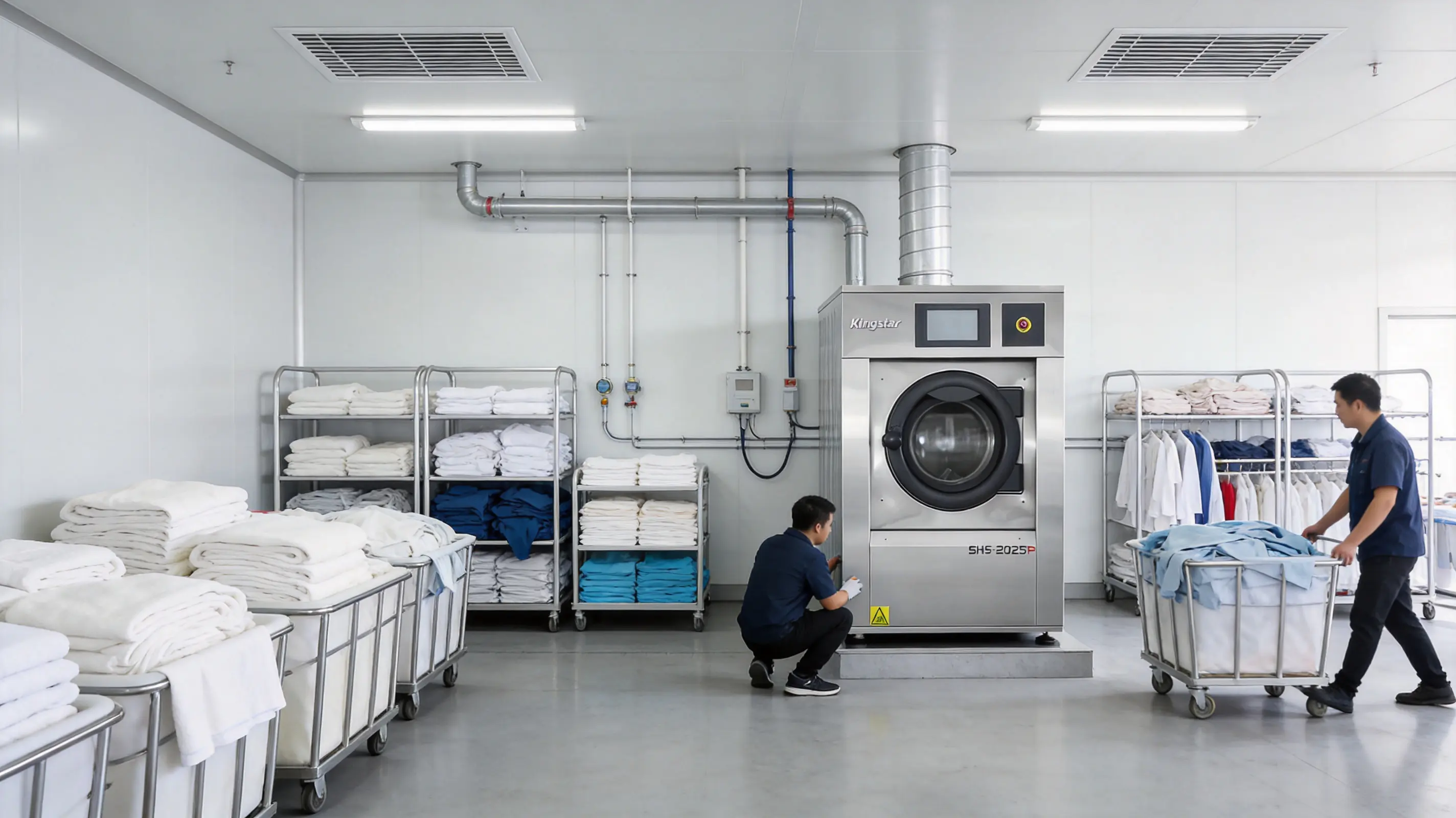
Commercial laundry operations require equipment that can combine capacity, extraction performance, operational reliability, and manageable noise levels in one machine. The 25kg Quiet Wet Washing Machine, model SHS-2025P, is designed for professional environments that process substantial quantities of textiles while maintaining a controlled and practical workflow. With a rated capacity range of 8 to 25 kilograms, a 250-liter drum volume, washing and extraction speeds from 10 to 1,080 revolutions per minute, and a G Factor of 400, this commercial washer-extractor provides a flexible platform for hotels, hospitals, industrial laundries, uniform services, care facilities, and other textile-care businesses.
The machine belongs to the commercial washer-extractor category and is engineered to support both washing and high-speed moisture removal in one integrated unit. Its design balances useful washing volume with a compact overall footprint of 1,055 × 1,055 × 1,465 millimeters. The noise level is specified at no more than 70 decibels, making it particularly suitable for facilities where employee comfort, patient well-being, guest experience, or neighborhood operating conditions are important considerations.
For professional users, choosing a washer-extractor is not simply a matter of selecting the largest drum available. The machine must match the facility’s utilities, textile mix, daily production requirements, installation conditions, maintenance capabilities, and energy strategy. The SHS-2025P addresses these considerations through a combination of capacity flexibility, high-speed extraction, multiple utility connections, chemical dosing capability, and a structure intended for continuous commercial use.
Overview of the 25kg Commercial Washer-Extractor
The SHS-2025P is a wet washing machine designed for textile processing in commercial and industrial environments. Its 8 to 25 kilogram capacity range enables operators to process both medium-sized and full-capacity loads. This is valuable for laundry departments that handle different textile categories during the same working day, including towels, bed linens, uniforms, workwear, hospital textiles, restaurant fabrics, and other washable materials.
A 25-kilogram maximum capacity offers a useful middle position between smaller commercial machines and very large industrial systems. Smaller machines may require too many cycles when demand increases, while oversized machines may be inefficient when processing moderate loads. The variable operating range of this model allows users to select an appropriate load size rather than treating every batch as a full-capacity production run.
The 250-liter drum volume supports the stated capacity and provides space for textiles to move through washing, rinsing, and extraction stages. Effective textile movement is essential because it helps water, detergent, heat, and mechanical action reach the fabric more consistently. In practical terms, the drum volume allows operators to organize loads according to textile type and soil level, helping prevent overloading and supporting repeatable wash results.
The washing and extraction speed range extends from 10 to 1,080 revolutions per minute. Low-speed operation is appropriate for controlled washing and delicate mechanical action, while high-speed extraction removes a substantial proportion of water before the textiles move to drying or finishing equipment. The stated G Factor of 400 further indicates strong extraction capability. A higher extraction force can reduce the residual moisture carried into the dryer, potentially shortening drying time and reducing the workload placed on downstream equipment.
The machine is powered by a 3-kilowatt motor and includes 18 kilowatts of electrical heating power. It also supports steam pressure from 0.2 to 0.4 MPa, giving facilities the option to use steam-based heating when a suitable steam supply is available. This dual heating arrangement can help users select a heating method that fits their building infrastructure, energy pricing, production schedule, and sustainability objectives.
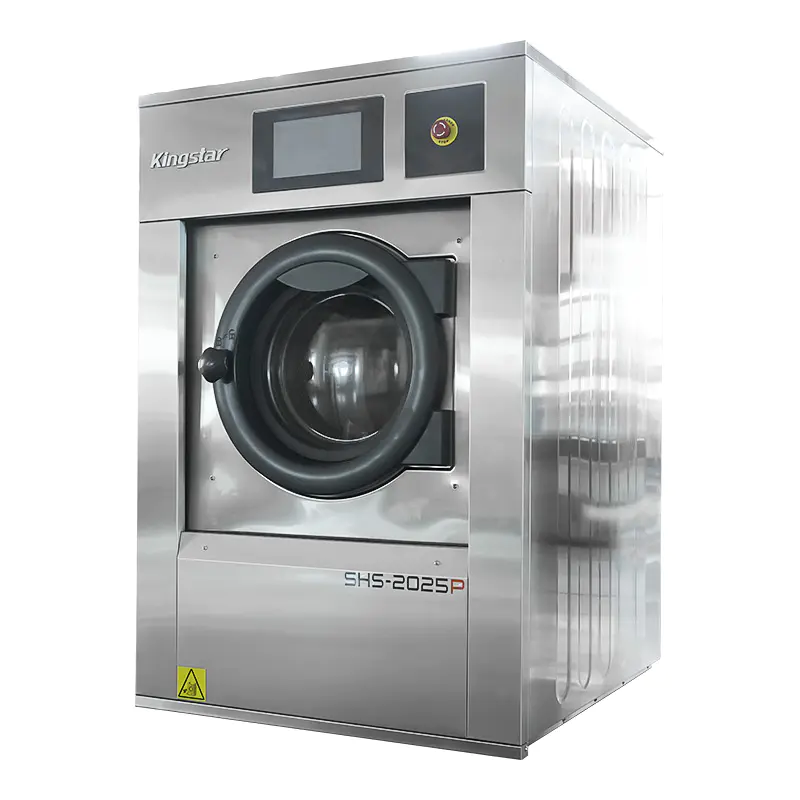
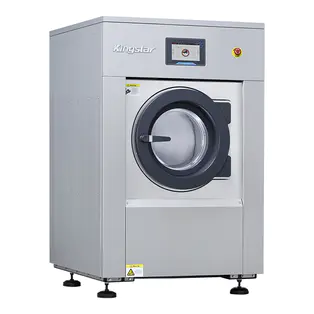
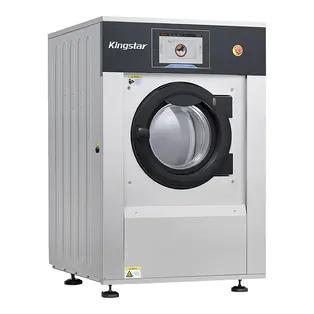
25kg Quiet Wet Washing Machine
Main Advantages for Professional Laundry Users
Flexible 8–25kg Operating Capacity
One of the most practical advantages of the SHS-2025P is its broad capacity range. A machine with a maximum capacity of 25 kilograms can handle substantial production volumes, but its lower operating range of 8 kilograms also allows the operator to process smaller batches. This flexibility can improve scheduling because users do not need to wait until enough textiles accumulate for a full load.
Hotels may use the machine for towels, sheets, pillowcases, and restaurant linens. Hospitals and care facilities may process uniforms, patient garments, sheets, and other controlled textile groups. Industrial plants may wash protective workwear or reusable cleaning fabrics. Because the load range is not limited to a single fixed batch size, the same machine can support different departments and different levels of daily demand.
Compared with a machine selected only for maximum volume, a flexible washer-extractor can help reduce underloaded cycles. Underloading may waste water, heat, labor time, and chemical resources when the machine is not correctly programmed for the actual textile quantity. Operators should still follow the manufacturer’s loading recommendations, but the stated capacity range gives the facility more room to match the load to the work available.
High-Speed Extraction for Improved Workflow
The maximum extraction speed of 1,080 revolutions per minute and a G Factor of 400 are important features for modern laundry production. Washing is only one part of the textile-care process. After washing, the amount of moisture remaining in the textile directly affects dryer time, energy consumption, handling speed, and overall throughput.
High-speed extraction applies centrifugal force to separate water from fabric. When the wash program is complete, the drum accelerates and pushes water outward through the textile and perforated drum surface. The more water that can be removed during this stage, the less work the dryer may need to perform afterward. This can be especially valuable in facilities operating several machines at once, where drying capacity is often a production bottleneck.
A G Factor of 400 represents a strong extraction level for many commercial textile applications. However, not every textile should be processed at maximum speed. Delicate fabrics, structured garments, coated materials, and certain healthcare textiles may require a lower extraction setting. The wide speed range allows the operator to select a more appropriate mechanical treatment according to textile construction and program requirements.
Quiet Operation for Sensitive Environments
The specified noise level of no more than 70 decibels is a major benefit for facilities that operate near occupied areas. Hospitals, hotels, residential care homes, apartment-based laundry services, and urban commercial laundries may need to control equipment noise to maintain a comfortable environment.
Lower operating noise can also improve workplace communication. Employees who work near laundry equipment for long periods may benefit from a less disruptive acoustic environment. Reduced noise does not eliminate the need for correct installation, balancing, and maintenance, but it provides a useful starting point for noise-conscious facility planning.
Quiet operation is particularly relevant when laundry production continues outside traditional daytime hours. A machine with a controlled noise specification can support extended operating schedules while reducing disturbance to guests, patients, residents, or neighboring businesses. Operators should install the unit on a suitable foundation and follow the relevant technical instructions to achieve the best possible result.
Multiple Heating Options
The SHS-2025P is specified with 18 kilowatts of electrical heating power and a steam pressure requirement of 0.2 to 0.4 MPa. This provides flexibility for facilities with different utility arrangements. A site equipped with a reliable steam boiler can use steam heating, while a facility without central steam may select electrical heating if its electrical infrastructure can support the required load.
Heating flexibility is useful during facility planning. Some hospitals and industrial plants already operate a central steam system, making steam integration a logical choice. Smaller hotels, laundromats, and independent laundry businesses may prefer electrical heating because it can simplify the installation where steam generation would be impractical. The final configuration should be determined by a qualified installer after reviewing utility capacity, local codes, energy costs, and production requirements.
Correct temperature management is also important for textile quality. Different fabrics and soil types require different washing conditions. Controlled heating can assist detergent performance, help remove oils and other soils, and support hygiene-oriented protocols when the selected process requires elevated temperatures. Program settings should always be selected according to textile-care instructions and applicable industry requirements.
Nine Detergent Cups for Organized Chemical Dosing
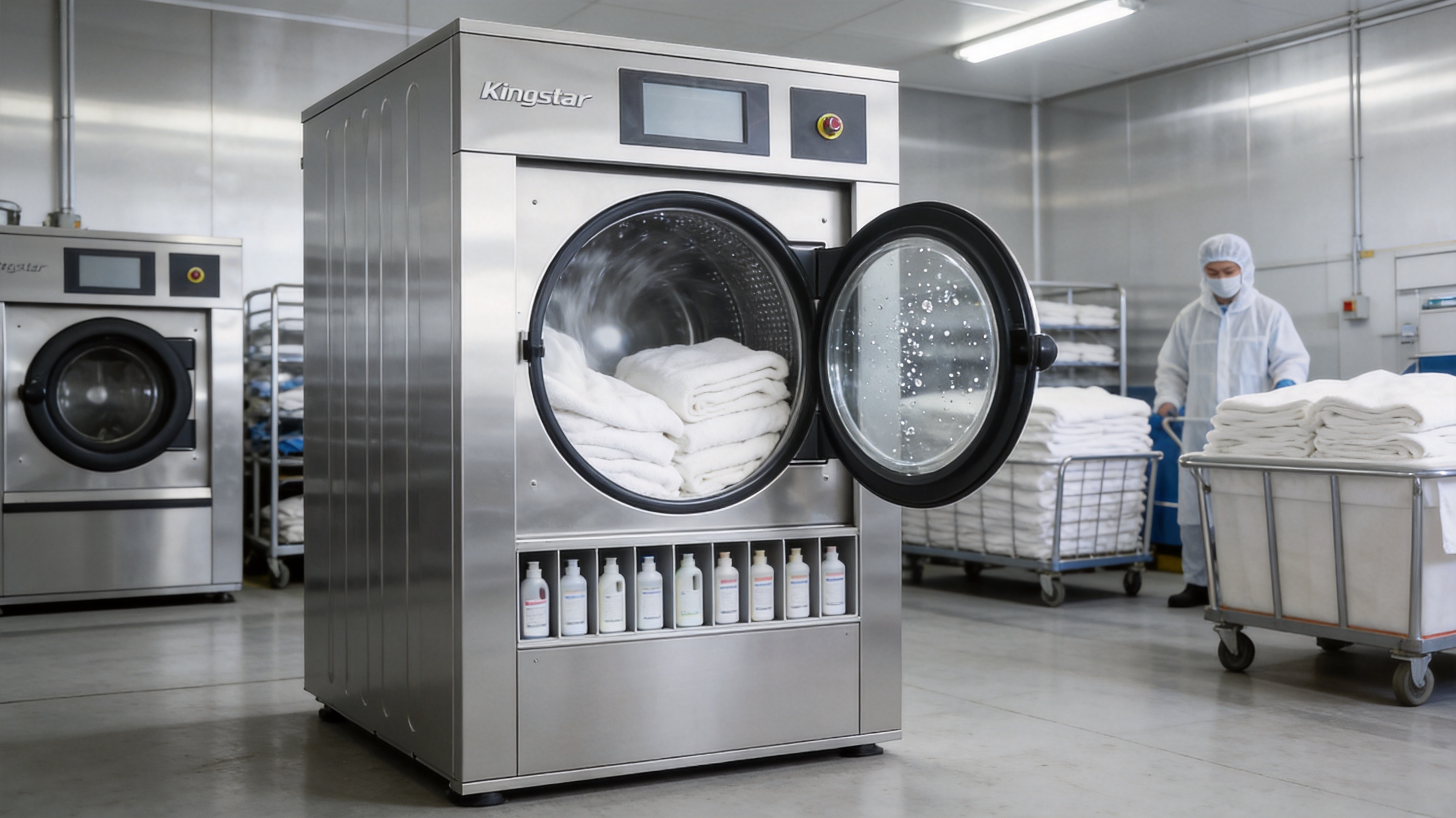
The machine includes nine detergent cups, providing a structured way to organize the addition of washing chemicals. Multiple dosing positions can support the separation of products such as main detergent, prewash detergent, oxygen-based chemistry, softener, and other process chemicals, depending on the facility’s washing formulas.
Organized chemical dosing can improve repeatability. When products are added consistently at the correct stage, operators are less dependent on manual timing and less likely to confuse different chemical products. This can contribute to more stable wash results and help reduce the risk of accidental chemical mixing outside the intended process.
Commercial laundry managers should develop written dosing procedures and ensure employees understand chemical handling requirements. Detergent cups should be cleaned and inspected regularly to prevent buildup, blockage, or cross-contamination. The exact chemical program should be developed with the detergent supplier, textile specialist, or laundry process consultant.
Technical Specifications
| Specification | Value | Operational Significance |
|---|---|---|
| Model | SHS-2025P | Identifies the commercial washer-extractor configuration |
| Voltage | 380 V | Requires compatibility with the facility’s electrical supply |
| Capacity | 8–25 kg | Supports variable batch sizes and commercial production |
| Drum volume | 250 L | Provides working space for textile movement and processing |
| Washing and extraction speed | 10–1,080 rpm | Allows adjustable mechanical action and high-speed extraction |
| Motor power | 3 kW | Drives drum rotation during wash and extraction cycles |
| Electrical heating power | 18 kW | Supports electrically heated washing programs |
| Noise level | ≤70 dB | Supports use in noise-sensitive commercial environments |
| G Factor | 400 | Indicates strong centrifugal moisture removal |
| Detergent cups | 9 | Provides multiple locations for organized chemical dosing |
| Steam pressure | 0.2–0.4 MPa | Defines the supported steam supply range |
| Water inlet pressure | 0.2–0.4 MPa | Defines the recommended water supply pressure |
| Water inlet pipe | 27.5 mm | Supports connection planning for the water supply |
| Hot water pipe | 27.5 mm | Supports connection to a hot-water system |
| Drainage pipe | 72 mm | Provides the stated drainage connection size |
| Inner drum diameter and depth | 750 × 566 mm | Describes the primary working drum dimensions |
| Overall dimensions | 1,055 × 1,055 × 1,465 mm | Assists with room layout and access planning |
| Weight | 463 kg | Requires suitable floor loading and installation planning |
Advantages Compared with Conventional Commercial Washing Equipment
The SHS-2025P offers several characteristics that can distinguish it from basic commercial washing machines. Conventional units may provide washing functionality but lack the combination of high extraction performance, flexible heating, broad load range, and controlled noise specified for this model.
First, the 400 G Factor and 1,080 rpm maximum extraction speed support a more complete wash-to-dry workflow. A basic washer may leave more moisture in the textiles, increasing dryer demand. When a laundry processes many loads each day, even a modest reduction in residual moisture can influence production time. Faster drying may also help prevent damp textiles from remaining in carts or storage areas for extended periods.
Second, the 8 to 25 kilogram capacity range allows a more adaptable production strategy than a machine built around one narrow load size. A commercial operation can use smaller cycles for urgent or specialized loads and larger cycles for bulk linen processing. This flexibility is important when the daily textile volume varies according to occupancy, patient census, production schedules, or customer orders.
Third, the maximum noise specification of 70 decibels is relevant to modern facility design. Noise control is sometimes overlooked when equipment is selected primarily by capacity. However, the acoustic environment can affect employee comfort and the suitability of the laundry room’s location. A quieter machine may be easier to integrate into facilities where the laundry area is close to offices, guest rooms, treatment areas, or residential spaces.
Fourth, the availability of electrical heating and steam compatibility helps the machine adapt to different infrastructure plans. Some competitors may focus on only one heating arrangement, forcing the purchaser to make significant utility changes. With this model, the facility can assess whether electrical heating or steam heating better matches its existing services.
Finally, the combination of multiple detergent cups and variable speed control supports a more structured washing process. Commercial users often handle a wide variety of textiles and soil levels. The ability to organize chemical dosing and adjust mechanical action can help create differentiated programs rather than relying on one generalized cycle for every load.
Manufacturing and Engineering Strengths
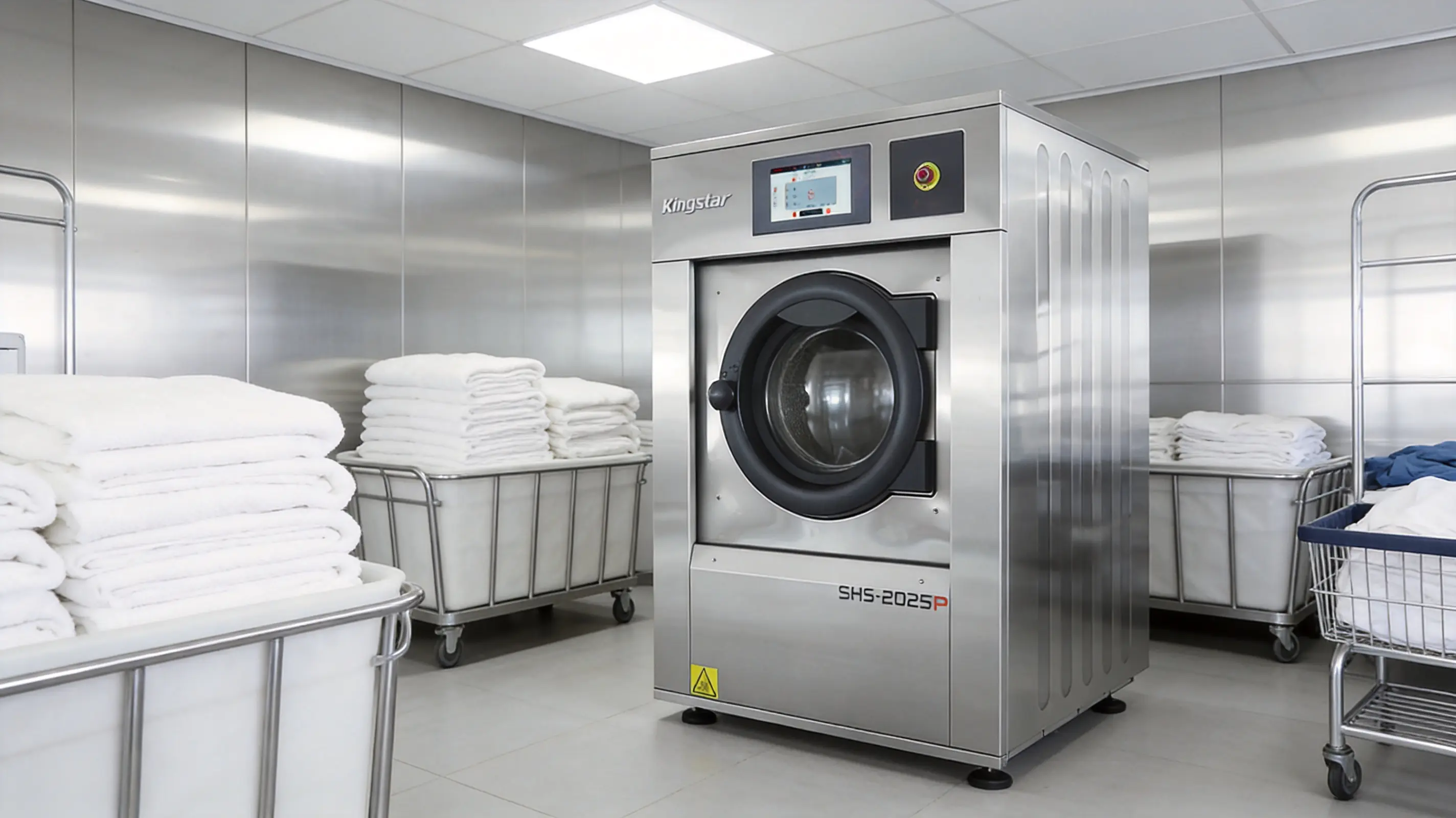
The equipment is supplied by Jiangsu Chuandao Intelligent Equipment Co., Ltd., a Chinese manufacturer focused on washing machines, laundry machinery, and commercial washer-extractors. Its stated product scope includes industrial washing machines, hospital washing machines, industrial dryers, commercial washer-extractors, stacked washer-and-dryer systems, stack dryers, and commercial dryers. This product range is significant because it reflects experience across multiple stages of professional textile processing rather than a narrow focus on household appliances.
A manufacturer serving industrial and commercial laundry markets must design equipment around demanding operating conditions. Professional users expect repeatable performance, accessible utility connections, durable mechanical systems, predictable production capacity, and serviceable components. The SHS-2025P specification demonstrates an engineering approach that considers the entire process: loading, washing, heating, chemical dosing, rinsing, extraction, drainage, and transfer to drying.
Process-Oriented Product Development
The machine’s specifications show that its design is based on the complete laundry workflow. The drum volume is matched with a 25-kilogram maximum load. The motor provides controlled drum movement across a wide speed range. The extraction system is rated for high-speed operation. Heating can be supplied through electricity or steam, and drainage is specified for a commercial installation. These features work together rather than functioning as isolated specifications.
Process-oriented development is important because a laundry machine cannot be judged only by its motor power or drum size. The value of the equipment comes from how effectively it supports the full sequence of operations. A well-planned system reduces unnecessary handling, helps operators maintain consistent programs, and supports a predictable transition from dirty textiles to washed and partially dried textiles.
Production Range and Application Knowledge
The manufacturer’s range includes equipment for industrial, hospital, commercial, and stacked laundry applications. This breadth can help the company understand different operating environments. Hospital laundry requires careful separation, controlled processing, and attention to hygiene procedures. Industrial laundry may prioritize heavy-duty workwear and high throughput. Commercial hospitality laundry often requires consistent presentation quality and rapid turnaround. Stacked equipment may be selected where floor area is limited.
The 25kg washer-extractor fits within this broader application landscape as a medium-to-large commercial machine. It can serve as a central unit in a smaller professional laundry or as part of a larger equipment group in a high-volume facility. Its specifications also make it suitable for pairing with commercial drying equipment, especially where high extraction is used to improve dryer productivity.
Specification-Based Quality Control
Advanced manufacturing is not defined only by visible appearance. It also involves the ability to produce equipment that consistently meets declared specifications. For this model, relevant control points include drum dimensions, rotational speed, motor performance, heating output, noise level, water and steam connection requirements, drainage performance, overall dimensions, and finished weight.
During production and final inspection, these characteristics should be verified according to the manufacturer’s internal quality procedures and applicable standards. A commercial buyer should request available inspection documentation, electrical information, installation instructions, warranty terms, and service support details before purchase. The precise inspection system may vary by production batch and destination market, so project-specific confirmation is recommended.
The stated weight of 463 kilograms also reflects the need for a substantial commercial structure. Heavy equipment requires careful handling during assembly, transport, and installation. Floor loading, access routes, lifting equipment, anchoring requirements, and vibration control should be considered during the planning stage. Proper installation is essential for obtaining the expected performance of any professional washer-extractor.
Customization and OEM/ODM Capability
The company’s commercial positioning includes OEM and ODM laundry machinery services. This can be advantageous for distributors, project contractors, hotel groups, healthcare suppliers, and laundry operators with specialized requirements. OEM cooperation may involve product branding or defined configuration requirements, while ODM cooperation may involve greater participation in product design or adaptation.
Potential customization topics may include electrical configuration, language options for controls, heating arrangement, connection standards, program requirements, packaging, documentation, and integration with a broader laundry project. Any modification should be confirmed in writing because changes to voltage, heating, controls, or mechanical settings may affect capacity, certification, installation, and operating cost.
A manufacturer with a broader equipment portfolio may also be able to support system-level planning. For example, a customer may require washer-extractors, dryers, industrial washing machines, or stacked units within the same project. Consolidating technical communication can simplify procurement and help ensure that equipment capacities are reasonably matched across the washing and drying stages.
Installation Requirements and Facility Planning
The recommended installation environment should be dry, clean, and well ventilated. These conditions are not minor recommendations. Moisture, dirt, and poor ventilation can affect electrical components, metal surfaces, chemical storage, operator safety, and the general service life of the machine.
A dry environment helps protect electrical connections and control components. A clean room reduces the accumulation of lint, detergent residue, dust, and other contaminants around moving parts and ventilation areas. Good ventilation helps manage heat and humidity generated during washing, heating, and drainage. It can also improve the comfort of personnel working in the laundry area.
The machine dimensions are 1,055 × 1,055 × 1,465 millimeters, but the installation space must be larger than the equipment footprint. Operators need room for loading and unloading, door access, routine inspection, cleaning, maintenance, and emergency movement. The final layout should also account for water inlet pipes, hot-water connections, steam connections where applicable, drainage, electrical supply, chemical handling, and the movement of laundry carts.
The 463-kilogram machine weight requires a suitable floor. Before installation, the facility should verify floor strength, levelness, vibration conditions, and access routes. The machine should be positioned according to the manufacturer’s installation instructions. Improper leveling or inadequate support may increase vibration, noise, wear, and mechanical stress.
The required water inlet pressure is 0.2 to 0.4 MPa, and the steam pressure range is also 0.2 to 0.4 MPa. Facility engineers should confirm that the actual supply remains within the required range during operation, not merely when the machine is idle. Pressure fluctuations, undersized piping, poor-quality valves, or simultaneous demand from other equipment may affect filling and heating performance.
The stated water inlet and hot-water pipe size is 27.5 millimeters, while the drainage pipe size is 72 millimeters. These details should be shared with the plumbing contractor before construction or renovation begins. Drainage must be capable of handling the discharge volume without backup or slow flow. A properly designed drainage system helps prevent standing water, unpleasant odors, and interruptions between cycles.
Operational Guidance for Consistent Results
Load Selection
Operators should sort textiles by material, color, soil level, finishing requirements, and any applicable hygiene procedure. The 8 to 25 kilogram range provides flexibility, but the machine should not be overloaded. Overloading restricts textile movement, reduces contact with water and chemistry, and may affect extraction balance. Underloading can also reduce efficiency if the program is not adjusted to the actual batch.
Textiles should be distributed as evenly as practical inside the drum. Items with significantly different weights or structures should not be mixed without a clear process reason. For example, heavy workwear and lightweight linens may require different mechanical action and extraction settings. Proper sorting protects textile quality and improves the repeatability of the finished result.
Program and Speed Management
The speed range of 10 to 1,080 revolutions per minute gives the operator the ability to adapt the process. Lower speeds may be appropriate for washing phases, delicate materials, or heavily loaded textiles that require controlled movement. Higher speeds are generally used during extraction when the textile type and program allow it.
Maximum speed should not be treated as the correct setting for every load. Excessive mechanical force may cause creasing, stretching, or damage to certain materials. A professional laundry should establish program standards for each major textile group. These standards can include water temperature, wash time, detergent dose, rinse sequence, extraction speed, and transfer instructions.
Heating and Chemical Management
Electrical heating output is specified at 18 kilowatts. When electrical heating is used, the facility should confirm that its supply, protection devices, cabling, and distribution equipment are properly sized. When steam heating is used, the steam supply should remain within the specified pressure range and should be installed with suitable valves, traps, insulation, and safety controls.
The nine detergent cups should be clearly identified according to the site’s chemical system. Operators should never rely on memory alone when several products are used. Labels, color coding, written formulas, and staff training can reduce mistakes. Chemical suppliers should provide safety data and handling procedures, and the laundry should maintain appropriate personal protective equipment.
Extraction and Drying Coordination
The washer-extractor should be viewed as part of a larger production line. The high extraction capability can be used to prepare textiles for commercial dryers, finishing equipment, folding stations, and storage. If extraction is too low, dryers may require longer cycles. If extraction is too high for a particular fabric, the textile may emerge with excessive creasing or mechanical stress.
Facilities should compare the washer-extractor’s output with the capacity of their dryers. A high-throughput washing machine can create a bottleneck if the drying department is too small. Conversely, sufficient extraction can improve the utilization of existing dryers by reducing the moisture load per batch. Production planning should therefore consider washing capacity, extraction performance, drying capacity, labor, and textile turnover as one connected system.
Maintenance and Service-Life Considerations
A dry, clean, and ventilated environment is the first step in maintaining the machine. Regular cleaning helps prevent detergent residue, lint, soil, and mineral deposits from accumulating in areas that affect operation. The drum, detergent cups, door area, seals, filters, drainage path, and external surfaces should be inspected according to the manufacturer’s maintenance schedule.
Operators should monitor unusual noise, vibration, leakage, slow filling, slow drainage, heating problems, and changes in extraction performance. Early attention to these symptoms can prevent a small issue from becoming a major production interruption. Because the machine operates at high extraction speed, vibration should be treated seriously. The equipment should be stopped and inspected if vibration becomes abnormal.
Utility connections should also be checked periodically. Loose electrical connections, damaged hoses, blocked drains, pressure instability, and steam leakage can affect both performance and safety. Maintenance personnel should follow appropriate lockout and isolation procedures before servicing the equipment.
Preventive maintenance is especially important in facilities that operate multiple shifts. A planned inspection schedule may include daily cleaning, weekly checks, periodic mechanical inspection, and scheduled service by qualified technicians. The exact frequency depends on operating hours, textile type, water quality, chemical usage, and local conditions.
Service life is influenced by more than machine construction. Correct loading, suitable programs, water quality management, regular cleaning, proper installation, and timely maintenance all affect long-term performance. By following the recommended operating conditions, users can help protect the washer-extractor and maintain consistent production.
Applications Across Commercial and Institutional Markets
Hotels and Hospitality Facilities
Hotels require dependable processing for sheets, towels, pillowcases, bath mats, uniforms, table linens, and housekeeping textiles. The 25-kilogram capacity can support back-of-house laundry rooms that need substantial output without installing the largest industrial equipment. The controlled noise specification is also useful when the laundry is located near guest areas or staff facilities.
High extraction performance can help hotels manage fast room turnover. When linens move efficiently from washing to drying and folding, the laundry department can respond more effectively to occupancy fluctuations, weekend demand, and seasonal peaks.
Hospitals and Care Facilities
Hospitals, clinics, nursing homes, and care facilities often require controlled textile processing and careful separation of loads. The machine can be used for appropriate categories of hospital textiles when operated under the facility’s validated procedures. Program selection, chemical dosing, temperature, separation, and post-wash handling should follow the organization’s infection-control requirements.
Quiet operation may be especially valuable in healthcare environments. Laundry departments can be located near treatment, patient, or residential areas, making noise management a relevant part of equipment selection. The machine’s heating and extraction options can also support different textile-care programs when configured correctly.
Industrial and Workwear Laundries
Industrial facilities may wash uniforms, protective clothing, reusable wipes, cleaning textiles, and other work-related materials. These loads can be heavily soiled and may require strong mechanical action, carefully selected detergent systems, and effective rinsing. The machine’s commercial capacity, variable speed range, and high extraction capability provide a useful foundation for such operations.
Industrial operators should confirm that the materials being processed are compatible with the machine and selected chemicals. Specialized fabrics, flame-resistant garments, coated textiles, or garments contaminated with hazardous substances may require dedicated procedures and equipment.
Professional Laundry Service Providers
Commercial laundry companies process textiles for multiple customers, often under time pressure. A flexible washer-extractor can help these businesses separate loads by customer, fabric, color, or contamination level. The capacity range allows the operator to process both contract-scale batches and smaller urgent orders.
For service providers, equipment reliability and process repeatability are closely connected to customer retention. A machine that supports consistent washing and efficient extraction can contribute to predictable turnaround times. Operators should maintain documented formulas and records so that successful programs can be repeated across similar loads.
Purchasing Considerations
Before purchasing the SHS-2025P, buyers should confirm the electrical voltage and frequency required for the intended market. The listed voltage is 380 V, but the complete electrical configuration should be confirmed with the supplier and local installer. Buyers should also confirm whether electrical heating, steam heating, or another approved configuration is appropriate for the project.
The installation site should be reviewed for floor capacity, machine access, ventilation, drainage, water pressure, hot-water availability, steam availability, and chemical storage. These checks are particularly important when replacing an older machine because existing connections may not match the new equipment.
Buyers should request complete technical documentation, including installation instructions, utility diagrams, operating procedures, maintenance recommendations, safety information, warranty terms, spare-parts availability, and service arrangements. For export projects, the purchaser should also verify the documentation and certification requirements of the destination country.
When comparing competitors, purchasers should look beyond the initial machine price. A meaningful comparison should include capacity utilization, extraction performance, heating source, noise, utility consumption, labor requirements, service access, expected maintenance, delivery terms, and compatibility with existing dryers. A machine with a higher purchase price may offer stronger value if it improves throughput and reduces downstream processing time.
Frequently Asked Questions
What is the maximum capacity of the SHS-2025P?
The maximum stated capacity is 25 kilograms. The operating range is 8 to 25 kilograms, allowing the machine to process smaller commercial loads as well as larger batches.
What is the drum volume?
The drum volume is 250 liters. The inner drum diameter and depth are specified as 750 × 566 millimeters.
How fast can the machine extract water?
The washing and extraction speed range is 10 to 1,080 revolutions per minute. The specified G Factor is 400, indicating strong centrifugal extraction performance.
Is the machine suitable for a hospital?
It can be considered for hospital and healthcare laundry applications when the equipment, programs, chemicals, textile categories, and handling procedures are compatible with the facility’s requirements. Hospital users should validate the complete laundry process according to applicable infection-control policies and local regulations.
How quiet is the washer-extractor?
The stated noise level is no more than 70 decibels. Actual perceived noise may also depend on installation quality, floor conditions, load balance, building structure, and maintenance.
Does the machine support steam heating?
Yes. The stated steam pressure range is 0.2 to 0.4 MPa. The machine is also specified with 18 kilowatts of electrical heating power. The preferred heating method should be selected according to the facility’s utilities and project requirements.
What water pressure does the machine require?
The stated water inlet pressure range is 0.2 to 0.4 MPa. The facility should verify that its water system can maintain suitable pressure during operation.
How many detergent cups are provided?
The machine includes nine detergent cups. These can support organized chemical dosing, subject to the facility’s selected detergent system and operating procedures.
What are the machine dimensions?
The overall dimensions are 1,055 × 1,055 × 1,465 millimeters. Additional clearance is required for loading, unloading, maintenance, utility connections, and safe personnel movement.
How much does the machine weigh?
The listed weight is 463 kilograms. The installation site must be evaluated for floor loading, access, handling, and support requirements.
Can the machine be used for smaller loads?
Yes. The stated capacity range begins at 8 kilograms. Operators should follow the manufacturer’s recommendations for loading, water levels, chemical dosage, and program selection when processing smaller batches.
What makes this model suitable for commercial use?
Its commercial characteristics include a 25-kilogram maximum capacity, 250-liter drum volume, high-speed extraction, G Factor of 400, flexible heating options, nine detergent cups, controlled noise, and utility specifications intended for professional installation.
What installation environment is recommended?
The installation environment should be dry, clean, and ventilated. The facility should also provide suitable electrical, water, drainage, heating, floor, and access conditions.
Conclusion
The 25kg Quiet Wet Washing Machine, model SHS-2025P, is designed for professional laundry operations that need a balance of capacity, extraction, flexibility, and controlled noise. Its 8 to 25 kilogram operating range supports varied batch sizes, while the 250-liter drum provides useful working volume. The 1,080 rpm maximum extraction speed and G Factor of 400 can improve the transition from washing to drying by removing more water before downstream processing.
The machine’s electrical and steam heating options allow it to fit different facility infrastructures. Nine detergent cups support organized chemical management, and the stated noise level of no more than 70 decibels makes the equipment suitable for many noise-sensitive commercial and institutional environments. Its dimensions and 463-kilogram weight also provide clear information for installation and facility planning.
Supported by a manufacturer whose product range covers industrial washing machines, hospital washing machines, commercial washer-extractors, industrial dryers, commercial dryers, and stacked laundry equipment, the model can be considered as part of a broader professional laundry solution. The company’s manufacturing and OEM/ODM positioning may also support project-specific requirements, subject to technical confirmation.
For the best results, buyers should evaluate the machine as part of the entire laundry process. Correct installation, suitable utility supply, proper loading, validated washing formulas, preventive maintenance, and coordinated drying capacity are all essential. When these factors are managed effectively, the SHS-2025P can provide a practical and high-capacity washing and extraction solution for commercial, healthcare, hospitality, industrial, and professional laundry applications.
References
1. Product technical information for the SHS-2025P 25kg Quiet Wet Washing Machine, including capacity, drum volume, speed, heating, pressure, dimensions, and weight specifications.
2. Commercial laundry equipment installation and maintenance principles for washer-extractors, water systems, drainage, ventilation, and floor planning.
3. Professional textile-care practices covering load classification, detergent dosing, temperature management, extraction, drying coordination, and preventive maintenance.
4. General industrial laundry workflow guidance for hospitality, healthcare, institutional, and workwear processing environments.
5. Manufacturer product-category information covering industrial washing machines, hospital washing machines, industrial dryers, commercial washer-extractors, stacked washer-and-dryer systems, stack dryers, and commercial dryers.
Product: 25kg Quiet Wet Washing Machine

ADD:No.388 Xinggang Road, Chongchuan District, Nantong City, 226000, Jiangsu Province, China.
-
Phone: +86-13917089379
-
Tel:+86-13917089379
-
Fax:+86-0513-85663366
-
E-mail:louislu@kingstarlaundry.com
products