英语
英语 俄语
俄语 西班牙语
西班牙语 德语
德语
Home / Author / Meiwen Zeng — Product After-Sales Service Manager / 15kg Commercial Stackable Washer and Dryer: Space-Saving Performance for Modern Laundry Operations

Kingstar is your trusted partner for industrial and commercial laundry equipment. We specialized in the R&D and manufacturing of high-end industrial washers, commercial washers and dryers. Meanwhile, we provide global clients with comprehensive planning, layout workflow design, and software-hardware integration services for smart laundry plants.
15kg Commercial Stackable Washer and Dryer: Space-Saving Performance for Modern Laundry Operations
Commercial laundry businesses are under constant pressure to improve productivity, control operating costs, and make better use of limited floor space. Hotels, dry cleaners, self-service laundries, salons, spas, clubs, clinics, and other professional facilities all need dependable laundry equipment that can process substantial loads without occupying excessive room. The 15kg commercial stackable washer and dryer is designed to answer these needs with a practical combination of washing capacity, drying convenience, efficient installation, and intelligent space utilization.
Unlike a traditional side-by-side laundry arrangement, this commercial washer and dryer combination is configured vertically. The washer and dryer are integrated into a stackable structure, allowing the equipment to provide two essential laundry functions while using approximately half the floor space of a conventional layout. This arrangement is particularly valuable in facilities where every square meter must support revenue-generating activity, customer circulation, storage, or additional service equipment.
The product is manufactured and supplied by Jiangsu Chuandao Intelligent Equipment Co., Ltd., a company focused on commercial laundry machinery and intelligent equipment. Through its Kingstar laundry equipment range, the company provides solutions for professional washing, drying, and laundry processing applications. Its product portfolio includes industrial washing machines, hospital washing machines, industrial dryers, commercial washer-extractors, stacked washer and dryer systems, stack dryers, and commercial dryers.
The 15kg commercial stackable washer and dryer combines the requirements of modern commercial laundry with a design that is straightforward to install and operate. Its suspended construction allows it to be installed on different floor levels and helps operators create an organized vertical laundry area. The result is a practical solution for businesses that need commercial-grade equipment but cannot dedicate a large room to laundry operations.
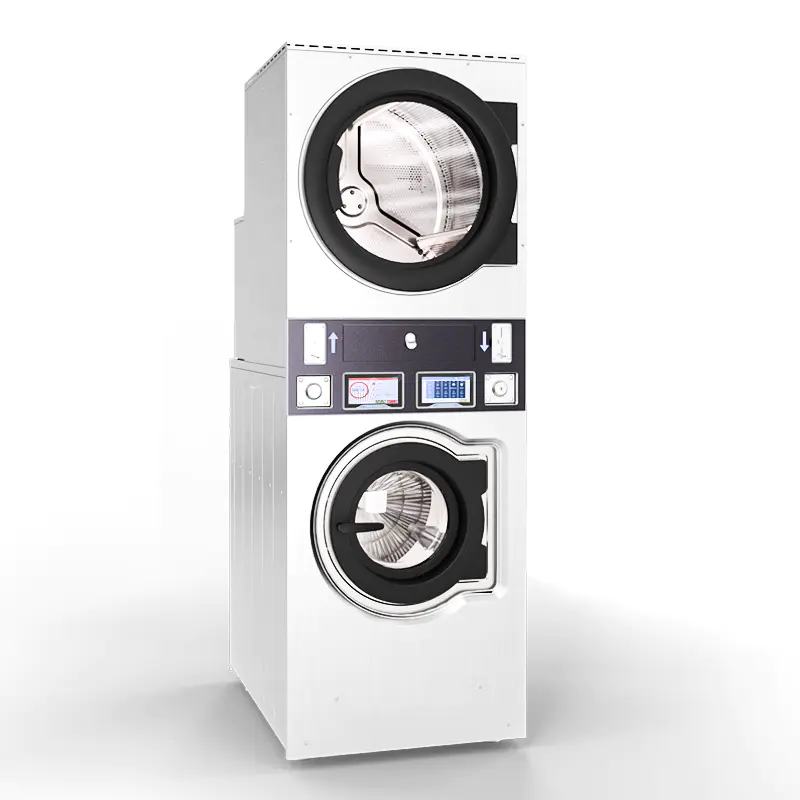
15kg Commercial Stackable Washer and Dryer
Product Overview
The 15kg commercial stackable washer and dryer is a vertically arranged laundry system designed for professional use. The washing unit and drying unit are positioned in one compact structure, providing a coordinated workflow from washing to drying. With a nominal washing capacity of 15kg, the equipment is suitable for businesses that handle regular loads of towels, uniforms, bedding, garments, linens, and other washable materials.
The product is intended for applications including laundries, dry cleaners, and self-service laundry facilities. It can also support laundry requirements in smaller hotels, spas, salons, clubs, and clinics. These environments often have a steady flow of laundry but limited space for a complete industrial laundry line. A stackable design makes it possible to expand laundry capability without requiring a large building extension or major floor-plan change.
The vertical configuration is one of the product’s most important characteristics. A conventional washer and dryer arrangement typically requires both machines to occupy separate positions on the floor. In contrast, the stackable washer and dryer uses height rather than additional floor width. This can significantly improve the layout of a laundry room, especially where the available floor area is narrow, irregular, or already occupied by ironing tables, folding stations, carts, shelving, or water treatment systems.
The machine is also designed for simple operation. Commercial users need equipment that can be learned quickly by employees, attendants, and self-service customers. A clear operating process helps reduce errors, improves turnaround time, and supports consistent washing and drying results. The product’s humanized design philosophy is intended to make daily use more convenient while maintaining the durability required for professional environments.
In addition to practical operation, the equipment incorporates intelligent functions. These functions are intended to support controlled washing and drying programs, consistent processing, and more efficient resource management. Depending on the configuration selected for a specific project, commercial users can benefit from customizable wash cycles and energy-conscious drying options that match different textile types and service requirements.
Why Vertical Laundry Equipment Matters
Floor space is one of the most expensive resources in a commercial facility. A laundry area must accommodate not only machines but also loading and unloading space, transport carts, detergent storage, ventilation arrangements, drainage, maintenance access, and safe operator movement. When washers and dryers are installed side by side, the equipment footprint can become disproportionately large compared with the actual processing capacity.
A stackable system addresses this challenge by placing two machines within one vertical footprint. This can free valuable floor area for folding, sorting, storage, or customer service. In a self-service laundry, for example, the saved space may be used to install additional payment stations, seating, or another stackable unit. In a hotel or clinic, it may allow the laundry room to retain sufficient passageways and working zones without reducing washing capacity.
Vertical installation can also simplify the overall planning of a new facility. Instead of designing a wide room with long equipment rows, an operator can create a more compact equipment wall. This is useful in converted retail spaces, basement rooms, service corridors, small commercial buildings, and existing facilities where structural changes are difficult or expensive.
The space-saving advantage does not mean that the product is intended only for very small businesses. Larger operations may also benefit from a stackable arrangement. Multiple units can be organized in a modular layout, allowing capacity to be increased in stages. A business can begin with one machine and later add another unit as demand grows, subject to the site’s utility and installation conditions.
Compared with purchasing separate standalone machines, a stackable washer and dryer can also make the relationship between washing and drying more efficient. Operators can move loads through the laundry process within one clearly defined area. This may reduce unnecessary movement, simplify work instructions, and make it easier for staff to monitor production during busy periods.
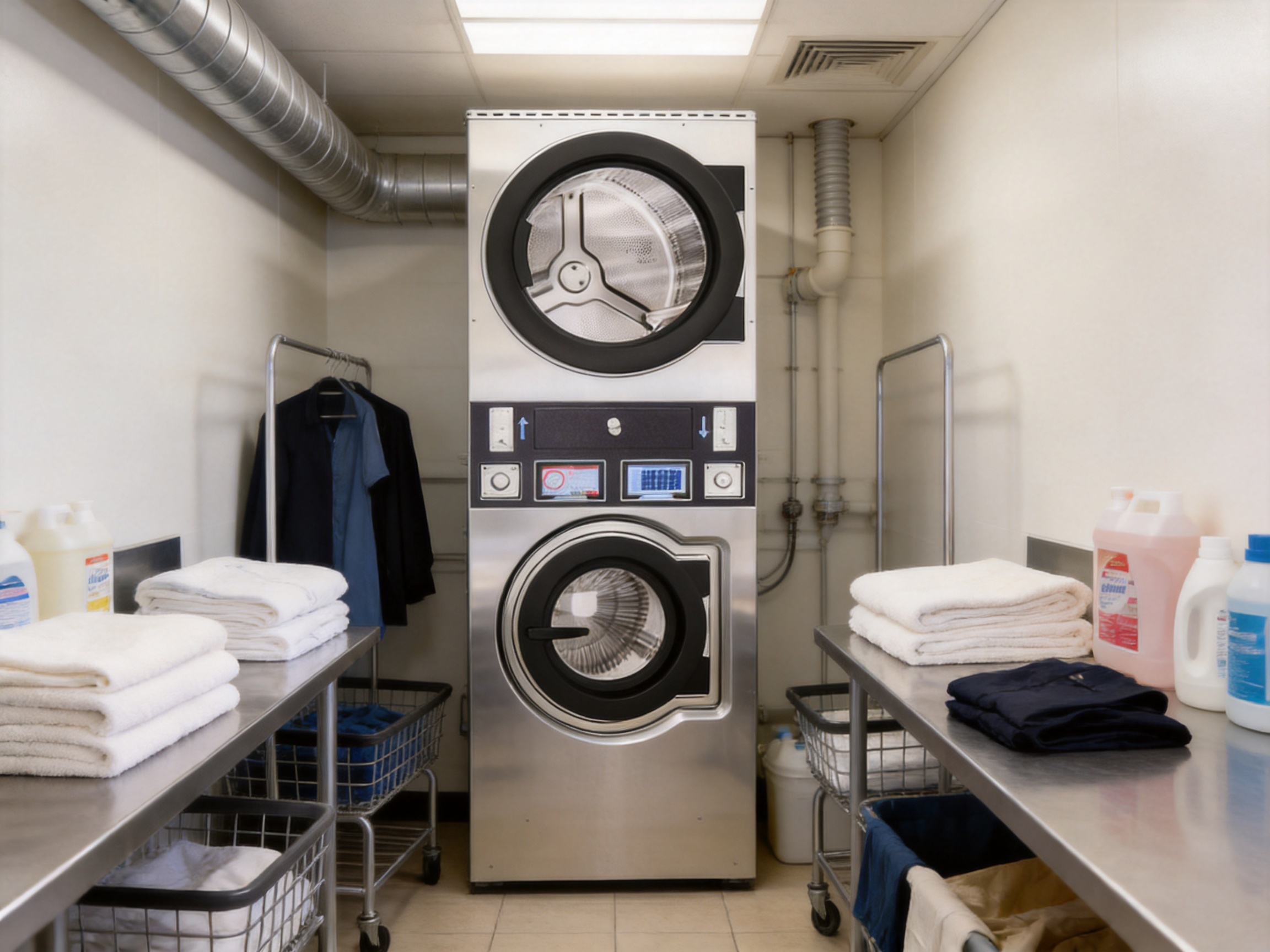
Core Product Advantages
Efficient Use of Floor Space
The most visible advantage of the 15kg commercial stackable washer and dryer is its compact vertical structure. The equipment is designed to take up approximately half the floor space of a traditional washer and dryer arrangement. This allows commercial operators to obtain washing and drying functions without sacrificing a large portion of the facility.
Efficient floor utilization is especially important for businesses operating in high-rent areas. A dry cleaner in an urban shopping district, a salon in a compact retail unit, or a self-service laundry in a small neighborhood location may not have enough space for full-size side-by-side equipment. A vertical unit can help these businesses provide professional laundry services within their existing premises.
Integrated Washing and Drying Workflow
Combining a washer and dryer in one stackable system supports a logical workflow. Laundry can be loaded into the washing unit, transferred to the drying unit, and returned to the folding or finishing area without requiring operators to cross a large room. A well-planned workflow can help reduce handling time and minimize the risk of mixed loads or misplaced garments.
For self-service applications, the integrated structure also offers a familiar and convenient user experience. Customers can find the washing and drying functions in one compact location. For staffed operations, employees can monitor both stages of the process more easily, especially when the equipment is installed close to the sorting and folding zones.
15kg Commercial Capacity
The 15kg capacity provides a balance between productivity and compact installation. It is large enough for many routine commercial loads but remains suitable for facilities that do not require the very high capacity of large industrial tunnel systems. This makes the product appropriate for small and medium-sized laundry operations, hospitality businesses, personal-care facilities, and specialized service providers.
Capacity should always be matched with the type of material being processed. Towels, uniforms, linens, workwear, and garments have different moisture levels, loading characteristics, and drying requirements. A 15kg commercial machine gives operators the flexibility to process recurring loads while maintaining a manageable size for daily handling.
Suspended Installation Design
The product is described as suspended and capable of installation on any floor, subject to appropriate site preparation and professional installation requirements. This design gives planners more flexibility when deciding where the machine should be located. It can be incorporated into purpose-built laundry rooms, compact service areas, and renovated commercial spaces.
A suspended configuration may also assist with orderly floor planning. By concentrating the equipment in a vertical footprint, operators can reserve surrounding floor space for carts, supplies, folding tables, or safe walking routes. Before installation, the building should be assessed for structural support, utility access, drainage, ventilation, clearance, and service requirements.
Simple Operation
Commercial laundry equipment must be productive without being unnecessarily complicated. Simple operation helps employees start programs correctly, select suitable cycles, and complete routine tasks with fewer mistakes. It also reduces the amount of training required when staff changes occur.
In self-service environments, simple controls are equally important. Customers may have different levels of experience with commercial laundry machinery. Clear instructions and an intuitive operating sequence can contribute to a smoother customer experience and fewer interruptions for attendants.
Intelligent Control
The intelligent design of the product supports the management of washing and drying programs. Commercial users may need different treatment for lightly soiled clothing, heavily soiled workwear, towels, linens, delicate fabrics, or high-moisture loads. Customizable wash cycles allow the equipment to be adapted to practical operating needs rather than forcing every load through one fixed program.
Intelligent controls can also help improve consistency. When a suitable program is selected and repeated, operators can achieve more predictable results across similar loads. Consistency is essential for hotels, clinics, salons, and commercial laundry services because customers and departments expect clean, dry, and properly processed items every time.
Durability for Repeated Use
Commercial equipment must withstand frequent operation, repeated loading, vibration, moisture, and demanding working schedules. The product is designed around durable construction and long-wearing components intended for professional use. This makes it different from domestic laundry equipment, which is generally designed for lower usage frequency and less intensive operating conditions.
Durability contributes to more than machine lifespan. It can also support schedule reliability. When a laundry business depends on daily processing, unexpected equipment downtime can interrupt customer service, delay linen delivery, and increase labor costs. A commercial design built for repeated use helps operators establish a more dependable production routine.
Energy-Conscious Drying Options
Drying can represent a significant portion of laundry operating costs. The product range includes energy-saving drying options intended to help reduce operating expenses while maintaining the required level of textile dryness. The most suitable drying program depends on fabric type, load composition, moisture content, and the final use of the processed items.
Energy efficiency should be considered together with correct loading and regular maintenance. Overloading, underloading, blocked airflow, or unsuitable cycle selection may reduce performance in any commercial dryer. With appropriate operating procedures, energy-conscious functions can help businesses work toward lower resource consumption and more controlled laundry costs.
Advantages Compared with Conventional and Competing Arrangements
More Floor Capacity per Installation Area
The primary competitive advantage of a stackable washer and dryer is the amount of service provided within its footprint. Side-by-side machines require a wide installation area, whereas the vertical system makes use of available height. For operators comparing different equipment layouts, the relevant question is not only the capacity of an individual machine but also how much useful laundry service can be delivered per square meter.
This distinction is important in commercial property. A smaller footprint can reduce the need for room expansion and may allow the business to use an existing site rather than relocate. It can also improve the return on facility investment by preserving space for services that directly contribute to revenue.
Better Suitability for Compact Commercial Sites
Some competitors focus on large industrial installations that require extensive room dimensions, significant utility planning, and high initial investment. Those systems can be appropriate for large centralized laundries, but they may be excessive for a small hotel, salon, clinic, or local self-service laundry. The 15kg stackable design offers a more proportional solution for moderate demand.
Its compact format supports businesses that require commercial performance but do not need a complete industrial production line. This makes it easier to match equipment size with actual demand, available capital, staffing levels, and site limitations.
Reduced Handling Distance
When washing and drying equipment is installed in separate areas, employees must move wet laundry from one machine to another. If the room is crowded or the route is long, this can increase handling time and create additional opportunities for dropped, mixed, or contaminated items. A stacked arrangement helps concentrate the workflow.
In healthcare and personal-care environments, organized handling is particularly important. Although the machine itself does not replace appropriate hygiene procedures, a logical layout can support better separation of clean and soiled materials and make standard operating procedures easier to follow.
Flexible Commercial Applications
The product is not limited to one business model. It can be used in staff-operated laundries, dry-cleaning support areas, self-service laundry stores, hospitality facilities, and other professional environments. This application flexibility is a competitive strength because the same basic equipment concept can support different operating strategies.
A self-service laundry may prioritize clear controls and customer convenience. A salon may focus on towels and reusable fabrics. A clinic may require dependable processing of uniforms and linens. A hotel may need regular handling of bedding, towels, and housekeeping materials. The ability to adapt cycles and operating procedures allows one product platform to serve different requirements.
Balanced Investment for Growing Businesses
Large industrial systems can require substantial capital and extensive infrastructure. A compact stackable solution can provide a more accessible entry point for a growing business. Operators can establish commercial laundry capability without immediately investing in a large multi-machine line.
As demand increases, additional equipment can be considered according to available space and utility capacity. This modular approach can help businesses align equipment purchases with actual growth rather than paying for unused capacity at the beginning of operations.
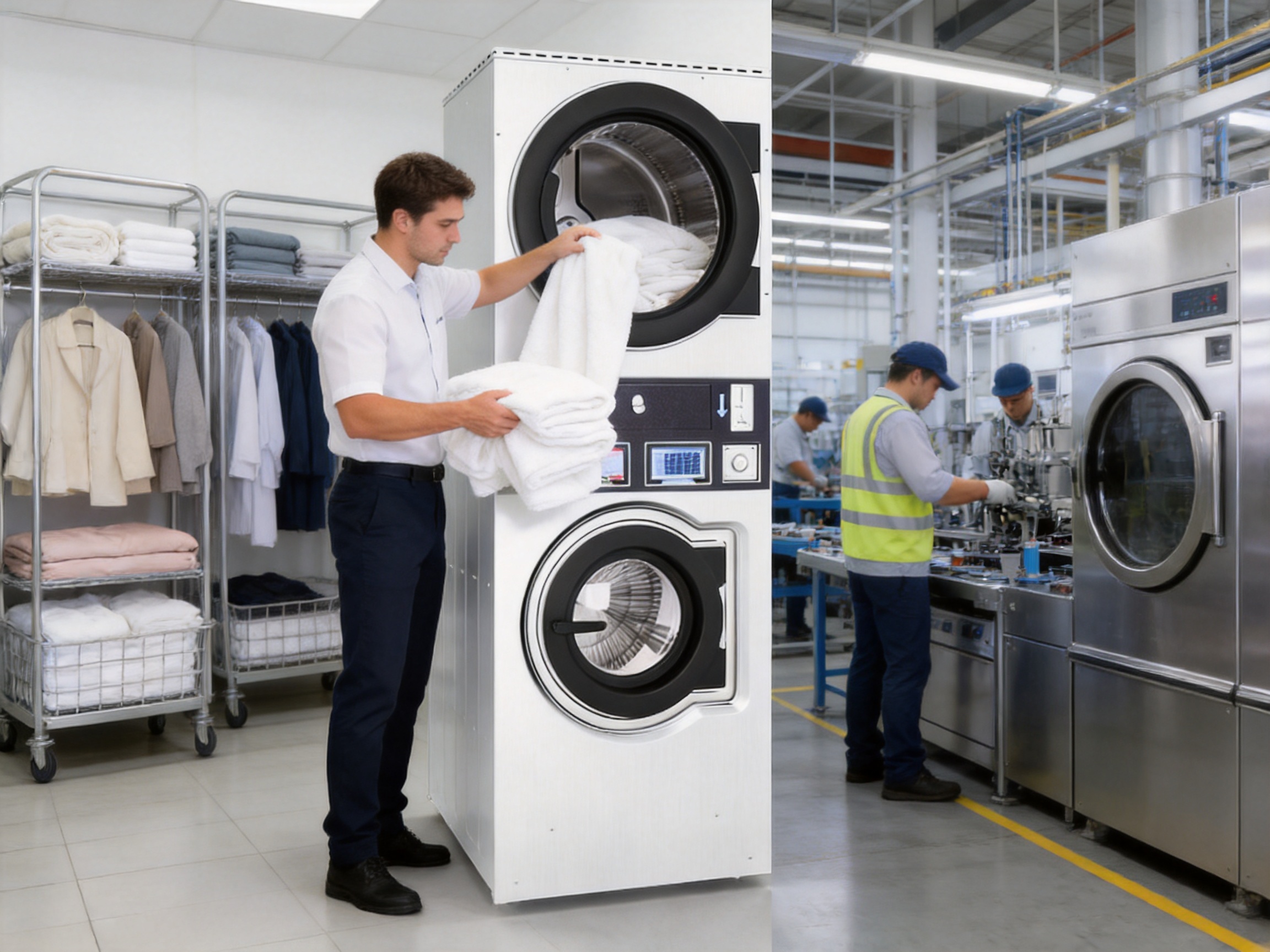
Applications in Different Commercial Environments
Laundries
Commercial laundry facilities require equipment that can process recurring loads efficiently and consistently. The 15kg stackable system can serve as a core machine for smaller laundries or as a supplementary unit in larger operations. It can be used for daily garments, towels, linens, uniforms, and other materials that need regular washing and drying.
Its vertical configuration may allow a laundry operator to install more processing equipment within a restricted room. This can be especially helpful when the business is located in a converted retail space or a building with limited service-area dimensions.
Dry Cleaners
Dry cleaners often handle a mixture of professional garments and washable items. A dedicated commercial washer and dryer can support the cleaning workflow for materials that are suitable for wet washing and machine drying. The stackable format helps dry cleaners add laundry capacity without reducing customer reception, pressing, finishing, or garment storage areas.
Because textile care requirements vary, operators should select cycles according to garment labels, fabric characteristics, soil levels, and finishing expectations. The machine’s customizable program concept can help users establish suitable processes for recurring categories of washable items.
Self-Service Laundries
Self-service laundries need equipment that customers can understand quickly. A clearly organized washer and dryer combination can make better use of the store layout while providing a convenient solution for customers who need to complete both stages of laundry in one location.
Space saved through vertical installation may be used for customer seating, folding counters, vending equipment, payment systems, or additional laundry units. In a competitive self-service market, a clean, organized, and easy-to-navigate environment can influence customer satisfaction and repeat visits.
Hotels and Small Hospitality Businesses
Hotels, guesthouses, spas, and similar businesses must process towels, bedding, robes, staff uniforms, and other textiles. Smaller properties may not have room for a large laundry department, yet outsourcing every item can increase recurring service costs and reduce control over turnaround times.
A compact commercial stackable washer and dryer can help smaller hospitality businesses bring selected laundry tasks in-house. The machine may be used for daily essentials or as supplementary capacity during busy periods, seasonal demand, or urgent replacement needs.
Salons, Clubs, and Clinics
Salons, clubs, and clinics often generate regular quantities of towels, uniforms, covers, and reusable fabrics. These loads may need to be processed frequently to maintain service standards. A compact commercial unit can be installed close to the point of use, reducing the need to transport laundry to an off-site provider.
In clinics and other care-related environments, laundry procedures must comply with applicable hygiene, textile-handling, and facility-management policies. The equipment can support these processes, but operators remain responsible for selecting suitable programs, separating loads, and following local regulations.
Manufacturing Strengths and Production Approach
The performance of commercial laundry equipment depends not only on its visible design but also on the manufacturing process behind it. Jiangsu Chuandao Intelligent Equipment Co., Ltd. focuses on intelligent commercial laundry machinery and provides equipment for professional users. Its product categories cover washing, extraction, drying, and stacked configurations, allowing the company to develop solutions around the complete laundry workflow rather than a single isolated machine.
A broad product range can strengthen manufacturing expertise because different machines share important engineering requirements. These include load management, mechanical durability, control-system coordination, water and energy efficiency, safety, service access, and compatibility with commercial operating routines. Experience across multiple equipment types can support a more integrated approach to product development.
Product Engineering for Commercial Use
Commercial equipment design begins with the conditions of actual use. Machines must accommodate repeated cycles, variable load types, routine operator interaction, and the practical limitations of commercial buildings. A stackable washer and dryer must also be designed so that the vertical arrangement remains stable, accessible, and functional during loading, unloading, inspection, and maintenance.
The company’s focus on intelligent equipment supports the development of systems that combine mechanical operation with programmable controls. This approach enables manufacturers to address not only washing and drying performance but also usability, cycle management, energy awareness, and operating consistency.
Integrated Design and Assembly
A stacked system requires careful coordination between the washer, dryer, support structure, controls, and service connections. The manufacturing process must ensure that the components work together as one installation rather than as unrelated standalone products. Alignment, structural stability, access to control interfaces, and protection of internal components are all important considerations.
Integrated assembly can also improve the final installation experience. When a product is designed as a coordinated system, distributors, installers, and end users can follow a clearer process for positioning and commissioning the equipment. Professional installation remains essential, particularly for utility connections, drainage, ventilation, grounding, and building support.
Quality-Oriented Production
Commercial laundry machinery must be manufactured with attention to material selection, component compatibility, assembly accuracy, and inspection. Long-wearing components and durable structures are important because the equipment is expected to operate frequently over an extended service period.
A quality-oriented process includes verification of key assemblies, functional checks, control-system testing, and inspection before shipment. While exact procedures may vary by model and order configuration, the goal is to ensure that each machine is prepared for reliable operation in a demanding commercial setting.
Intelligent Manufacturing Philosophy
The company’s positioning in intelligent equipment reflects the growing role of automation and digital control in professional laundry. Intelligent manufacturing is not limited to adding electronic controls. It also involves improving the way equipment is designed, assembled, tested, configured, and supported.
For customers, this manufacturing philosophy can translate into more consistent product configuration, clearer operating functions, and better adaptability to different commercial requirements. OEM and ODM capabilities further allow equipment solutions to be adjusted for project needs, market preferences, branding requirements, and installation conditions.
OEM and ODM Support
Commercial laundry distributors and project contractors may require more than a standard catalog product. They may need specific electrical configurations, control languages, exterior treatments, operating programs, packaging arrangements, or private-label support. The company’s OEM and ODM service capability is intended to support these requirements.
OEM cooperation can help buyers offer commercial laundry equipment under their own market identity, while ODM cooperation can support deeper product customization and project development. These services are valuable for distributors, hospitality groups, laundry-service companies, and equipment integrators seeking a stable manufacturing partner.
Operational Efficiency and Cost Management
Purchasing commercial laundry equipment is a long-term operational decision. The purchase price is only one part of the total cost. Businesses must also consider floor space, utilities, labor, maintenance, downtime, textile throughput, and the value of timely service. A stackable washer and dryer can influence several of these factors through its compact footprint and integrated workflow.
Space-Related Savings
When a machine uses less floor area, the business may be able to avoid expansion or renovation. The saved space can also be used for productive activities such as garment finishing, storage, customer seating, or additional processing equipment. The commercial value of this space varies by location, but in many facilities it can be considerable.
Labor and Workflow Efficiency
A compact laundry arrangement can reduce the distance employees travel between washing, drying, sorting, and folding stations. Less movement may help staff process more loads within the same shift. Clear equipment positioning also makes it easier to establish repeatable work instructions and assign responsibilities during busy periods.
Resource Awareness
Water, electricity, gas, and labor all influence laundry operating costs. Customizable wash programs and energy-saving drying options can help operators choose processes that are appropriate for the load instead of relying on unnecessarily intensive cycles. Correct loading, regular cleaning, proper ventilation, and timely maintenance are also necessary to achieve efficient operation.
Reduced Downtime Risk
Durable commercial construction and routine maintenance can support equipment availability. Businesses should establish inspection schedules for seals, filters, vents, connections, controls, and other serviceable areas. Early attention to unusual vibration, noise, heating behavior, drainage, or drying performance can help prevent minor issues from becoming major interruptions.
Installation and Facility Planning
Although the stackable design improves installation flexibility, the site must be prepared carefully. Before ordering, the operator should confirm the available height, width, depth, doorways, corridors, floor conditions, utility locations, ventilation requirements, drainage arrangements, and service clearances.
The statement that the product can be installed on any floor should be understood in the context of proper engineering and local installation requirements. The building must be able to support the equipment and its operating loads. A qualified installer should verify the site and complete the installation according to the equipment documentation and applicable regulations.
Electrical requirements should be confirmed before shipment. Commercial machines may be configured for different voltage, frequency, and power conditions depending on the destination market. Water supply, drainage, exhaust, and ventilation must also be matched to the selected configuration. Early technical communication can prevent delays during commissioning.
Operators should provide enough working clearance around the equipment for loading, unloading, cleaning, inspection, and service. A space-saving design should not result in an unsafe or inaccessible installation. The best layout balances compactness with operator comfort, maintenance access, and emergency procedures.
Transportation planning is another important consideration. The machine must pass through entrances, elevators, stairways, and internal corridors before reaching its final position. Buyers should communicate building limitations to the supplier or installation contractor in advance.
Recommended Operating Practices
Commercial performance depends on how the machine is used. Operators should sort laundry by fabric type, color, soil level, and processing requirement. Loads should be distributed evenly and should not exceed the appropriate capacity. Overloading can reduce washing action, increase drying time, and place unnecessary stress on mechanical components.
Detergent and chemical selection should follow textile requirements and local operating procedures. Excessive detergent does not necessarily improve cleaning and may increase rinsing requirements or leave residue. Suitable dosing practices can support textile quality, equipment cleanliness, and resource efficiency.
Drying programs should be selected according to the material being processed. Towels and heavy textiles may require different treatment from lightweight garments or delicate fabrics. Operators should avoid excessive drying when it is not necessary, since unnecessary heat and time may increase energy consumption and accelerate fabric wear.
Filters, vents, seals, detergent compartments, and surrounding surfaces should be cleaned regularly. Lint and residue can affect airflow, hygiene, drying performance, and equipment life. A simple daily and weekly cleaning schedule can help maintain stable operation.
Staff should be trained to recognize warning signs such as abnormal vibration, unusual noise, water leakage, slow drainage, poor drying, error messages, or unexpected cycle behavior. Problems should be reported promptly rather than ignored. Preventive maintenance should be carried out by qualified personnel according to the product’s technical requirements.
Purchasing Considerations for Commercial Buyers
Before purchasing a 15kg commercial stackable washer and dryer, buyers should define their expected laundry volume and the types of materials they will process. The best equipment choice depends on daily load frequency, peak demand, operating hours, available utilities, room dimensions, and staffing.
Buyers should also clarify whether the equipment will be used by trained employees or self-service customers. Employee-operated facilities may require customized programs and workflow integration, while self-service locations may place greater emphasis on user instructions, payment integration, cycle visibility, and ease of cleaning.
Electrical and utility specifications must be confirmed for the destination country. Buyers should request appropriate technical documentation, installation instructions, maintenance guidance, and recommended spare parts. For projects involving multiple machines, it is useful to prepare a complete layout showing clearances, utility routes, transport paths, and service access.
Customization requirements should be discussed at the quotation stage. Potential options may include operating language, program configuration, branding, packaging, electrical standards, and other project-specific details. Early communication allows the manufacturer to confirm feasibility, lead time, and technical implications.
After-sales support is also important. A commercial laundry machine is a production asset, and its value depends on reliable operation over time. Buyers should evaluate the supplier’s communication capability, technical documentation, spare-parts availability, training support, and experience with export or OEM projects.
Comparison Table
| Evaluation Factor | 15kg Commercial Stackable Washer and Dryer | Traditional Side-by-Side Arrangement | Large Industrial Laundry Line |
|---|---|---|---|
| Floor-space efficiency | High, because washing and drying functions are arranged vertically | Lower, because each machine requires separate floor positions | Varies, but usually requires a large dedicated facility |
| Suitability for small commercial sites | Strong suitability for laundries, dry cleaners, salons, clinics, and small hotels | Suitable where sufficient width is available | Often excessive for moderate laundry volumes |
| Washing capacity | 15kg commercial washing capacity | Depends on the individual washer selected | Usually designed for much higher centralized throughput |
| Workflow arrangement | Washer and dryer are concentrated in one vertical equipment area | Requires movement between separate machines | May provide a complete production flow but needs more planning |
| Expansion approach | Additional stackable units can be considered as demand grows | Expansion generally requires additional floor width | Expansion may require substantial infrastructure |
| Operating complexity | Designed for simple operation with intelligent functions | Depends on the controls of each machine | May require specialized staff and process management |
| Best application profile | Professional facilities seeking compact, flexible capacity | Businesses with ample room and conventional layouts | Large centralized laundry operations |
Why Choose a Specialized Commercial Manufacturer
Commercial laundry equipment requires different priorities from household appliances. A specialized manufacturer understands that professional users need repeatable performance, durable construction, flexible configuration, practical maintenance, and technical support. The company’s concentration on laundry machinery allows it to develop products around these industry-specific requirements.
Jiangsu Chuandao Intelligent Equipment Co., Ltd. offers a product range that includes washer-extractors, dryers, hospital washing machines, industrial washing machines, and stacked systems. This breadth provides customers with access to a manufacturer that understands multiple stages of textile processing and can help match equipment to different applications.
The company’s OEM and ODM capabilities are also valuable for international buyers. Commercial laundry markets differ in electrical standards, installation practices, customer expectations, control languages, and business models. A manufacturer capable of supporting customized solutions can help distributors and project developers adapt equipment to their target markets.
Manufacturing strength should be considered together with product design. The 15kg stackable washer and dryer is not simply a washer placed below a dryer. It is a coordinated commercial system developed to address space limitations, operating convenience, durability, and workflow efficiency at the same time.
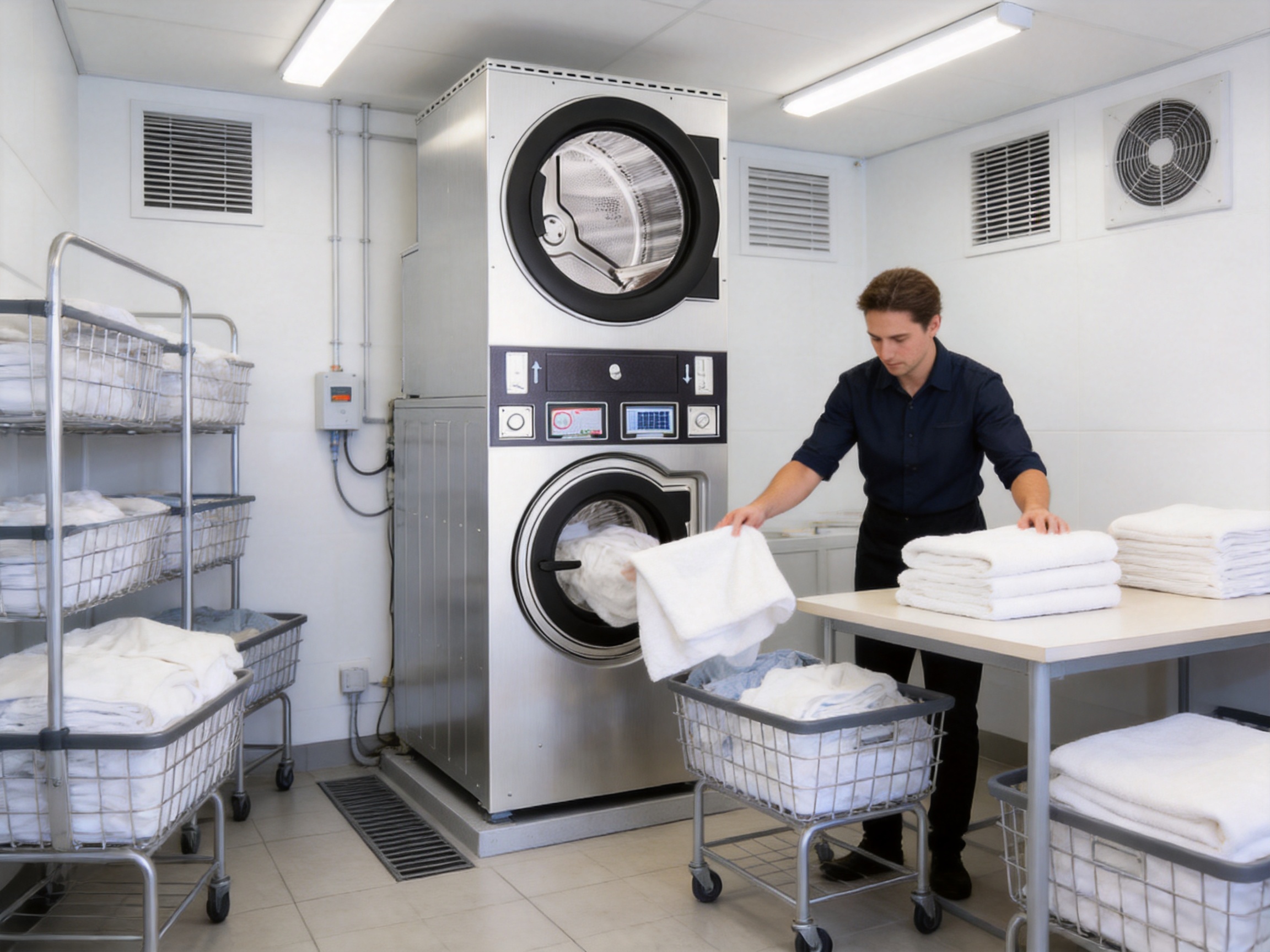
Long-Term Value for Business Owners
The value of commercial equipment is measured by the service it provides throughout its working life. A machine that occupies less floor space, processes regular loads, supports convenient operation, and reduces unnecessary handling can contribute to a more efficient business model.
For a small hotel, the unit may help keep essential linens available without building a large laundry room. For a dry cleaner, it may add washable garment capacity while preserving valuable front-of-house space. For a self-service laundry, it may improve the equipment density of the store. For a clinic or salon, it may provide reliable in-house processing for towels, uniforms, and reusable materials.
The product can also support business development. Operators may begin with a compact installation and evaluate demand over time. If the market grows, they can review additional units, expanded operating hours, or a more comprehensive laundry system. This approach reduces the risk of purchasing a system that is much larger than the current business requires.
Long-term value also depends on correct maintenance and responsible operation. Equipment should be installed properly, loaded correctly, cleaned routinely, and serviced according to technical recommendations. When these practices are followed, the machine can become a dependable part of the business rather than a source of avoidable interruptions.
Frequently Asked Questions
What is the capacity of the commercial stackable washer and dryer?
The product has a 15kg commercial washing capacity. Actual load suitability depends on the type, density, and moisture characteristics of the textiles being processed.
How does the stackable design save space?
The washer and dryer are arranged vertically, so they use one compact floor position instead of requiring two side-by-side positions. The design is intended to occupy approximately half the floor space of a traditional washer and dryer arrangement.
Where can this machine be used?
Typical applications include laundries, dry cleaners, self-service laundries, small hotels, spas, salons, clubs, and clinics. The product is suitable for professional environments that need regular washing and drying but have limited floor space.
Can the machine be installed on different floors?
The suspended design allows flexible floor installation, provided that the building structure, utilities, ventilation, drainage, access, and local safety requirements are properly evaluated. Professional installation is recommended.
Is the product suitable for self-service laundry businesses?
Yes. Its simple operating concept and combined washer-and-dryer arrangement can suit self-service locations. The final configuration should be selected according to customer instructions, payment systems, local regulations, and store layout.
Does the machine support customized washing programs?
The product range is designed to offer customizable wash cycles and drying options. The exact programs and functions should be confirmed with the supplier according to the required textile types and project configuration.
What types of laundry can it process?
Potential materials include towels, linens, uniforms, garments, bedding, robes, and other washable textiles. Operators should always follow textile-care labels and use programs appropriate for the material.
How does it compare with domestic laundry equipment?
The product is designed for commercial use, repeated operation, and professional laundry environments. Its structure, capacity, operating concept, and durability requirements are intended for business applications rather than ordinary household use.
Can the equipment be customized for international markets?
Jiangsu Chuandao Intelligent Equipment Co., Ltd. provides OEM and ODM support. Buyers can discuss electrical standards, control languages, programs, branding, packaging, and other project requirements with the manufacturer.
What should be checked before installation?
Buyers should verify room dimensions, equipment access routes, floor support, electrical supply, water connections, drainage, ventilation, exhaust requirements, maintenance clearances, and applicable local codes.
Can the machine help reduce operating costs?
Its space-saving structure can reduce the amount of floor area needed for laundry functions. Customizable cycles and energy-saving drying options may also help control resource consumption when the equipment is loaded and operated correctly.
How can operators maintain reliable performance?
Operators should avoid overloading, clean filters and surrounding areas, inspect seals and connections, use suitable detergents, choose appropriate cycles, and arrange preventive maintenance through qualified technicians.
Conclusion
The 15kg commercial stackable washer and dryer is a practical solution for businesses that need professional laundry capacity without the footprint of a conventional side-by-side arrangement. Its vertical design, suspended installation concept, simple operation, intelligent functions, durable commercial construction, and energy-conscious drying options make it suitable for a wide range of applications.
The machine is particularly valuable for laundries, dry cleaners, self-service stores, small hotels, spas, salons, clubs, and clinics. In each of these environments, the ability to combine washing and drying in a compact area can improve workflow, preserve valuable floor space, and support more flexible facility planning.
Its advantages over conventional arrangements are based on practical business needs: more efficient use of space, shorter handling routes, scalable installation, and a balanced capacity for small and medium-sized commercial operations. Compared with oversized industrial systems, it can provide a more proportional solution for companies that require commercial performance without a large centralized laundry plant.
Behind the product is a manufacturer focused on intelligent commercial laundry machinery and capable of supporting OEM and ODM projects. Jiangsu Chuandao Intelligent Equipment Co., Ltd. combines a broad laundry equipment portfolio with an emphasis on product engineering, coordinated assembly, quality-oriented production, and adaptable commercial solutions.
For buyers evaluating commercial laundry equipment, the final decision should include capacity, textile types, site conditions, utilities, installation requirements, maintenance planning, and long-term business objectives. When properly specified and operated, the 15kg commercial stackable washer and dryer can become a reliable, space-efficient foundation for modern laundry service.
References
1. Commercial Laundry Equipment Selection Principles, professional equipment planning and facility-layout guidance.
2. Textile Care and Laundry Process Management, general principles for washing, drying, sorting, and textile handling.
3. Industrial Equipment Maintenance Practices, preventive maintenance methods for commercial mechanical systems.
4. Energy Management in Commercial Laundry Operations, guidance on load management, drying efficiency, and resource control.
5. Commercial Facility Safety and Installation Planning, general considerations for structural support, utilities, access, ventilation, and service clearances.
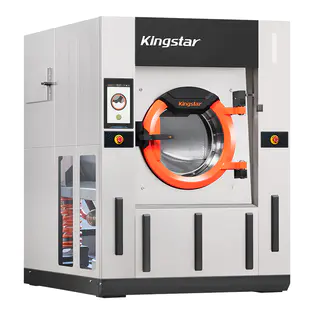
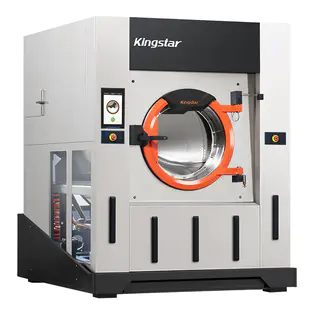
Product: 15kg Commercial Stackable Washer and Dryer

ADD:No.388 Xinggang Road, Chongchuan District, Nantong City, 226000, Jiangsu Province, China.
-
Phone: +86-13917089379
-
Tel:+86-13917089379
-
Fax:+86-0513-85663366
-
E-mail:louislu@kingstarlaundry.com
products